Daniel Tay · · 8 min read
Evictions? Regulations? Taxes? How can Singapore deal with sites like Airbnb?
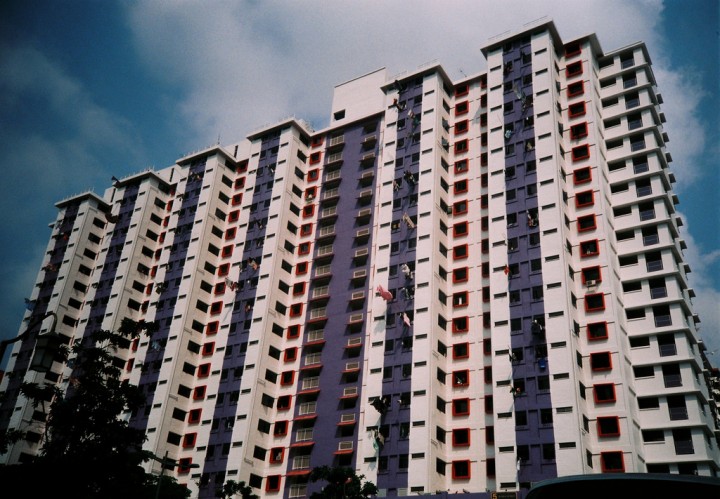
Faced with rising hotel room rates, many tourists in Singapore have turned to shorter-term, far cheaper accommodation offered by sites like Airbnb and Roomorama, which have lots of rooms for rent listed in Singapore.
These disruptive startups currently face a slew of opposition from regulatory bodies around the world, including in Singapore. Most recently, Singapore’s Housing and Development Board (HDB) confiscated two flats from their owners as they were renting out the space to tourists. The owners were evicted from their homes.
Authorities in Singapore disallow rental of private or public housing to anyone if the lease is under six months.
Both the HDB and Singapore’s Urban Redevelopment Authority (URA) have investigated multiple cases over the past year involving offering short-term accommodation, but this is the first time that they have taken action. HDB has jurisdiction over public housing, while URA oversees private dwellings.
A source who has chosen to remain unnamed reveals that his friend was one of the two homeowners whose flat was confiscated. His friend had allegedly rented his apartment out via an agent on PropertyGuru, but the agent had fled as soon as the incident occurred. He is now uncontactable.
HDB acted on complaints from neighbors of loud noises and suspicious characters going in and out of the house. However, a HDB spokesperson declined to comment on that specific case.
Due to the price range, which was reported to be between S$25 and S$75 per night, it is highly unlikely that the flats in question were on Airbnb, since the going rate for an entire apartment on Airbnb is typically much higher than that. Similarly, Roomorama’s founder and CEO Teo Jia En has stated explicitly that there are no HDB flats listed on their platform.
Are short-term rentals really illegal?
Airbnb has over a thousand Singapore-based listings on its site, while Roomorama has about 500. According to HDB, though, “transient subletting” is illegal in Singapore. A report states that HDB has investigated over 184 cases of short-term rentals in public flats over the last year. Meanwhile, the URA investigated over 2,100 cases in the same period of time, with another 350 over the course of the first four months of this year.
Interestingly, James Chua, CEO of Singapore-based Pandabed, revealed in an answer on Quora that short-term renting for private property is actually not illegal here. Having consulted with a law firm, they found that the six-month minimum rental period stated by the URA is a guideline, and not a law:
There is a caveat: if a guest causes a disturbance of any kind to the neighbourhood, the URA then has the authority to take action.
Chua did, however, concede that HDB short-term rentals were against the law. The minimum allowable period is clearly stated on a HDB page related to subletting:
A problem of space
For income and dignity
Why regulate?
Alternatives to heavy-handed measures





Stay updated on the go with our mobile app.
Get latest insights with smoother, more personalized experience through TIA mobile app.