 Kaya Domingo · · 5 min read
Why PepsiCo’s support for startups’ sustainability efforts is more than just fizz

Take a canned drink and shake it. Now shake it some more. Would you open it after that?
In this scenario, we know that canned drink is going to explode if we open it, so we would stop shaking it. Taken in the context of the environment, however, it seems like many people and companies around the world won’t stop “shaking” our climate until it eventually ends up exploding too.

Photo credit: Photo by Mila Di Bella on Unsplash
That said, things could be changing for the better as more firms are stepping up to pledge to net zero. Among them is food and beverage company PepsiCo, which has set its sights on reaching net zero emissions by 2040.
In September 2021, it unveiled a comprehensive and transformative strategy called Pep+. The initiative is meant to represent a fundamental shift in the firm’s operations toward more holistic change, which includes its sustainability efforts.
To achieve the plan’s ambitious objectives, it was clear that innovation would play a role. To that end, the company launched a series of initiatives globally, including the Greenhouse Accelerator Program – APAC Sustainability Edition.
This program aims to not only discover and nurture groundbreaking offerings from the startup ecosystem, but also explore how innovative solutions can be applied to PepsiCo’s business operations.
“Beyond supporting entrepreneurs in addressing our shared sustainability challenges, we also wanted to foster innovations in the space and inspire the next generation of leaders to drive meaningful change,” says Ashley Brown, PepsiCo’s chief sustainability officer for Asia Pacific.
The birth of a program
Getting the Greenhouse Accelerator Program off the ground required collaborative effort, expertise, and oversight from various teams within the organization. PepsiCo’s sustainability leaders – which include Brown, a steering committee, and 20 mentors from countries such as China, Thailand, Malaysia, and Australia – helped guide the program’s direction.
Much of these efforts were centered around refining the program to focus on specific areas such as green packaging. This was a step up from the overall Greenhouse Accelerator program, which tackles sustainability issues more broadly. The APAC version also has a mentorship program based around an agile framework so PepsiCo could “accommodate a diverse group of startups from different countries and levels of maturity, solving a range of challenges,” says Brown.
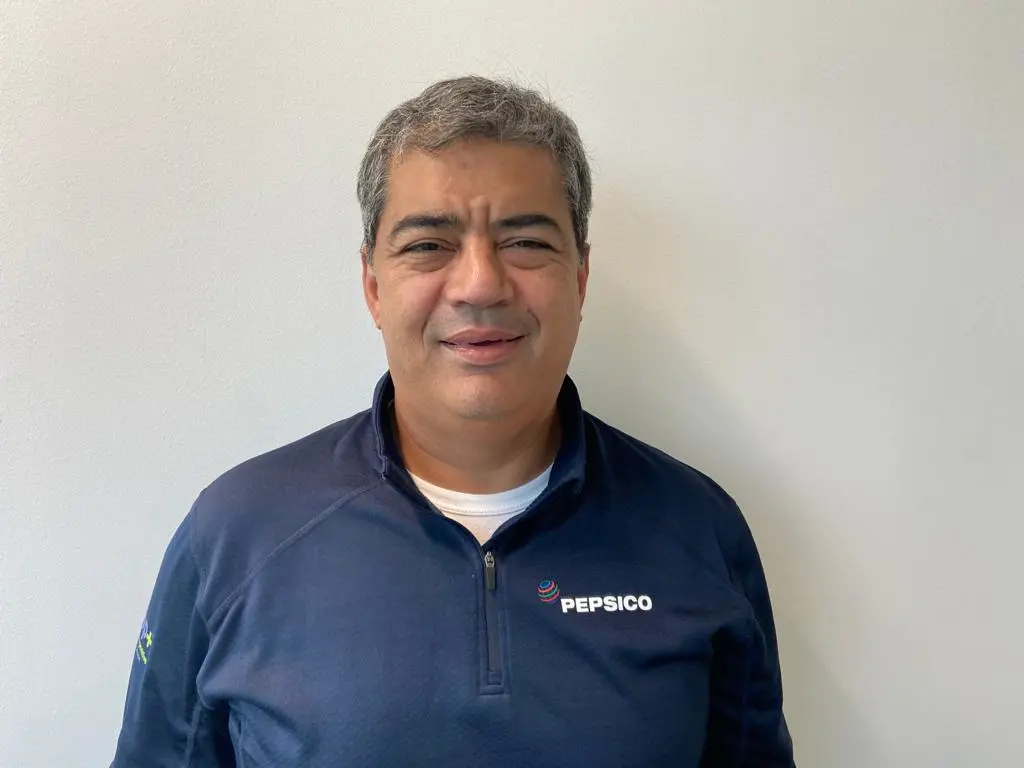
Ashley Brown, PepsiCo’s chief sustainability officer for Asia Pacific / Photo credit: PepsiCo
One of the program’s goals is to identify and support startups that could offer innovative solutions for PepsiCo’s sustainability efforts. As such, selecting the right firms from a highly competitive pool is crucial.
Apart from having scalable and practical innovations, candidates ideally have to align with the program’s objectives and PepsiCo’s sustainability ambitions. Shortlisted finalists receive an initial grant of US$20,000 from PepsiCo, get a chance to pitch their solution at a live event, and take part in a business optimization program designed to empower their growth.
They also undergo a one-on-one mentorship program overseen by PepsiCo executives and business accelerator experts that spans four months. “The mentorship offers them a unique opportunity to refine their business models, strengthen their market strategies, and enhance their potential impact,” says Brown.
Last but not least, shortlisted participants get the opportunity to discuss pilot projects in partnership with PepsiCo, allowing them to integrate their solutions into the firm’s supply chain.
Launching sustainable pilots
In June 2023, PepsiCo lined up 10 finalists for the program after a robust selection process.
This included the likes of Adiona, which specializes in last-mile delivery route optimization; HRK Group, which develops sustainable packaging; and Powered Carbon, which came up with a solution to convert carbon dioxide into raw materials for other products.
As part of the program, Adiona used its proprietary SaaS software to build a roadmap for a PepsiCo facility in Australia, enabling efficient and accurate delivery routes for fleets. The data gleaned from this pilot gave PepsiCo an opportunity to reduce emissions – by up to a double-digit percentage – through optimized route planning.
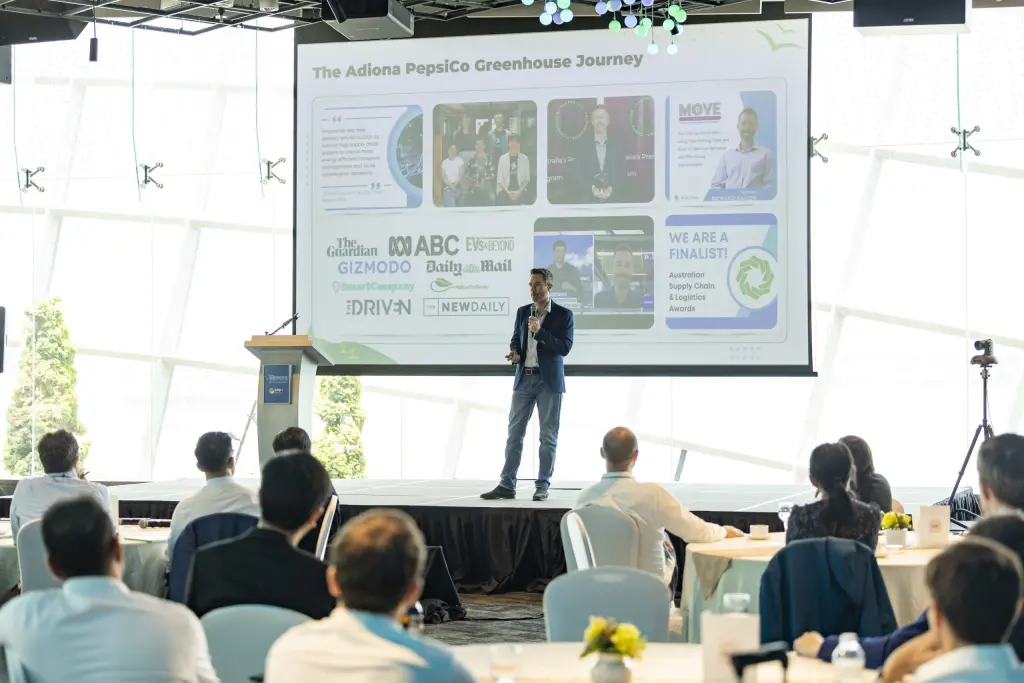
Photo credit: PepsiCo
Meanwhile, HRK Group helped create a range of eco-friendly solutions for PepsiCo’s secondary packaging used in its supply chain. For instance, it produced packaging that was compostable and recyclable as well as tested making bags from potato starch, a byproduct of PepsiCo’s factory processes.
“This partnership has been essential in ensuring that our solutions are not only technically feasible but also meet PepsiCo’s specific requirements,” says Jonathan Sourintha, co-managing partner at HRK.
This year’s program winner, Powered Carbon, worked closely with mentors from PepsiCo’s supply chain, strategy, and agriculture departments in China to reduce CO2 emissions in the company’s potato fields, which are located in Shandong province.
“After weeks of research and communication with PepsiCo, we used our own technology to make a bio-fertilizer that could successfully turn CO2 into a carbon source much more efficiently than natural photosynthesis,” says Xia Lin, founder and chief scientist of Powered Carbon. “Not only can it reduce carbon emissions and the use of fossil fertilizers in the long term, but it can also improve the soil microbial environment, helping potatoes grow better.”
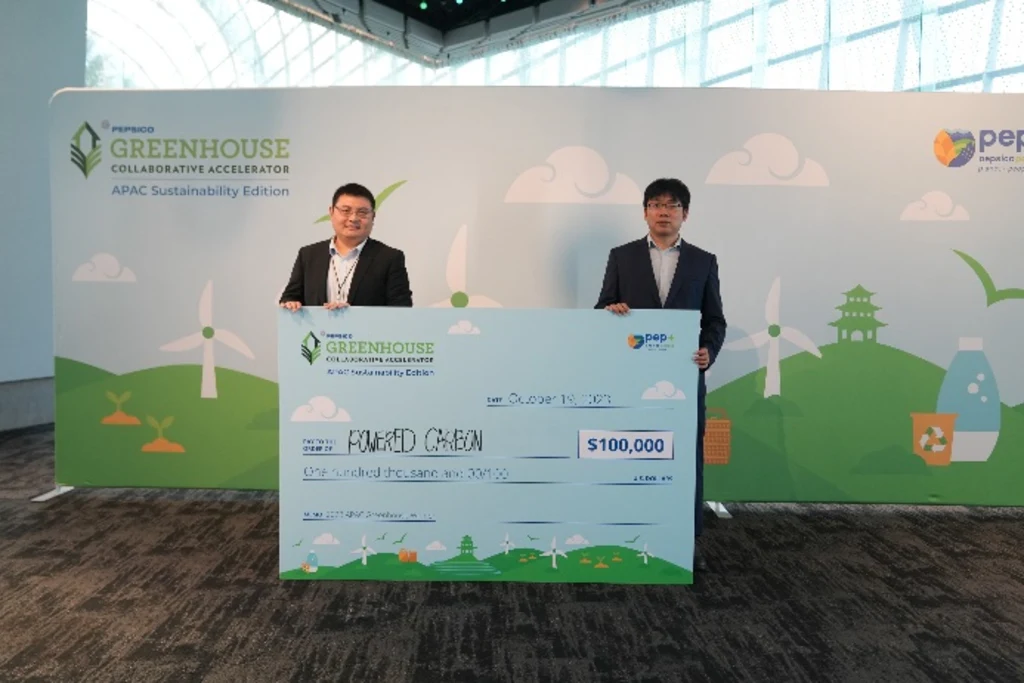
The Powered Carbon team / Photo credit: PepsiCo
The program has so far received positive feedback from finalists, who appreciated the opportunity for an in-depth interaction with the PepsiCo team.
“PepsiCo’s experts have been our mentors, offering their insights and support and helping us navigate any roadblocks that arose,” says Sourintha.
Many of the finalists also valued the added exposure and access they had across PepsiCo’s global network.
“Overall, the program pushes finalists to explore new avenues for growth and impact, allowing more to contribute meaningfully to the sustainability landscape,” says Brown.
Commitment to sustainability
According to Brown, agriculture emissions will be a focal area in future iterations of the Green Accelerator Program, given its key role in PepsiCo’s overall sustainability goals. Packaging and climate action solutions will continue to be priorities as well.
On top of this, PepsiCo wants to broaden its scope and work more closely with partners and suppliers to leverage the strengths of its networks. The company hopes this will attract more startups to participate in the program and ultimately drive a more meaningful impact on the environment.
“This underscores our commitment to nurturing an ecosystem of innovation that contributes substantially to PepsiCo’s vision for a sustainable future,” said Brown.
The Greenhouse Accelerator Program is part of PepsiCo’s commitment to Pep+ (PepsiCo Positive), the company’s end-to-end transformation strategy.
Learn more about PepsiCo’s Greenhouse Accelerator Program here.
This content was produced by Tech in Asia Studios, which connects brands with Asia’s tech community. Learn more about partnering with Tech in Asia Studios.
Stay updated on the go with our mobile app.
Get latest insights with smoother, more personalized experience through TIA mobile app.
Recommended reads
 How Europe wins the AI race in SAP CEO’s view
 An AI interviewer being built on interview data, not CVs
 SaaS is dead, long live SaS
 Why revenue should come before VC money
 Startup takes on Sri Lanka’s out-of-pocket healthcare problem
 Hatch’s new playbook for rapid innovation with cutting-edge tech
- How a brush with a human trafficker sparked a healthtech startup
 Why SaaS is dying and service as software is rising
 Databricks’ under-the-radar Asian rival
 The good, the bad, and the hallucinations: What SEA startups think of AI





Editing by Jonathan Chew, Stefanie Yeo, Eileen C. Ang, and Lorenzo Kyle Subido
(And yes, we’re serious about ethics and transparency. More information here.)




📅 Upcoming Events
22 October 2026
Payoneer x CSPN Summit 2026