Sign up for the Daily Newsletter, sent exclusively to our premium subscribers. We break down the big and messy topics of Asia’s tech and startup community. Get the newsletter in your inbox everyday with a premium subscription.
Hello reader,
I recently got back from a two-week trip to New Zealand. While everything about the vacation was great, there was one thing I realized: I didn’t really eat a variety of food.
Sure, the beef and venison were delicious, with a fresh quality that could only have come from the free range pastures of local farmers. But I’m Singaporean. I need some spice and life in my food – if not, why bother living at all?
Now, Penang on the other hand…
I’ve never actually been there, but the Malaysian state is always in contention for being one of the best places in the world when it comes to food. If you ask me, I can’t believe I haven’t actually visited yet.
In today’s story, we take a look at Penang – although unfortunately (for me), it’s not a travel guide about where to find the best dining options. Instead, we explore its tech startup scene, which showed much promise some seven years ago. Today, however, things are different. What changed?
Today we look at:
- What happened to Penang’s dream of being a tech hub?
- A Singaporean biotechnology company going public.
- Other newsy highlights such as a new code of conduct for Singapore-based BNPL players and GoTo Group’s possible controlled sale of around US$1 billion worth of shares.
Premium summary
Penang dreamin’
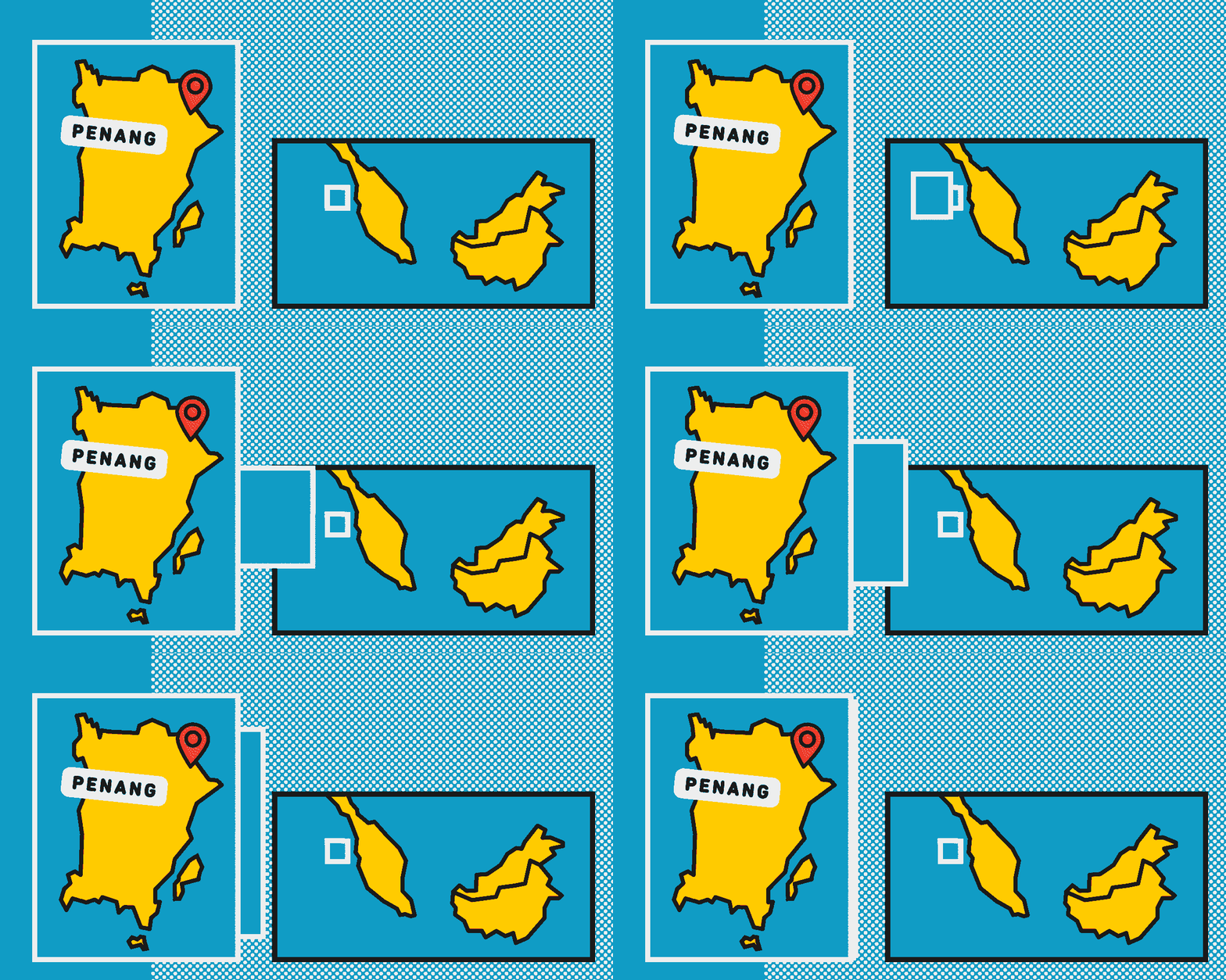
Image credit: Timmy Loen
Singapore and Malaysia have always had a friendly rivalry when it comes to food. I’m just kidding, but I’m pretty sure there are people who would actually fight each other over it.
That being said, there’s another similarity that Penang could have shared with Singapore: that of being a top global hub for tech startups. What happened to that vision?
- Too many cooks: According to Khoo Kah Lee, a tech evangelist in Penang, the involvement of state agencies conflicted with his efforts, as their agendas were “not aligned.” Lee, also known as Curry, added that because Penang is a small state with a population of 1.8 million people, “it made no sense to have two groups (i.e., state vs. non-state [actors] working on the same thing.”
- Silver spoon: All things considered, Penang actually had a great start. When Malaysia first began attracting global manufacturers to set up shop in the country in the 1970s, Penang was the location of choice due to its English-speaking workforce and connectivity with its strong port and logistics sector. Today, the state has a strong semiconductor industry and an extremely tech-savvy entrepreneurial class.
- Missing ingredients: With all its resources, however, Penang still lacks in some critical areas, namely talent development, venture capitalist funding, and mentors. Large multinationals and local tech giants tend to get the lion’s share of new talent by offering attractive pay packages, and many young founders would rather consider Kuala Lumpur or Singapore for their headquarters instead.
Heal the world, make it a better place
Quick bytes





Stay updated on the go with our mobile app.
Get latest insights with smoother, more personalized experience through TIA mobile app.