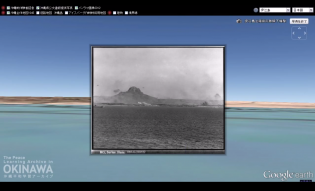
Readers of this site may already be familiar with the work of professor Hidenori Watanave and his laboratory at Tokyo Metropolitan University. He has led some fascinating digital archiving projects, including the Nagasaki Archive and the Hiroshima Archive, which collect experiences from those who experienced the bombings of those cities first hand, and presents them in a Google Earth experience. He is also producing the East Japan Earthquake Archive which presents photos of the disaster as well as testimonials collected by the Asahi Shimbun and student volunteers.
His latest project is called the Peace Learning Archive, which lets users learn about the Battle of Okinawa from 20 survivor testimonials, and 182 archived photographs and maps. The website, located at peacelearning.jp, states:
We hope that the visitors to the website will take the opportunity to view our archives and retrace the steps of the days past and walk through memories that shall not be forgotten.
Professor Watanavi tells me that when he showed his Nagasaki project to a friend from Okinawa, they had the idea to do something similar for Okinawa. The project has some local support which is good to see. He says that in the future they’d like to do other cities which were bombed, such as Fukuoka, essentially putting his efforts into this “as a lifework,” he explains.
I’ve discussed the problem of digital remembrance here before, and I really hope we can see more story-tellers, media organizations, and civic startups working to preserve this kind of information on a larger scale. Ideally, a mobile application would be a great help in collecting audio or video recordings of stories from older folks who are not tech savvy enough to get their experiences onto the internet, and then present the collected media (ideally with location and other meta data) under a common theme.
But it’s always encouraging to see projects like Professor Watanave’s. If you know of any similar initiatives in other countries, I’d love to hear about them in the comments. If you’d like to explore the Okinawa archive, you can do so on the Pace Learning website, or you can check out the video below.





Stay updated on the go with our mobile app.
Get latest insights with smoother, more personalized experience through TIA mobile app.








📅 Upcoming Events
22 October 2026
Payoneer x CSPN Summit 2026