Colin Moreshead · · 6 min read
This flea market app became a Japanese Etsy by accident

Fablic founder and CEO Shota Horii
As a fresh college graduate, Shota Horii spent a lot of time looking at women’s blogs. He wasn’t personally interested; Horii worked in online ad placement at Adingo and needed an intimate understanding of what sort of content was being produced and how blogging platforms were being used.
One pattern emerged that surprised Horii – women were trying to sell their unwanted clothing on blogs and social media like Mixi or Twitter.
Japanese retail experts estimate that the average Japanese woman between the ages of 18 and 34 has well over 50 items of clothing that “sleep” in her closet and are never worn. The nation’s second-hand and consignment shops have done well for the glut, but they offer so little to sellers that many women turned to the web for higher returns. Horii observed that the lack of security and consistency in these online sales limited their scale.
“Of course the only way to pay for things was either in person or by direct bank transfer, which can be dicey business,” he tells Tech in Asia. “But when the alternative was getting something like JPY 1,000 (US$8.15) for 30 items at a consignment shop, a lot of women were willing to risk it.”
In 2012, Horii decided to strike out on his own and in April, founded Fablic. By July of that year, his company had launched Fril, a flea market app that targeted Japanese women in need of a platform. They joined in droves, and with them came an interest in peer-to-peer (P2P) sales platforms in Japan.
A one-stop shop
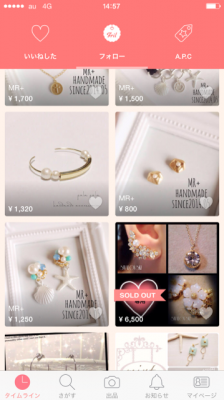
Fril begins with a profile to which users can upload pictures and descriptions of the clothing or accessories they want to sell. Items can be tagged for brand, style, and condition, so that buyers searching the app can narrow their field. Pricing is listed on the uploaded image, removing the guesswork and negotiation that usually accompanies one-on-one online sales.
As a P2P service, Fril also makes use of a seller rating system and comment stream that help users build and maintain a reputation. Payment is also available in-app, a far cry from when transactions initiated on Twitter ended (hopefully) with an envelope full of cash in the seller’s mailbox.
Quick uploads and simple UX were key concerns for Horii, who explains that surprisingly few Fril users report owning or regularly using a personal computer. For a generation of Japanese who grew up on garakei, the nation’s once-dominant flip phones, handheld versatility is everything. Fril is still a mobile service, with 60 percent of users on iOS and the remainder on Android.
Like any other online marketplace, Fril encounters its fair share of customer disputes. Horii and his team at Fablic have addressed this problem by employing more than 40 customer service representatives, most of whom began as Fril users with suggestions of their own.
Targeting Japan’s women
Scaling from Japan
An accidental incubator





Stay updated on the go with our mobile app.
Get latest insights with smoother, more personalized experience through TIA mobile app.