C. Custer · · 4 min read
Uber says it’ll get equal treatment in China, but history says otherwise
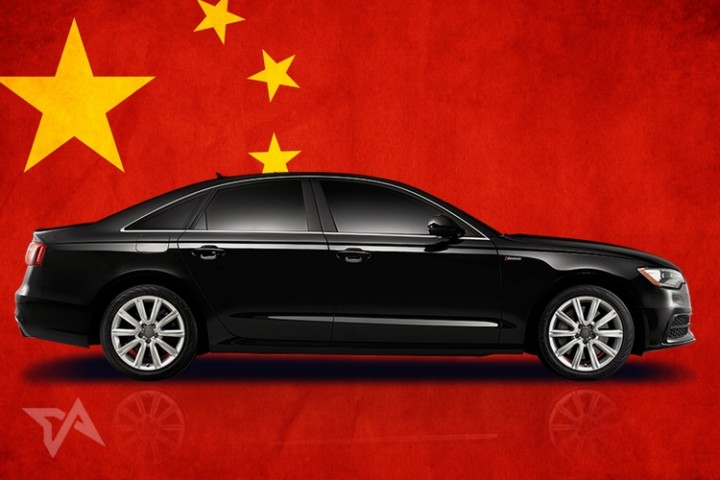
This week, Uber VP David Plouffe gave an exclusive interview to the China Daily at the International Transport Forum (ITF) in Leipzig, Germany. Apparently, Plouffe told the Chinese paper he is “confident” that Uber will receive equal treatment in the Chinese market.
Uber, of course, isn’t in a position to say anything else. Accusing the Chinese government of unfair treatment when the company is still trying to secure its foothold in the Middle Kingdom would be exceedingly unwise. But I will say what Uber cannot: I don’t think Uber will get fair treatment in the Chinese market.
Protectionism past and present
Historically speaking, there’s little reason to believe it would. None of the West’s most powerful internet companies hold a significant market share in China, In some cases – like Amazon and eBay – this is because the foreign companies were simply bested by local competitors. But in other cases, Western internet companies have faced government intervention that blocked them from the market entirely (Facebook, Twitter, Youtube, Flickr, etc.) or been the target of apparently-government-sponsored hacking that convinced them the market wasn’t worth the risk (Google). China has used its own security as a reason for enacting protectionist measures against a host of Western tech companies, and it shows no signs of stopping. Earlier this year it unveiled new regulations for Western hardware companies that many believe are actually targeted at forcing them out of the market.
No charges of threatening state security have yet been aimed at Uber, but there are already signs the Chinese government plans to play favorites. In Shanghai this week, for example, local authorities launched the first-ever government-approved ridesharing app platform – a move many see as paving the way for the legalization of taxi and ridesharing apps in China. The platform integrates the services of Didi Dache and Kuaidi Dache, Uber’s main competitor in China. But Uber has been left out in the cold. If the Shanghai platform is the game-changing precedent many analysts in China are suggesting, it’s certainly not a good sign for Uber.
The case for Uber?
Some people – including my former colleague Josh – have argued that China isn’t likely to legislate Uber out of existence because any move against Uber would also harm its Chinese competitors. But historically, China has been more than happy to apply a double-standard when that favors Chinese companies over foreign ones. Those double-standards are most easily applied when the Chinese government can make an argument on “national security” grounds, true, but Uber collects a lot of data on the habits and movements of its passengers. It’s something that has creeped out consumers even in the West, especially when Uber executives “jokingly” threaten to use that data as leverage. Now imagine that in the context of an Uber-controlled China market where Chinese government and military officials probably take Uber rides from time to time. If China’s government wants to push Uber out, I suspect it will be able to find a sufficient excuse.
 The other argument in Uber’s favor is that it has the backing of Baidu. And it’s certainly true that Baidu has a very solid record with its investments, and it isn’t in the habit of throwing money away. But Baidu may also be hedging its bets in this taxi/ridesharing app market. After investing in Uber, Baidu also put money into series C rounds for Chinese ridesharing apps Tiantian Yongche and 51Yongche. Some have theorized that it hopes to merge these companies or otherwise integrate their services with Uber, and that’s certainly possible. But it’s also possible Baidu recognizes that Uber is a risky venture in China, so it’s doubling down on its coverage of the domestic market with investment in domestic apps. (And it’s worth pointing out that even if Uber loses in China, Baidu’s Uber investment is not likely to be a failure given how successful the company already is in other markets across the world.)
The door to China isn’t yet closed to Uber, and the company still has a chance to win in China if it’s allowed to operate on an equal playing field. But will Chinese authorities allow that? Given both China’s history of protectionism in the tech industry and recent events like the Shanghai government officially partnering with its chief competitor, Didi Kuaidi, I can’t say I’m optimistic.





Stay updated on the go with our mobile app.
Get latest insights with smoother, more personalized experience through TIA mobile app.