- Premium Content It takes our newsroom weeks - if not months - to investigate and produce stories for our premium content. You can’t find them anywhere else.
 Melissa Goh · · 9 min read
Micromobility turns a corner as e-scooter startups like Beam become profitable
Bike-sharing companies had a wild ride in Asia. They seemed headed for success, but they ultimately screeched to a halt after running afoul of the authorities and grappling with the sky-high costs needed to maintain, repair, and recover the bikes.
Does micromobility still have a place in cities in the wake of bike-sharing’s demise? The performance of several e-scooter sharing companies may give hope to the industry.
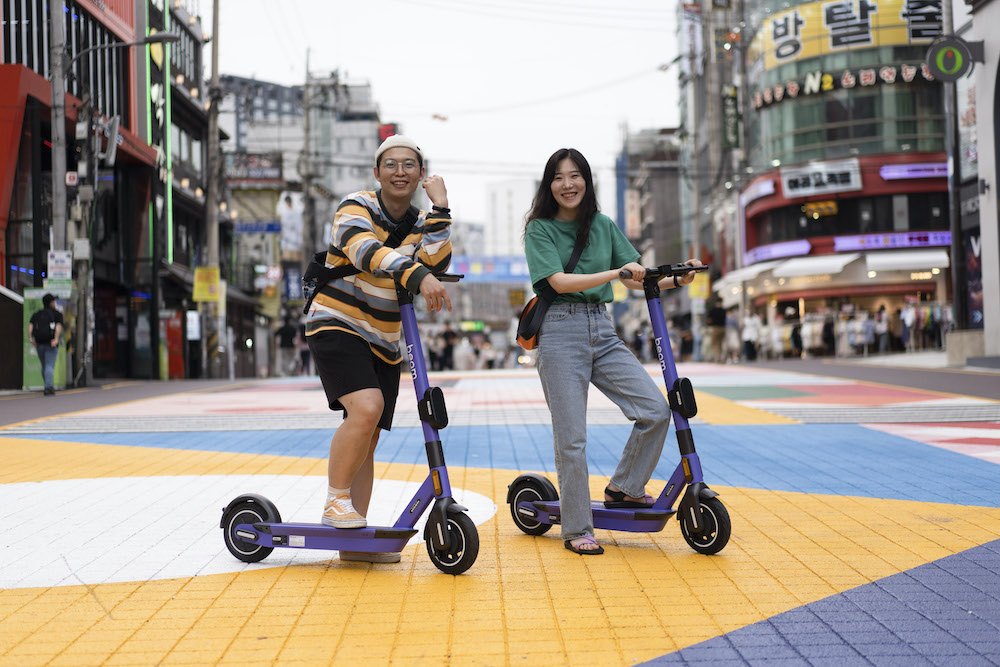
Photo credit: Beam
“We have never seen a country where people don’t want to use e-scooters,” says Alan Jiang, CEO and co-founder of micromobility startup Beam. Set up in Singapore just two years ago, the firm now has 15,000 e-scooters across four markets – Australia, New Zealand, South Korea, and Malaysia.
July to September 2020 was “the first quarter that we were fully EBIT (earnings before interest and taxes) positive,” says Jiang, who previously headed the Asia-Pacific operations of bike-sharing firm Ofo. Beam is also making a profit on every trip made, an encouraging sign that with efficient implementation, such platforms could sustainably support a city’s transportation networks.
This milestone is significant and comes after a challenging year for mobility companies. Demand for e-scooter sharing – or any form of ride-sharing, for that matter – sank to virtually zero during a pandemic that kept people at home. For instance, US-headquartered Lime underwent a painful layoff in April as Covid-19 put a pause on its operations in 99% of its markets. The company is backed by Uber, GGV Capital, and Singapore’s GIC, among others.
Now, several micromobility players are saying that they’ve turned the corner, calling dibs on profitability even if only on an adjusted (EBIT) basis.
Beam’s claim comes after Lime announced that it was the “first new mobility company to reach cash flow positive” in the third quarter. Berlin-based Tier, which operates in over 80 cities globally, also says it’s profitable, excluding interest and tax payments.
A hotspot for scooter-sharing
Much of Beam’s growth between the second and third quarter of 2020 was driven by strong demand from South Korea, a micromobility hotspot that has at least 16 players consisting of local providers like Kakao Mobility and global firms such as Beam and Lime.
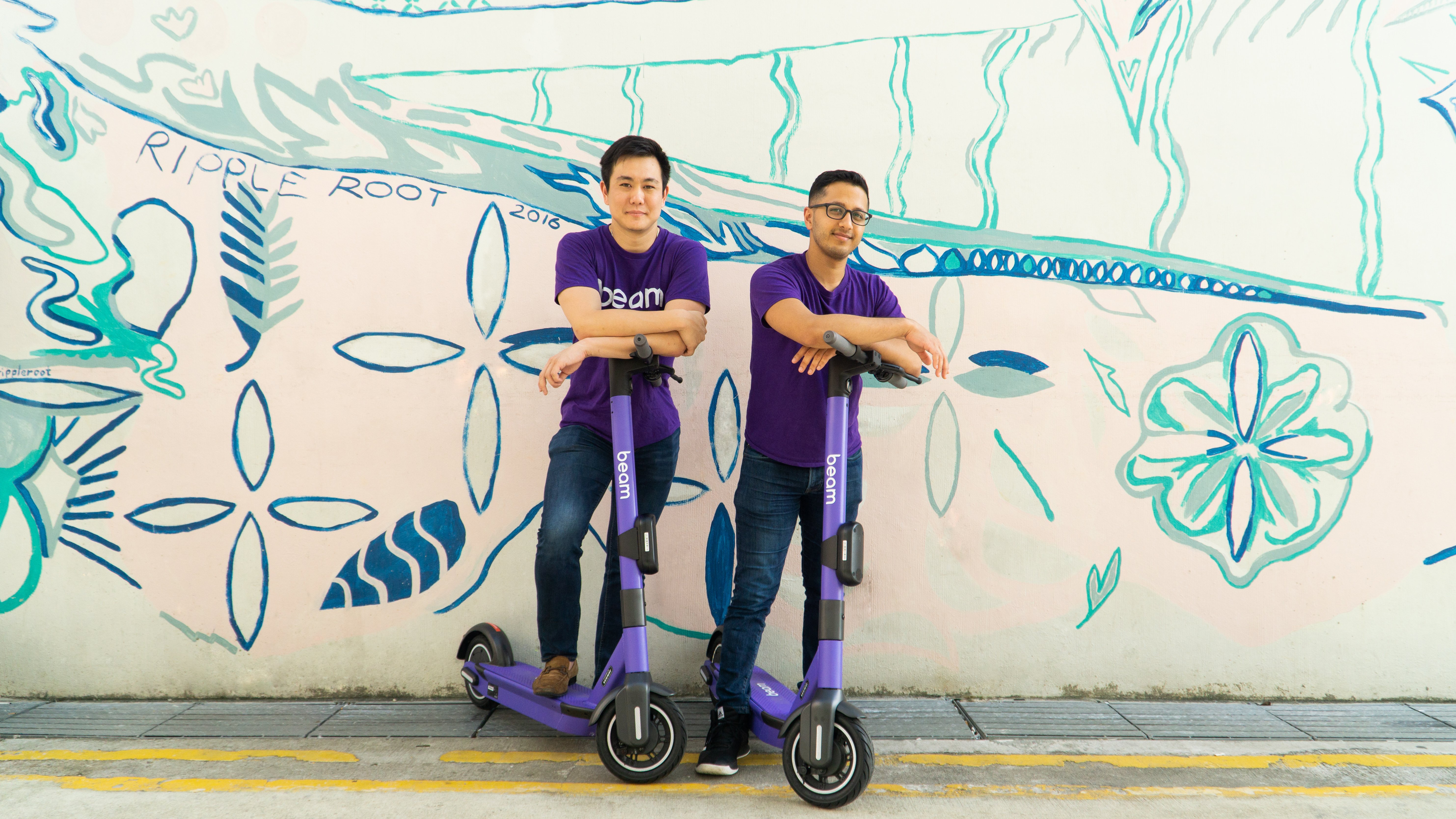
Beam’s co-founders (from left) Alan Jiang and Deb Gangopadhyay / Photo credit: Beam
“Covid has had a polarizing effect on micromobility,” Jiang says. Its impact is even more apparent when countries implement measures like the conditional movement control order in Malaysia or lockdowns in Australia and New Zealand, he adds. “Our ridership drops significantly because people are not leaving their homes. But once lockdowns are lifted, we get a big tailwind on demand.”
In the thick of the pandemic, Beam expanded its fleet tenfold. According to Jiang, South Korea was the biggest growth market of its business in the third quarter of this year.
“We were pretty lucky that we had just closed a round of funding. We believed… [that] the more vehicles we have on the ground, the more healthy our cash flows are going to be,” the CEO says.
Keeping trim
Real-time tracking
Working closely with governments
Stay ahead in Asia’s tech landscape
This is premium content. Subscribe to read the full story.
Despite bike-sharing’s demise, it seems like micromobility still has a place in cities.
We know this is not ideal. ⌛ Sign up in 20 seconds. Cancel anytime.
Our subscriber community includes professionals from these companies:





Stay updated on the go with our mobile app.
Get latest insights with smoother, more personalized experience through TIA mobile app.










📅 Upcoming Events
22 October 2026
Payoneer x CSPN Summit 2026