- Insights This article was written by a TIA community member. Insights pieces undergo the same rigorous editorial process that newsroom-produced articles have.
 Jeng Yang Chia · · 5 min read
A breakdown of the ownership and size of investment funds
As we at Saison Capital look back at our LP (limited partner) winners and improve on our LP strategy moving forward, we are particularly excited by the rise of first-time GPs (general partners) and micro-VCs, which are defined as those with less than US$150 million in funds.

Photo credit: Christine Roy on Unsplash
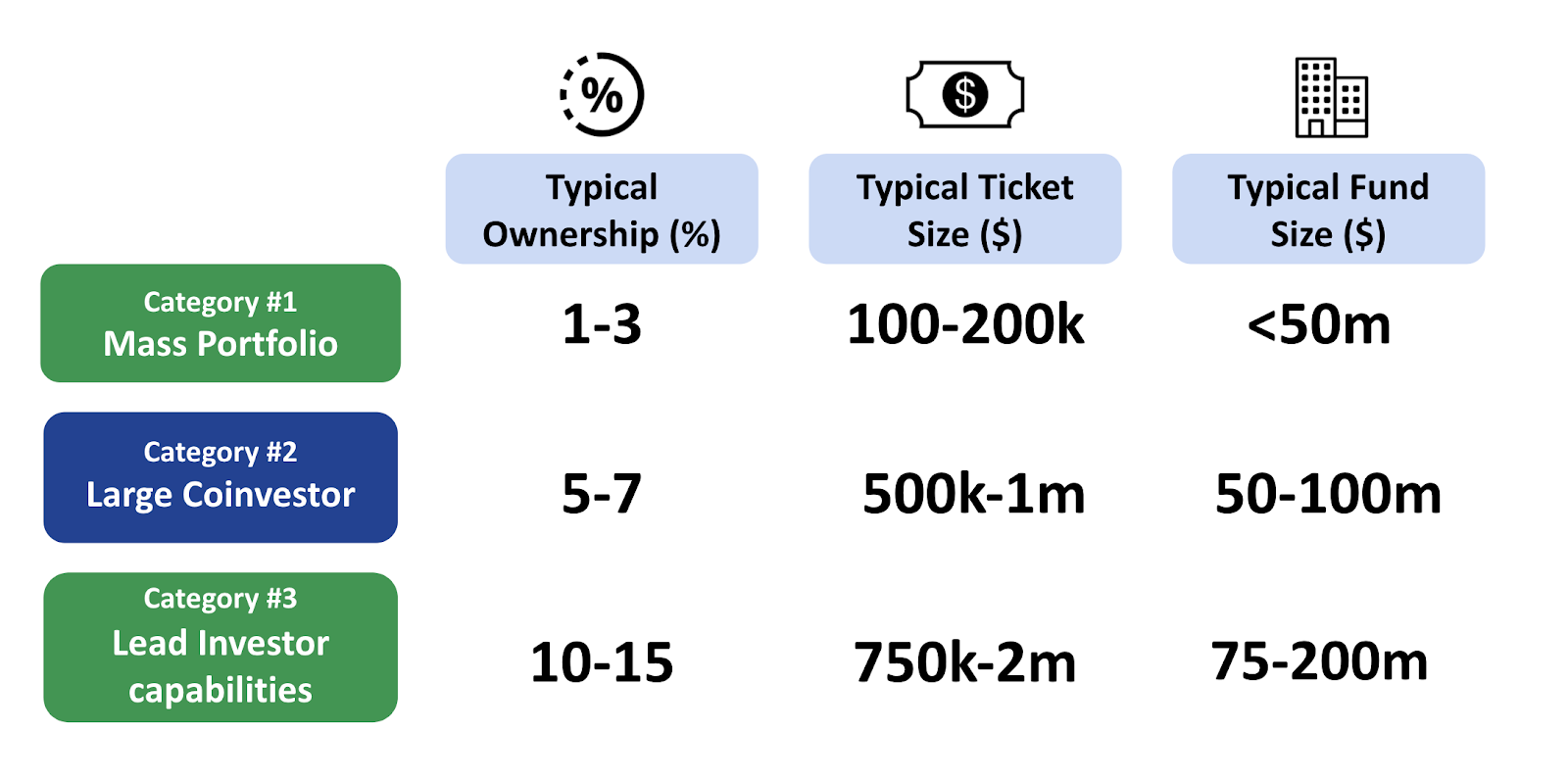
Below is an early framework we initially developed for thinking about LP investments. It introduces three categories of VCs within early-stage GPs that guide our LP investment framework.
Within early-stage GPs, we found three existing buckets:
Category 1: These have mass portfolios with about 1% to 3% ownership in the companies they have a stake in . They typically hand out US$100,000 to US$200,000 investments and have 20 to 80 companies per fund.
Category 2: These are large co-investor s with about 5% to 7% ownership. They typically invest US$500,000 to US$ 1 million and have 15 to 30 companies per fund.
Category 3: These are the ones with lead investor capabilities and usually have an ownership of about 10% to 15% and above. They typically invest US$750,000 to US$ 2 million, with 15 to 25 companies per fund.
We also think it is important to overlay an ownership strategy by fund size:
- Category 1 investors are most typically found under the US$50 million mark.
- Category 2 investors are most typically found above the US$50 million mark, up to roughly US$100 million.
- Category 3 investors are most typically found between the US$75 million and the US$200 million mark (approximately the upper limit for seed funds).
GPs optimize for meaningful ownerships when great companies exit. As articulated by Rob Go from NextView Ventures, this means:
- Investing in the right companies. It’s more important to have an only okay ownership of a great company than great ownership in an okay company.
- Having disproportionately high ownership relative to fund size, especially compared to your competitive set. This may mean not having higher absolute ownership.
- Being able to have high ownership at exit.
With the above three buckets of investors, we are now clear that fund ownership strategies do exist and vary according to assets under management (AUM).





Stay updated on the go with our mobile app.
Get latest insights with smoother, more personalized experience through TIA mobile app.