- Premium Content It takes our newsroom weeks - if not months - to investigate and produce stories for our premium content. You can’t find them anywhere else.
 Scott Shuey · · 7 min read
Shenzhen’s robot vision challenges Silicon Valley’s AI dream
When Auki Labs needed a custom-built prototype camera for its robots, its CEO Nils Pihl – a behavioral engineer based in Hong Kong – didn’t fly to Silicon Valley but to Shenzhen. A few days later, he had the camera for only US$300.
“Try doing that in America,” he says. “Good luck.”
For the last few years, headlines proclaiming China’s dominance in robotics have been driven by these types of stories that highlight Shenzhen’s manufacturing and tech power.
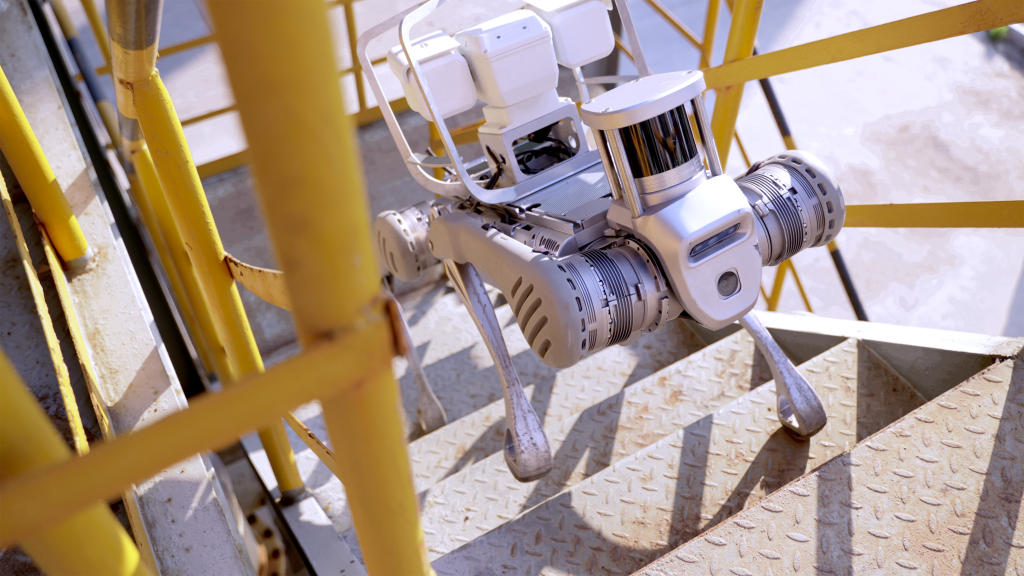
Photo credit: Unitree
China’s rise in robotics didn’t happen by accident. While Western companies chase AI, quantum computers, and bioengineering, China has made robots a national priority.
The future of robotics, agentic AI, and perhaps even economic productivity is being assembled in Shenzhen, tested in Singapore, and quietly dominating global supply chains. Chinese companies are already shipping products, scaling production, and open-sourcing the latest breakthroughs.
Why is that not the case in the US? Pihl points to the country’s expensive hardware and slow upgrades. He adds that US companies are cautious about sharing proprietary knowledge.
Experts tell Tech in Asia that the implications of China’s robot power have largely gone unnoticed despite the consequences, which in the worst-case scenario could cripple US economic power by devaluing the US dollar.
As China accelerates its robotics ambitions with sweeping state support and centralized investment, the US risks losing its competitive edge – not just in manufacturing but in long-term technological influence, says Rob Atkinson. He is the president of Information Technology and Innovation Foundation, a nonprofit, nonpartisan think tank for science and technology policy based in Washington DC.
Robots don’t happen by accident
Beijing’s strategic push into robotics isn’t a casual initiative. Backed by centralized political will and coordinated funding at the national, provincial, and municipal levels, China has created a robust pipeline from research to commercialization.
According to Atkinson, the Chinese government has committed large sums to the robotics sector, treating it as a core pillar of national power – on par with AI and 6G development.
The result: over 14,000 robotics startups launched in Shenzhen last year.
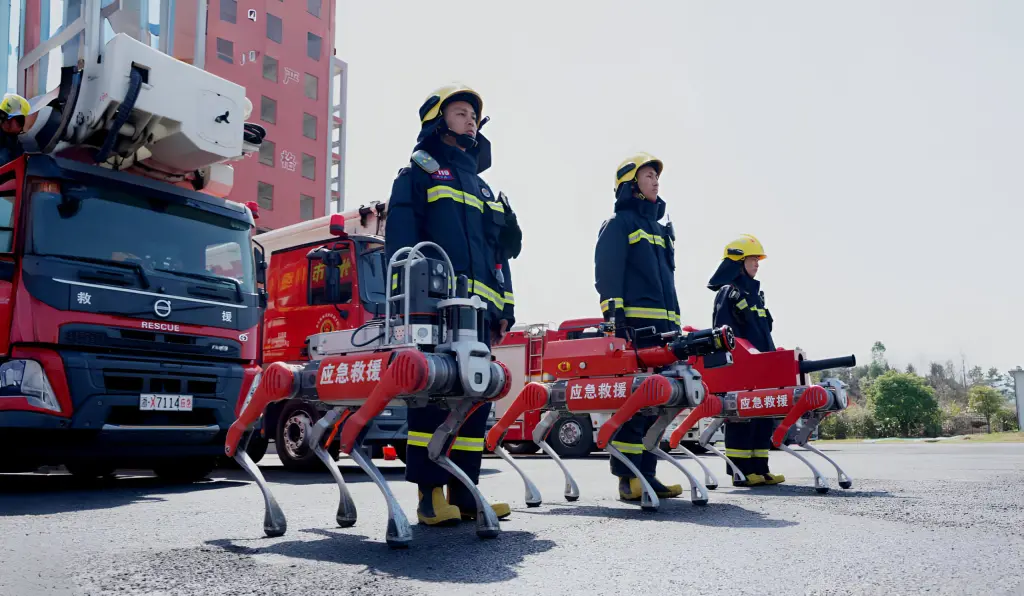
Photo credit: Unitree
Chinese robots to tank the US dollar?
Don’t expect M3GAN
Open source or die
Stay ahead in Asia’s tech landscape
This is premium content. Subscribe to read the full story.
While the US focuses on AI, China’s robot surge is reshaping global supply chains and could undercut US economic power.
We know this is not ideal. ⌛ Sign up in 20 seconds. Cancel anytime.
Our subscriber community includes professionals from these companies:





Stay updated on the go with our mobile app.
Get latest insights with smoother, more personalized experience through TIA mobile app.