J.T. Quigley · · 6 min read
Can Japan’s second city become a first-class center of innovation?
When it comes to startup ecosystems in Japan, Tokyo takes the cake as far as infrastructure and existing opportunities. The Tokyo-Yokohama megalopolis, after all, remains the largest urban area in the world – home to more than 37.5 million of Japan’s 127 million citizens, or roughly 30 percent of the entire population. From prestigious universities to the corporate headquarters of many household-name tech giants, Tokyo is where the country’s most ambitious reside – or wish to reside.
Still, that’s not to say that other areas aren’t trying. Japan’s second city, Osaka, is attempting to slow the brain drain of its local talent to the capital. For medtech and some other highly-specialized sectors, Osaka might even provide opportunities that Tokyo cannot.
A ‘Hub’ for entrepreneurs
The base of operations for many entrepreneurs in Osaka and the greater Kansai area is Osaka Innovation Hub (OIH). The Osaka City government-funded establishment is housed in the year-and-a-half-old Grand Front retail and office complex, adjacent to Osaka Station and the surrounding Umeda entertainment district. The section of Grand Front that houses OIH is called “Knowledge Capital” – a combination of private and public shops and offices that operate around the central theme of “intellectual creation.” In addition to OIH, there’s a convention center, a co-working space, an incubator from SunBridge Global Ventures, and a hands-on laboratory showcasing projects by local startups and university students.
In line with the city’s mission to promote local ventures on a global scale, OIH hosts numerous events and hackathons. Its annual Hack Osaka conference, held in Knowledge Capital’s event space, attracts entrepreneurs from Tokyo to Silicon Valley. Last year’s event focused on wearables and the internet of things, with the CEOs of BERG and Pebble smartwatch each giving keynotes. Next year’s Hack Osaka, scheduled for February 10, will feature keynotes from Khailee Ng of 500 Startups, Tim Romero of Engine Yard, and serial entrepreneur Don Burton.
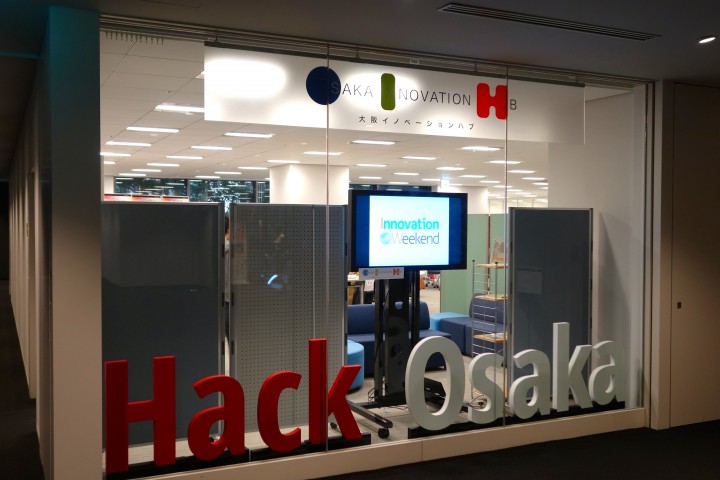
“Knowledge is necessary to innovate the city of Osaka and create new employment opportunities, so that’s why we call this area ‘Knowledge Capital,’” Masaaki Yoshikawa, Osaka Innovation Hub’s director and a member of the Osaka city government, tells Tech in Asia. “Shops and restaurants that want to exist here have to exhibit some advanced, outside-of-the-box theme.”
A Subway outlet, for example, grows its own lettuce, tomatoes, celery, and wasabi on the premises, using greenhouses that complement the dining room’s design. They’re not just for show – the veggies produced in-store are used on sandwiches and in salads.
Yoshikawa explains that the area where Grand Front now stands was previously a 24-hectare stockyard for the national railway company. The concept for the building (which is situated atop 7 of the 24 hectares) was approved in 2002 and the construction plan was fixed in 2004. The doors finally opened last April.
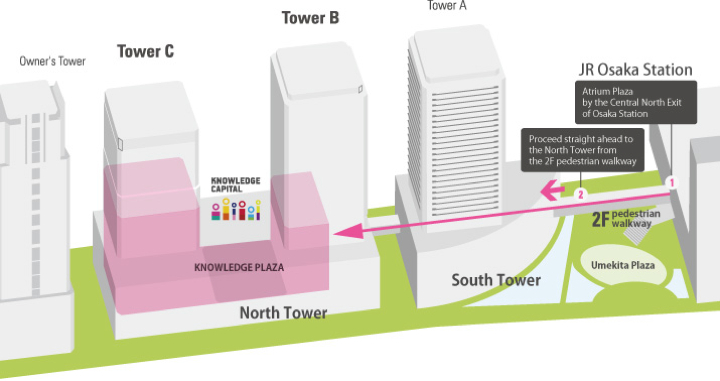
The initial response has been so strong, Yoshikawa says, that a similar building is being built on adjacent land (within the same railyard area).
Unique incentives
As a push to revitalize Japan’s stagnant economy, Prime Minister Shinzo Abe has implemented a package of reforms dubbed “Abenomics.” The so-called third arrow of Abenomics is concerned with deregulation, and through it a number of special economic zones (SEZs) have been established across the country.
See: Far from Tokyo, Fukuoka’s mayor wants to build a startup hub
“Osaka and the greater Kansai area – including the nearby cities of Kyoto and Kobe – has been selected as a SEZ for advanced medical systems and innovative medical equipment,” explains Yoshikawa. “Our target businesses are both global enterprises and startups. We will ease the terms and conditions for hiring talent, both local and foreign. Osaka wants people who are internationally-minded to use the city as a base.”
Beyond medtech





Stay updated on the go with our mobile app.
Get latest insights with smoother, more personalized experience through TIA mobile app.