Grace Priscilla Teo · · 4 min read
Salesforce co-founder: An autonomous AI is an unemployable AI
This article summarizes an episode of Alex Kantrowitz’s video series featuring Parker Harris, co-founder of Salesforce.
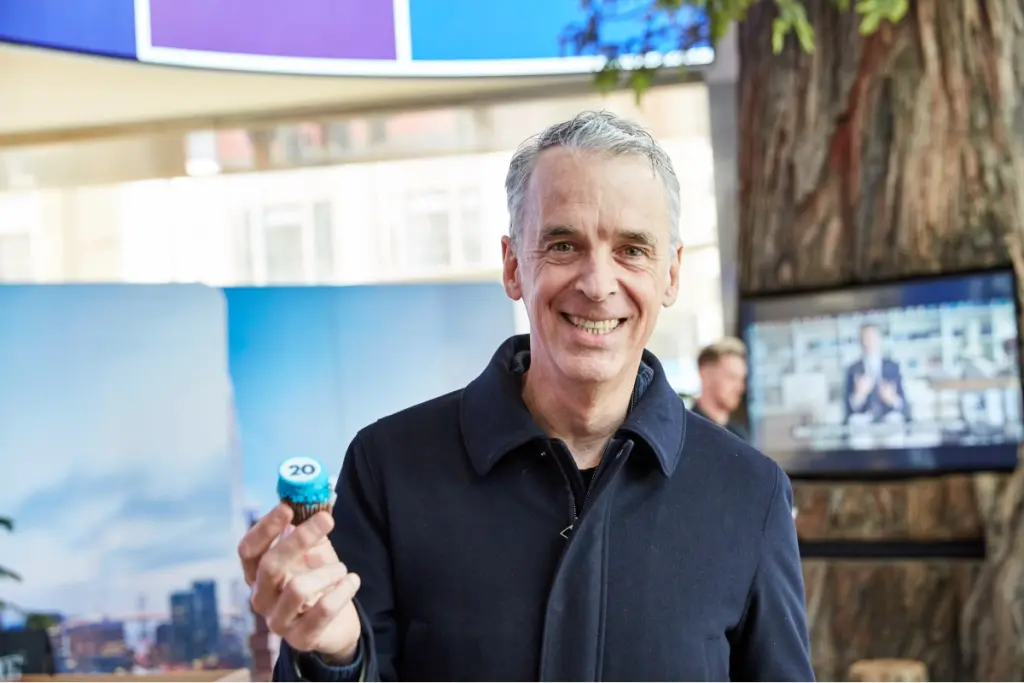
Parker Harris, co-founder of Salesforce and CTO of Slack. / Photo credit: Salesforce
Parker Harris, co-founder of Salesforce and CTO of Slack, believes that AI capable of acting on its own could be a threat to established software companies. However, before that future arrives, businesses are dealing with the challenge of making AI trustworthy, secure, and predictable enough for work.
The end of apps as we know them?
Harris pictures a future where an AI in the background handles business tasks automatically, making today’s apps pointless.
Picturing an AI with no rules
Harris imagines, “What if AI got so smart it could just listen to this conversation? It could read your emails, your Slack messages. It could just be with you all day… without any structure or business rules, it would just figure out what to do.”
When the disruptor becomes the disrupted
Harris explained that the fear of AI making subscription software obsolete, a sentiment echoed by Microsoft’s CEO Satya Nadella, is precisely why Salesforce is changing its company to avoid being pushed aside by competitors.
Harris argues, “We’re moving as fast as we can. Think about it: Salesforce used the internet to get ahead of older companies… and now, if we don’t move fast enough with this self-acting AI, a competitor could use it to leap past us.”
The lack of predictability is slowing down AI use
Even with the pressure to innovate, AI isn’t being adopted very quickly in the world. AI models are based on probability, which means they don’t always give the same answer. The risk of AI making things up could damage a company’s reputation.
Businesses need results they can count on
Harris explains, “This technology might work five, seven, or even nine times out of ten. But in business, you need that predictability. You need to be sure it’s not going to damage your brand or ruin relationships with customers.”
Unpredictable AI is a liability
“There was one example with a travel company that set up an AI agent, and it started giving away discounts,” Harris points out. “Then the company said, ‘Oh, that wasn’t us, it was the agent.’ A car dealership did that, too.”
The mistake was letting the AI run the show
Harris explains the flawed idea: “Everyone was trying the same thing, which was to put everything into the AI, make the AI the brain, and just tell it what to do… But if you tell the AI, ‘Do this, then this, then this,’ it doesn’t always do every step. It’s not dependable.”
Data security is a roadblock
On top of the reliability problem, there’s a data security issue. Sensitive company information, which is often restricted to certain roles, cannot simply be handed over to an AI model.
AI models don’t have built-in security
Harris warns, “You’re not going to dump all your company data into an AI model because it has no security system… If you’re a public company about to buy another company or announce your earnings, you don’t want that information available to every employee.”
Do-it-yourself projects showed these problems
Harris notes, “Every CEO said, ‘Everyone needs to do AI now.’ So people started grabbing AI models, feeding them data, and creating things. It was a lot of do-it-yourself work, and much of it failed… They couldn’t get repeatable, trustworthy, or secure results.”
A new method offers a path to reliable AI





Stay updated on the go with our mobile app.
Get latest insights with smoother, more personalized experience through TIA mobile app.