Welcome to Tech in Asia’s daily newsletter, your essential dose of Asia’s tech and startup buzz. Not yet a subscriber? Register here. Got a story tip? Send it to editors@techinasia.com.
In focus
- Get the tea on how Chinese milk tea brands are winning the hearts (and wallets) of Gen Z consumers
- A look in our archives at the state of Southeast Asia’s coffee scene
- Don’t come to OpenAI for your morals, says Altman
Hello reader,
I discovered milk tea was a big deal in Vietnam a few years ago, when a friend asked if I was racist for not getting in on a group order.
He was just playfully hazing a new member of the group (I think), but the point stood: There would have to be something seriously wrong with you to not enjoy milk tea. And to be honest, I was quickly converted, even if regular English breakfast tea is what I was raised on in Ireland.
Putting a late afternoon milk tea order in became a semi-regular ritual in that office. Aside from the much-needed sugar boost to get through another few hours of content marketing, it became something to look forward to that wouldn’t break the bank.
Today’s Big Story from Insights writer Olivia Plotnick dives into how Chinese milk tea brands are tapping into this type of emotional consumption to outpace corporate titans such as Luckin Coffee and Starbucks. It also goes into how other brands can use these milk tea shops’ playbooks to brew similar emotional loyalty.
She recently traveled to more than 30 mostly lower-tier cities across China and found the biggest lines outside the likes of Heytea and Red Bottle Tea House, not the coffee giants. With Gen Z disillusioned by the rat race, she argues that spaces designed for productivity, like a Starbucks, aren’t as attractive as milk tea shops, which offer instant gratification and emotional satisfaction at a reasonable price.
The real secret ingredient isn’t tea or whatever the bubbles are made with – it’s emotion.
Peter Cowan, engagement editor
The Big Story
The Starbucks vs. Luckin debate misses the real winner
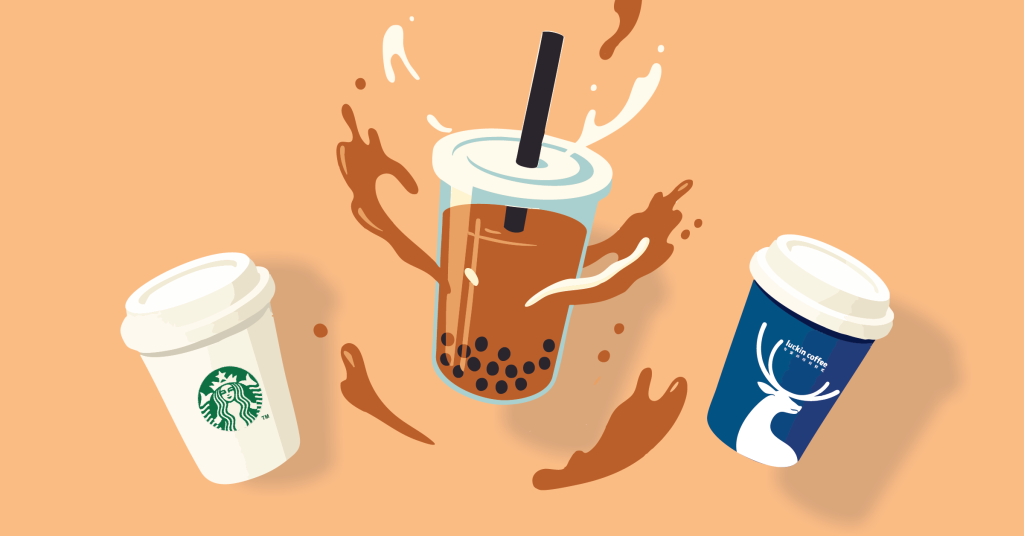
Image credit: Arsal Ysfin
What do Pop Mart’s collectible Labubu and milk tea have in common? Aside from being extremely popular in China, they both thrive on emotional consumption.
The ingredients? A sprinkle of affordability, a touch of customization, and a whole lot of accessibility.
From our archives
Trending news





Stay updated on the go with our mobile app.
Get latest insights with smoother, more personalized experience through TIA mobile app.