Michael Tegos · · 2 min read
Singapore co-working space rings in $5.5m seed round for expansion in Southeast Asia
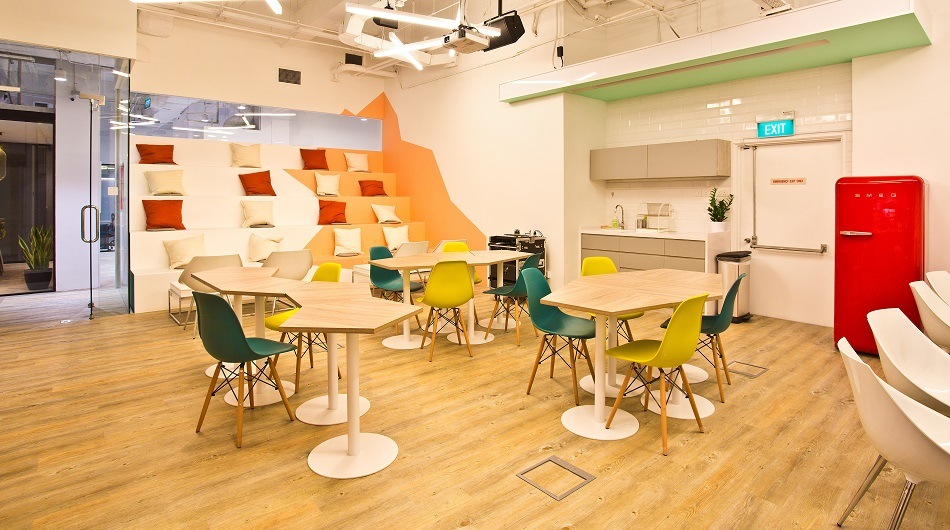
Photo credit: Spacemob.
Singapore’s co-working spaces got one more vote of confidence by investors, as Spacemob announced today it has raised a seed round worth US$5.5 million.
The round is led by Singapore-based venture capital firm Vertex Ventures. Indonesia’s Alpha JWC Ventures and angel investors from the property and hospitality industries also joined in.
Spacemob, a co-working space that launched last month, was founded by Turochas “T” Fuad of Travelmob fame. The former managing director of Skype Asia Pacific founded the home vacation rental startup in 2012. Travelmob was then acquired by rival Homeaway in July 2013, as part of the US company’s expansion plan to Asia Pacific.
(Update, 24/11: This story has been updated with comments by Spacemob CEO Turochas “T” Fuad.)
Turochas tells Tech in Asia the majority of the sum is available to the company up front and it will be used primarily for expansion. Spacemob plans to open one more space in Singapore and one in Jakarta in the first quarter of 2017. It hopes to have 30 sites across Asia Pacific in the next three years.
In addition, the company wants to develop technology for building an ecosystem around its spaces, helping its members network and collaborate. “Like a ‘Tinder’ for business,” Turochas says.
Spacemob plans to open new spaces in Singapore and Jakarta next year.
Spacemob claims to work like a “hotel operator,” unlike other similar businesses. “The way most co-working spaces work is that they sign a master tenancy agreement with a landlord and fit out the space,” Turochas explains. “Spacemob works closely with its property owners and developers where we operate co-working spaces in their properties.”
He believes this approach helps minimize the company’s expenses, as it doesn’t have to deal with most of the real estate challenges other companies face. “Think of us as an operating system to spaces,” he adds.
The tactic echoes US-based co-working space manager WeWork, which leases existing properties, while the planned tech-based network and collaboration angle sounds similar to co-working space connector Loop.
Spacemob’s current clients include coding school General Assembly and Unilever subsidiary Big Sync. Spacemob claims to be operationally profitable, and Turochas says its current space is 85 percent full.
“The idea is to allow our members to work at any of our sites around the region, which appeals not just to frequent travelers and creatives, but also to [small businesses] and [multinationals] who wish to be more asset-light,” he says in a statement.
Editing by Nivedita Bhattacharjee





Stay updated on the go with our mobile app.
Get latest insights with smoother, more personalized experience through TIA mobile app.