Stephen Chen · · 4 min read
Google denies link to China’s military over touchscreen tools that may help PLA pilots
Google has denied contributing expertise to the Chinese military after taking part in research that could be used to sharpen the accuracy of China’s new stealth fighter jet.
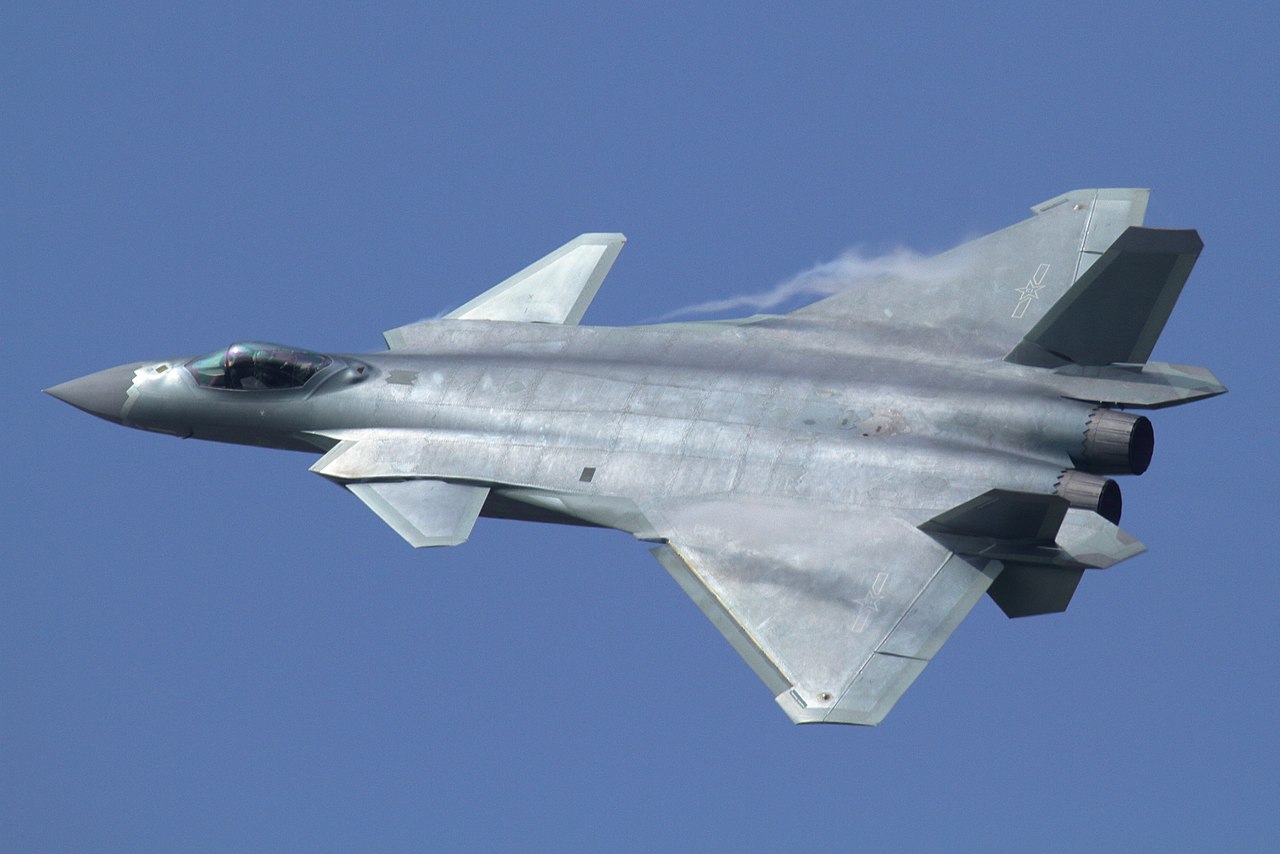
China’s J-20 during the opening of Airshow China in Zhuhai / Phot credit: Alert5
A lead scientist from Google took part in a research program in Beijing with applications that include military, medicine, and education, according to China’s largest government science institute.
The research paper, about the development of new computer-human interaction technology, focuses on a smart target-selection assistant that can speed up on-screen mobile target selection by more than 50% and improve accuracy by nearly 80%, the government institute said.
A fighter jet pilot or anti-air missile operator could, therefore, select fast-moving targets on a touch screen with unprecedented speed and accuracy, according to two mainland researchers informed about the study.
This makes China’s stealth fighter J-20 a candidate to use the system, said the two researchers, who declined to be named.
Shumin Zhai, a lead scientist in Google’s artificial intelligence team, was recently named as one of the authors of the research paper.
Google confirmed its involvement but denied a link to the military. “This paper addresses a very general research question in user experience design of how people interact with moving items on a touchscreen,” said a Google spokesperson on Wednesday. “This paper is simply not about military applications.
“There is nothing in this paper that refers to a military application. Research like this is key to improving finger or stylus-based navigation in any app.”
The Chinese Academy of Sciences said on its website last week: “This research … will have broad application prospects in military, medical, education, and digital entertainment.”
An AI weapon researcher working for the People’s Liberation Army said it was possible for foreigners from international technology companies to work on China’s defense-related projects.
“They will have no security clearance to get access to sensitive information, for sure,” said the researcher, who requested not to be named because of the sensitivity of the issue.
“But it does not matter. What we need is their brain.
“For instance, they can be asked to develop an algorithm but not briefed on the details of how the algorithm would be used.”





Stay updated on the go with our mobile app.
Get latest insights with smoother, more personalized experience through TIA mobile app.