Terence Lee · · 2 min read
Document: NSA’s XKeyscore surveillance program has servers in Southeast Asia, Japan, China
The Guardian has disclosed a new secret document from the United States’ National Security Agency revealing information about a program called “XKEYSCORE”, an international system that siphons data directly from Internet networks without users’ authorization.
The program collects and monitors data from unencrypted Internet browsing sessions in countries around the world. In one 30-day period in 2012, around 41 billion records were retrieved and stored in XKeyscore.
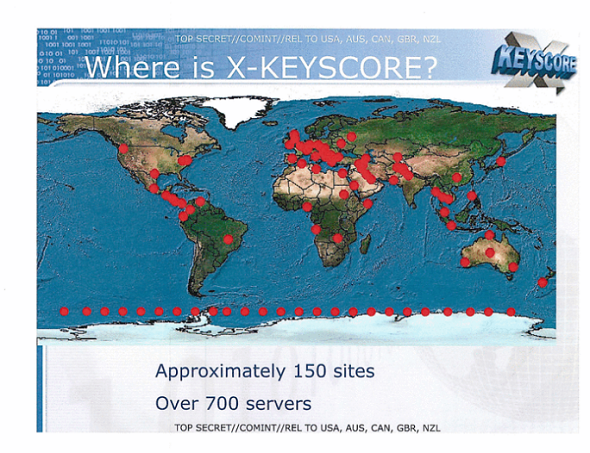
One page from the training manual shows that the program has over 700 servers from 150 sites, including countries in Asia. China, Myanmar, Philippines, and Japan appear to be directly implicated, while other countries in Southeast Asia are marked as well, though it is unclear which exact countries the document is referring to.
There is also no information on the purposes and exact locations of these servers.
According to the documents retrieved by The Guardian, the system enables analysts to obtain real-time information about a US citizen’s internet activity, which includes email, chat history, and browsing records. While the NSA needs a Fisa warrant to monitor a “US person”, no permission is needed for spying on communications of Americans with “foreign targets”.
The NSA is also able to monitor the activity of foreign nationals. Last month, American Civil Liberties Union deputy legal director Jameel Jaffer revealed in an interview with The Guardian that national security officials do pick up surveillance on Americans by tapping into foreign citizens.
The security agency has replied with a statement saying that their activities are focused and deployed only against “legitimate foreign intelligence targets” for the sake of national interests. Multiple “technical, manual, and supervisory checks and balances” are in place to prevent deliberate misuse.
While the full ramifications of this revelation and the PRISM program have yet to be felt, they could eventually shift consumer habits related to online privacy, particularly in the United States. This has implications on web and mobile startups, which are often revolved around getting user data for the purposes of analytics, personalization, and marketing. Trust is extremely important.
It could also present new opportunities. Already, startups like Snapchat and DuckDuckGo are built from the ground up to give control to users with regards to their data. We may see more companies follow in their footsteps.
Read: XKeyscore presentation





Stay updated on the go with our mobile app.
Get latest insights with smoother, more personalized experience through TIA mobile app.