Guest Contributor · · 7 min read
Want a top-notch startup sector? Reform the Singapore Armed Forces
By Yap Shiwen. A version of this article was published on The Online Citizen. Republished with author’s permission.
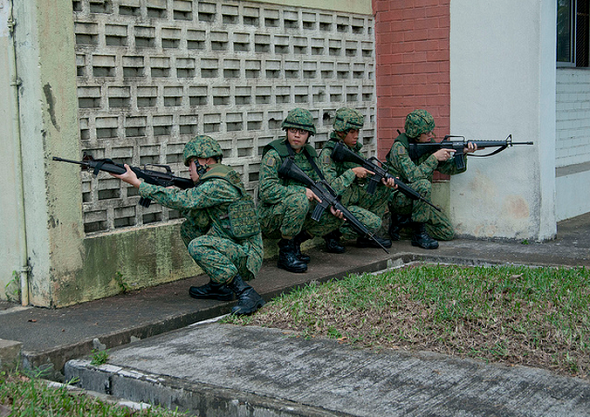
Image: Naval Surface Warriors
While funding, talent, and business environment contribute to startup success, there are many intangibles that have a role to play as well. One factor is culture capital, which are non-financial social assets that promote social mobility and entrepreneurship.
Examples of this can include education, intellect, style of speech, dress, cultural literacy or physical appearance. To compare the significance of cultural capital, let’s look at Singapore and Israel.
Both are similar in that they share a conscription-based military and exist amidst majority-Muslim states that have been at odds with them at one point or another throughout their history. They have no natural resources to speak of. Both also have a history as immigrant nations and former British territories, with diverse cultures co-existing and integrated into a single identity.
Israel and Singapore share comparatively small populations relative to their neighbours, with both being relatively young states with no significant natural resources. Yet Israel produces more startups than socioeconomically stable and larger societies like Japan, China, India, Korea, Canada and the UK. The Economist noted in a 2010 review that Israel had more high-technology start-ups and has a larger venture capital industry per capita than any other nation.
Singapore possesses a higher GDP per capita than Israel since the 1980s as one of the ‘Asian Tiger’ economies. Based on IMF estimates of GDP per capita in 2012, adjusted for purchasing power parity, Singapore’s stood at USD 61,000 against Israel’s USD 32 300.
It is also noted for the legal infrastructure, ease of funding available through state-sponsored channels for aspiring entrepreneurs –local and foreign — as well as enjoying international connectivity.
However, Israel’s start-up sector continues to enjoy more success in generating and sustaining startups. It is noted for the number of acquisitions made by global MNCs. Examples include Objet and ICQ, two Israeli firms acquired by overseas investors.
Two key differences that emerge upon a brief review of Israel’s and Singapore’s culture are the following:
• the freedom to question assumptions
• military service culture
These differences are most critical in comparing the two nations.
The freedom to question assumptions





Stay updated on the go with our mobile app.
Get latest insights with smoother, more personalized experience through TIA mobile app.