 Sarah Dai · · 3 min read
Nio, Intel’s Mobileye to bring autonomous cars to China, other markets
Electric-car maker Nio has teamed up with Mobileye, a subsidiary of Intel Corp, to accelerate the commercial development of highly automated and autonomous vehicles for China and other major markets worldwide.
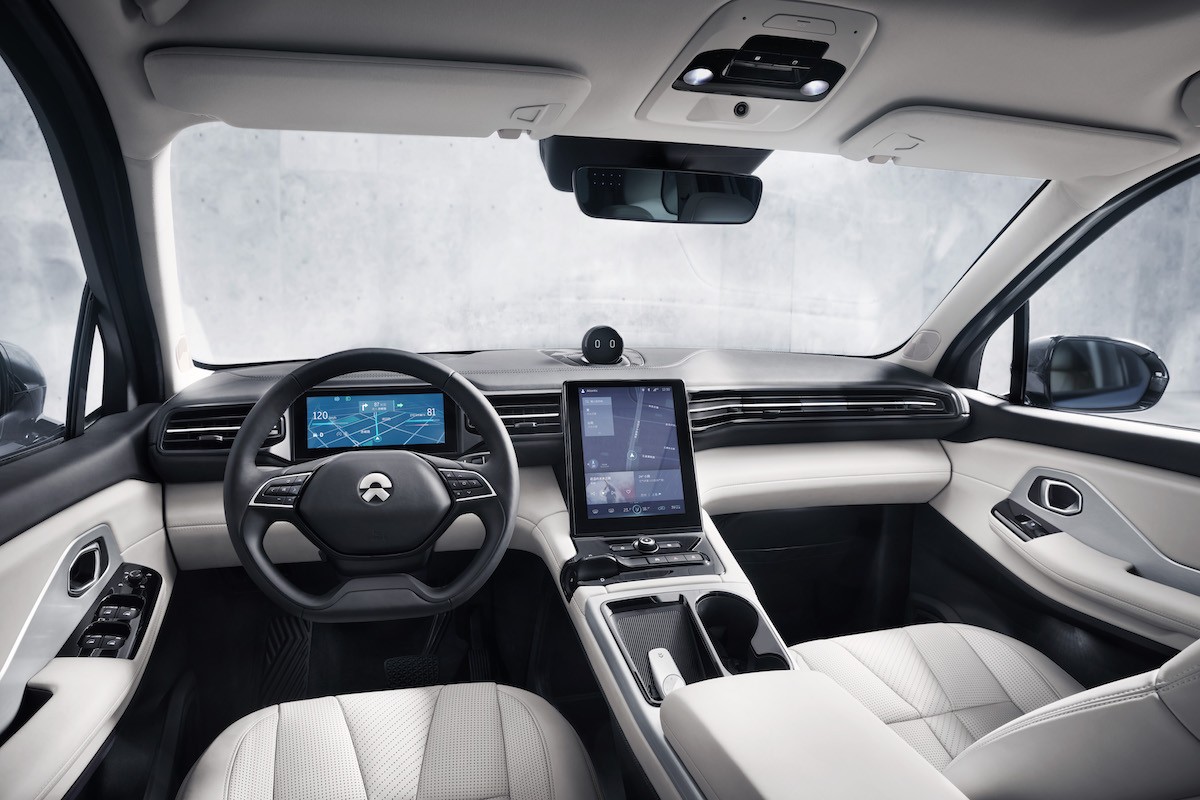
Photo credit: Nio
Shanghai-based Nio will engineer and mass produce a self-driving system, designed by Mobileye, that will enable so-called Level 4 category autonomous operation, according to a joint announcement by the two companies on Tuesday. Level 4 autonomous driving means a vehicle can run without a human driver’s attention in specific areas, such as roads designated for driverless cars.
This self-driving system, described as “the first of its kind” by the two companies, is targeted for initial release from 2022 in China, where it will be integrated in Nio’s electric cars. Mobileye, headquartered in Jerusalem, will use the system on its own driverless ride-hailing services.
“We value the opportunity to bring greater road safety to China and other markets through our efforts,” said Amnon Shashua, the president and chief executive of Mobileye, in a statement. The collaboration with Nio will also enable Mobileye to collect data in compliance with Chinese regulations, according to Shashua in a Reuters report.
The pact with Mobileye comes after Nio was named last year among the first batch of Chinese companies authorized by the Shanghai government to conduct road tests for autonomous cars in the city. In 2016, Nio received a license to test self-driving vehicles in California.
Its latest initiative may provide a much needed boost to the company, considered China’s Tesla challenger, as it pursues further job cuts and new funding amid mounting losses.
New York-listed Nio reported in September a larger-than-expected loss of 3.3 billion yuan (US$470.5 million) in the second quarter.
That loss prompted William Li Bin, Nio’s founder, chairman, and chief executive, to target a reduction of the company’s global headcount to around 7,800 by the end of the third quarter from more than 9,900 in January this year. The company’s shares have fallen more than 62% since the start of this year.
“We look forward to building our strategic collaboration with Mobileye in autonomous driving technology development to further enhance the safety and capabilities of our vehicles as we strive to be the next-generation car company,” Li said in the joint announcement.
Nio, which is backed by Tencent Holdings, is among dozens of electric vehicle companies established in China over the past few years, with an eye on upending larger carmakers such as Toyota Motor Corp and Tesla. China has been pushing for a strong EV sector to rival efforts in the West.
China’s electric and hybrid vehicle makers, however, have faced a downturn this year after the government scaled back its subsidy program. Beijing slashed subsidies on new-energy vehicles (NEVs) by up to 60% as part of a policy to improve technological standards in the green car market.
Sales of NEVs in the country fell for the third consecutive month in September, down 34.2% from a year earlier, according to data from the China Association of Automobile Manufacturers.
As the company’s outlook dimmed further, Nio announced last month that its chief financial officer, Louis Hsieh, who was responsible for taking the carmaker public, was leaving “for personal reasons.” The company is still searching for a replacement.





Stay updated on the go with our mobile app.
Get latest insights with smoother, more personalized experience through TIA mobile app.








📅 Upcoming Events
22 October 2026
Payoneer x CSPN Summit 2026