C. Custer · · 3 min read
How Jack Ma convinced a Chinese game company to adopt ‘wolf culture’
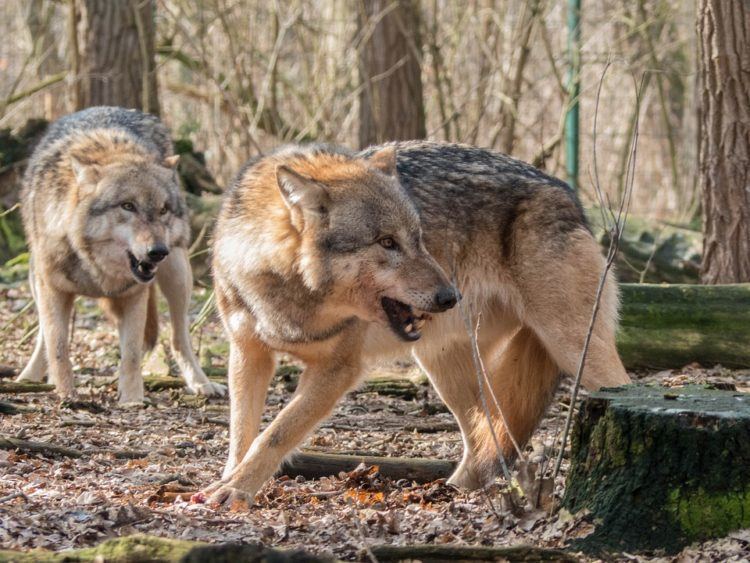
Photo credit: Pixabay.
Giant Interactive is making some changes. It’s going to be hungry like the wolf, says chairman Shi Yuzhu, and it may have Alibaba’s Jack Ma to thank.
Giant is one of China’s largest game developers and publishers, and its chairman Shi Yuzhu is one of the country’s most well-regarded entrepreneurs. But you could be forgiven for not having heard of it, as the company has stagnated somewhat in recent years, with competitors like Tencent and Netease having clearly surpassed it in China’s PC gaming market.
Shi Yuzhu wants to change things at the company, and he began last year with a shakeup that saw Giant’s upper management hierarchy simplified, a number of leaders fired, and pay raised significantly for crucial R&D staff. Now, he’s announced to the company that it will be implementing “wolf culture.”
There are four aspects of wolf culture, at least as Shi tells it:
- First, the company must be risk-aware but not risk-averse (wolves move fast and burn a lot of energy, so they’re always on the brink of starving).
- Second, the company must have a strong nose for market opportunities (like wolves smell prey).
- Third, employees at Giant have to be capable of spontaneous attack when the moment is right, like a pack of wolves can attack in a coordinated fashion without needing instructions from their leader.
- Fourth, the company must work together as a team naturally, just as wolves do (wolves help and support each other without needing to be asked or ordered).
Why Jack Ma hates rabbits

But Jack, they’re so cute! Photo credit: Pixabay.
The opposite of “wolf culture” is “rabbit culture.” And apparently Shi came by this whole idea after a conversation in which Alibaba founder Jack Ma convinced him that “rabbits” are the biggest internal threat to any company.
Here’s what Shi told his company about it:
“I’ve talked to Jack Ma several times about the question of rabbits and wolves, with the focal point of our discussion being: which is worse for a company to have internally, rabbits or malicious saboteurs? In the end, Jack Ma convinced me that rabbits pose the greatest threat to the company. Saboteurs will reveal themselves through their behavior, so the people around can observe them, report them, and defend against them. When everybody’s defending, a saboteur can’t do too much damage, or at least their damage will be a limited, one-time thing.
“So why are rabbits the greater danger? Rabbits get along well with everyone and people like them, but they don’t produce results. Rabbits like reproducing more than anyone, so they’re always looking for others of the same sort to create more rabbits and create a rabbit nest that will occupy a department’s resources and opportunities. If core departments at a company are rabbit nests, then you get ‘rabbit culture,’ and you lose your fighting strength and market opportunities.
“Rabbits aren’t attack-minded like wolves. They live day by day, and they’re easily satisfied, casually eating grass. There’s no strength of spirit [with rabbits].”
So, any “rabbits” still at Giant Interactive can blame Jack Ma when they’re let go. And firings are likely to happen. As part of his address Shi said, “I want to get rid of all of the rabbits” and “we’ll get rid of as many rabbits as we find” because a small number of wolves will do more for the company than a large number of rabbits.





Stay updated on the go with our mobile app.
Get latest insights with smoother, more personalized experience through TIA mobile app.