Celia Chen · · 4 min read
A nerve-wracking but enjoyable passenger drone test ride
Futurists have been promising us flying cars for quite some time, and who can forget the imagery from movies like Blade Runner and The Fifth Element?
Those dreams are now closer to reality though, thanks to Guangzhou-based Ehang, which describes itself as the world’s first electric passenger-grade autonomous aerial vehicle maker.
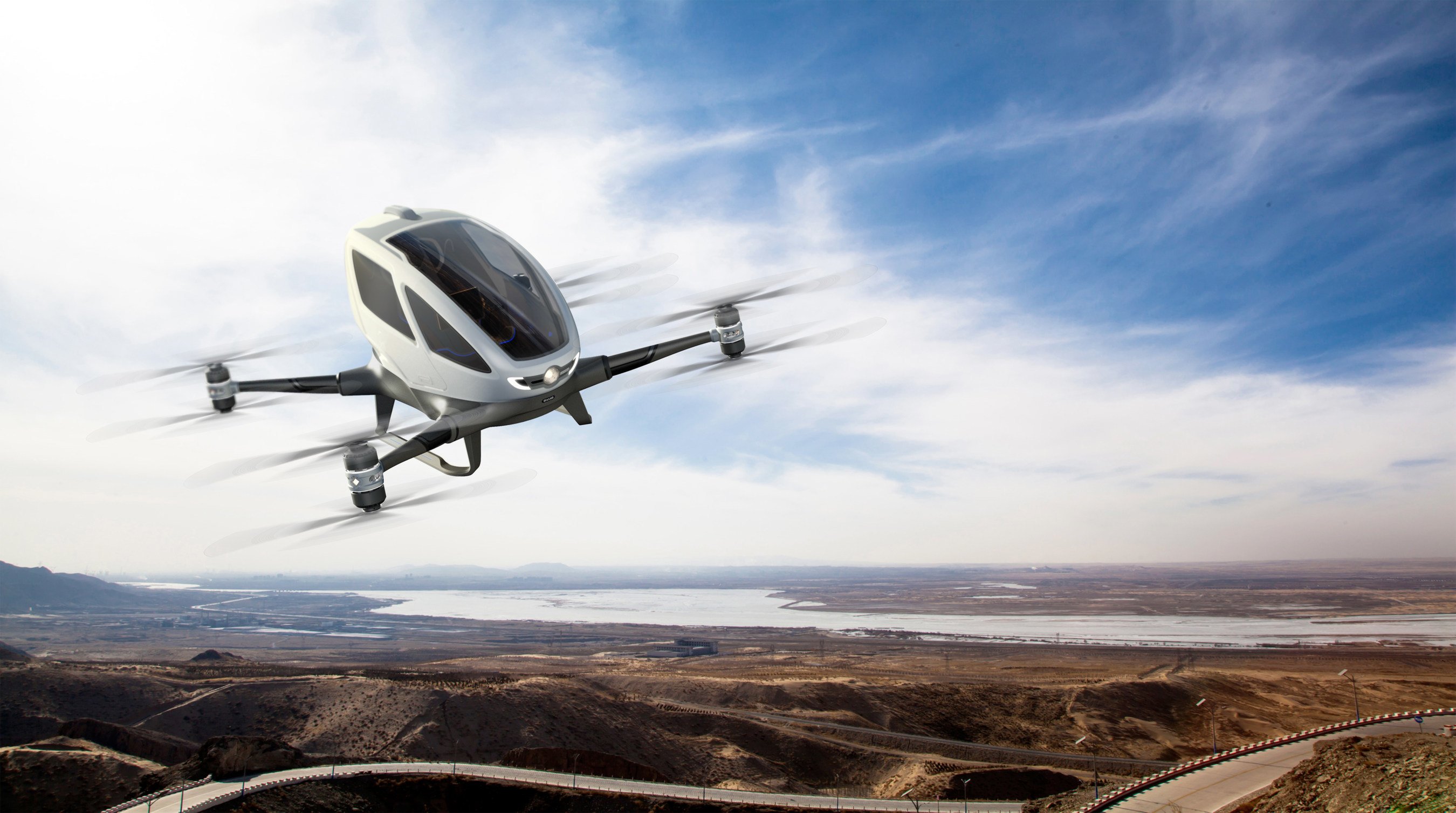
Ehang 184 / Photo credit: Ehang
Ehang’s mission statement is to “let humankind fly freely like a bird” and its vehicles are already in use in China for aerial cinematography, photography, and survey missions.
When offered the opportunity to take a test flight, I jumped at the chance, overcome with a mixture of emotions including fear, excitement, anxiety, and – as a Chinese person with a passion for technology – pride.
Ehang’s test flight center is based in a former national park in this southern corner of China, filled with greenery, trees, and a beautiful lake, whose blue waters shimmered in the heat of the afternoon sun.
I was sweating, and not just because of the humidity.
After exchanging casual chitchat with Ehang representatives, my videographer colleague shouted out when Ehang’s 216 flying car came into view.
Although I’d first seen it at a Barcelona technology fair two years ago, I felt a pang of fear when I realized this small autonomous vehicle was about to take me 100 meters up into the air very soon.
The black-and-white aircraft was rolled into a take-off square in front of the main building, surrounded by several young engineers with clipboards. I felt like I was about to undergo a surgery-like experience.
I walked over and grabbed one of the young scientists. “Hi, if you’re in charge of today’s test, can you please guarantee my safety?” I stammered. “I am an only child and my parents could not bear my death.”
“Don’t worry, I can guarantee your safety,” he said. “You’ll feel safer if you know how it works though. Have a chat with my colleagues over there.”
I ran over to the engineers and asked them a bunch of nervous questions that I’d thoroughly prepared for the story, but which now seemed like life-or-death issues.
They told me the aircraft was electric-powered and self-driving, meaning all I had to do was sit inside. The Ehang 216 has 16 separate electric motors, connected to 16 propeller blades.
“If any of the motors or propellers fail, others will adjust their rotor speed and make the aircraft stable and safe,” the engineer said. “There has been no accident in over 200 passenger flights so far […] It is safe, and please enjoy your flight.”





Stay updated on the go with our mobile app.
Get latest insights with smoother, more personalized experience through TIA mobile app.