 Kylee McIntyre · · 5 min read
Uber and Whatsapp meet school buses: how an app is keeping India’s children safe

Photo credit: Pixabay.
Update 7/28: The app has now launched, and you can find it here (Google Play) and here (Apple Store).
As Ashuvinder Ahuja says, epiphanies happen at very strange times. He got his in the middle of scorching Delhi heat, and it involved watching his wife wait for a school bus.
“I was working from home, and I could see my wife waiting outside,” the George Mason alum told Tech in Asia. He has previously worked for user engagement company WebEngage and data protection software company Druva. “If you’ve been to Delhi in May, it’s insane. It’s hot.” On a whim, he decided to time how long she was out there: 17 minutes. As his research later found, that’s the average amount of time parents or caregivers can expect to wait for buses for schoolchildren in Asia.
Why, in this day and age, does my wife have to wait?
“Why, in this day and age, does my wife have to wait?” he recalls asking himself. He did some research and found that schools have GPS monitoring systems for their buses, but parents didn’t have access to that data. He found that the data itself was a mess – what was out there was incorrect, with sketchy sources.
He decided to reinvent the bus tracking system as best he could. His first task was to include parents. His second task was to eliminate costs for schools. GPS tracking systems often involved costly infrastructure, installation, and configuration. The solution lay in a smartphone, he realized.
In October 2015, he started AppAlert, a cloud-based geo-tracking mobile app that lets schools, buses, and parents track buses and students’ locations. The startup is based in the US but right now it operates mostly among Indian schools.
Safety and efficiency
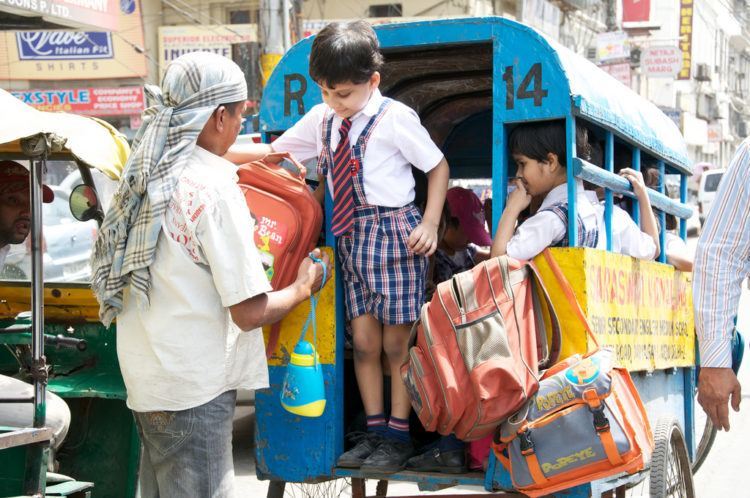
Photo credit: Jon Connell.
To install AppAlert, a school needs an Android device. Their buses also get Android devices, given to a caretaker on the bus (who may or may not be the bus driver). The rest of the app is free. The bus and school plot the daily route one time by having the bus drive it. From then on, the destinations – and the roads needed to get there – are set.
The point is to bring an Uber-like efficiency to the app.
As children board and disembark the bus, the caretaker simply taps the children’s names. Parents will then get notifications when their children get on or off the bus (useful especially if someone else is dropping the kids off at the stop), as well as when the bus is ahead of schedule or deviates from the planned route for any reason.
Ashuvinder mentioned while we were talking that most of his staff was out at schools at the moment getting AppAlert set up there. Given enough people to get the initial routing done, he said, AppAlert can be up and running for the school in one day.
Playing the long game





Stay updated on the go with our mobile app.
Get latest insights with smoother, more personalized experience through TIA mobile app.












📅 Upcoming Events
22 October 2026
Payoneer x CSPN Summit 2026