 Stefanie Yeo · · 5 min read
How to navigate the challenges of Vietnam’s digital bank scene

In Southeast Asia’s finance space, the phrase ‘digital bank’ is exciting. Across the region, new fintech firms, tech companies, and incumbent banks are launching digital banking services in place of physical branches.
Vietnam is no exception, and digital banks have plenty of potential to make a difference in the country. It is home to a young population – one that seeks flexible and efficient digital services and solutions, and while 70% of Vietnamese adults do have a bank account, many of them remain underserved and lack access to other financial products such as investments and credit.
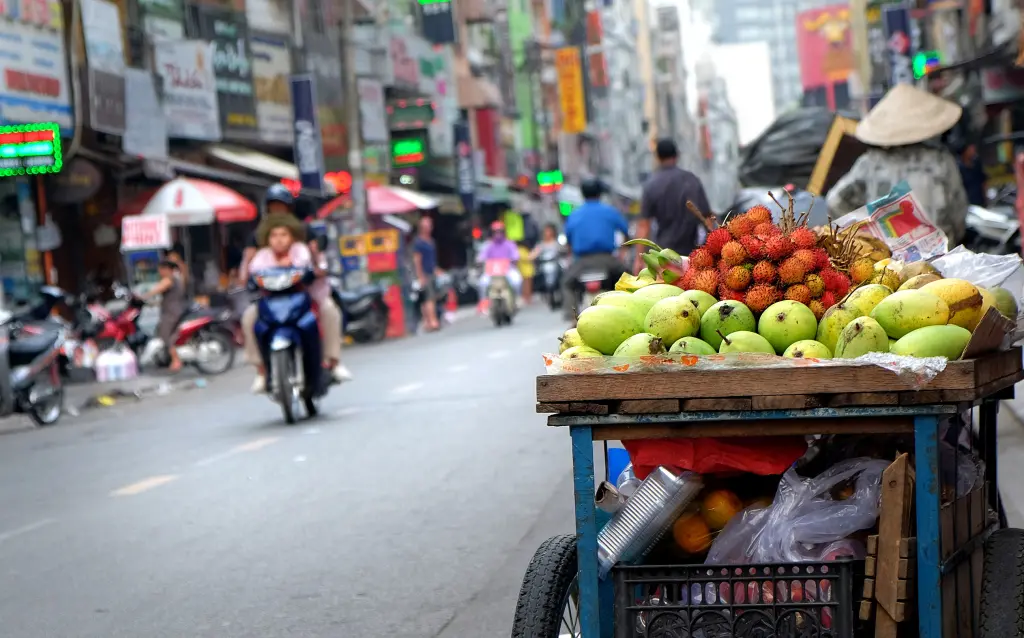
A fruit vendor in Ho Chi Minh City / Photo credit: 123rf
Plus, the nation’s central bank approved electronic know-your-customer (eKYC) processes in 2020 to allow users to open of bank accounts online, making it easier for citizens to set up bank accounts and reap the benefits of banking.
Despite these developments, digital banks haven’t had an easy time in the country.
A challenging market
Unlike other markets in Southeast Asia such as Singapore and Indonesia, which have launched digital bank licenses for non-banking players, Vietnam’s regulations for digital banks are not clearly defined. This means that any startup looking to launch a digital bank has to partner up with an existing bank, which can slow down the process significantly.
“It commonly takes six months to a year for a traditional bank to develop new products and services, due to all the processes and guidelines involved,” says Nguyen Huu Quang, CEO of Cake, the digital banking arm of Be Group, which operates Vietnamese ride-hailing service Be.

Nguyen Huu Quang, CEO of Cake / Photo credit: Cake
While Vietnam has a young population, many are hesitant about digital banking services, citing concerns such as identity theft and security. Financial literacy in Vietnam is still low, which makes it difficult for banks to get users to use services beyond opening a savings account.
Navigating roadblocks
Cake is one digital bank that’s rising to the challenge of serving Vietnam’s underbanked consumers. Launched in 2021 as a joint venture between Be Group and VPBank, Cake aims to be a “simple, trusted, and delightful bank” that brings greater financial inclusion to Vietnamese citizens by making digital banking via mobile phones easy and accessible.
According to Nguyen, Cake seemed like a natural extension of what Be Group aims to do with its mobility services: bringing convenience to its users. The firm worked with VPBank, which is one of Vietnam’s largest lenders, to develop the Cake platform, using the incumbent’s expertise and experience to build its framework. It then worked with fintech firms to accelerate the development process.

Photo credit: Cake
Cake worked closely with cloud banking platform Mambu to develop a full suite of banking services like those of established banks.
Cake opted to use Mambu’s cloud solutions as the basis of its core banking system – the back-end technologies involved in key banking activities such as account opening and transactions processing. By using cloud banking, Cake can launch new services within weeks, where traditional core banking systems took years. Additionally, it transformed its core banking system in just 74 days – a record in Asia.
Cake also inked a partnership with payments solutions firm Radar Payments to develop its end-to-end payments infrastructure.
“With the help of these fintech firms, it only takes one to two months to deliver new products to customers,” shares Nguyen. “This allows us to invest more into the people, products, and marketing behind Cake, instead of on the development process.”
Getting customers on board
Customer acquisition remains a significant challenge for digital banks, but Cake’s connection with Be Group helped it overcome this barrier. The digital bank saved on customer acquisition costs as it already had a large pool of potential customers from the drivers and users who use Be Group’s ride-hailing services and trust its technology.
Cake focused on integrating its platform with the Be app, enabling drivers and customers to seamlessly make payments on Be via Cake. Be Group ecosystem’s also added value to Cake’s offerings, giving customers access to services such as ride hailing, hotel bookings, and even insurance.
“Through this, Cake was able to offer clients financial services and smooth payments, as well as a rapid and secure experience throughout the pandemic,” adds Nguyen.
The firm also has staff to guide users through setting up an account on Cake, navigating the eKYC process, and understanding the digital bank’s offerings.
Cake is also aware of the fact that Vietnam’s tech-savvy youth are a large segment of its target audience. That’s why the firm positioned itself as “more than a banking service,” adding small but significant features to draw in the younger generation.
For example, the bank, in partnership with MasterCard, offers its customers an international debit card in colors and designs that appeal to young consumers. It also lets users add creative elements to transactions.
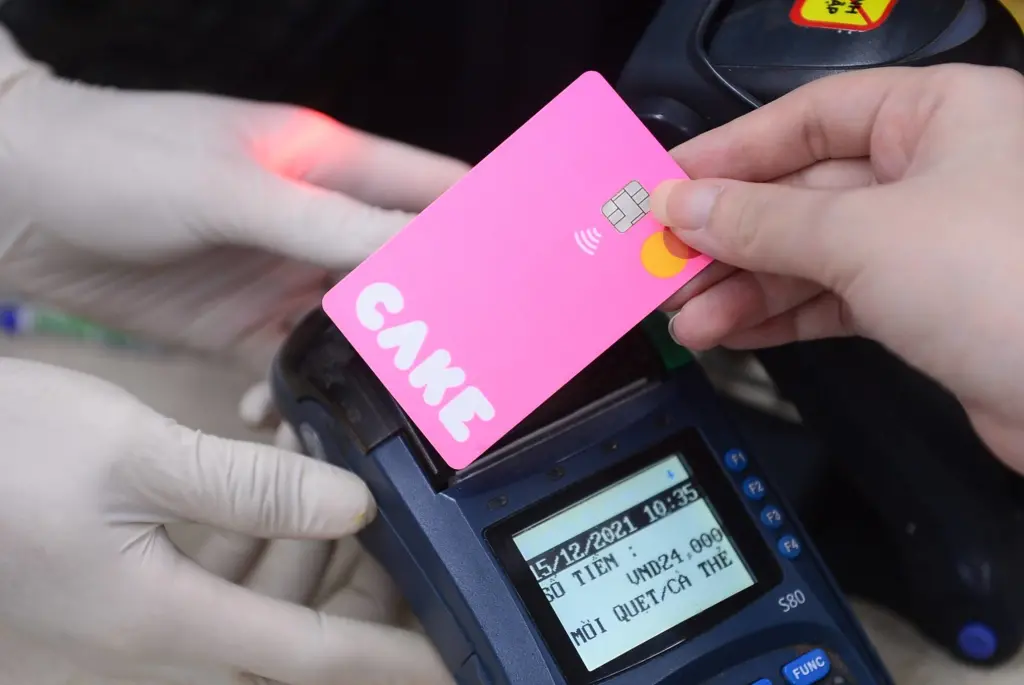
Photo credit: Cake
“Cake aims to boost engagement in each transaction – for example, when you make a transfer, you can add emojis or message cards to the transaction, showing off your creativity,” says Nguyen. “This helps meet the demands of young customers for creative offerings, and shows that Cake is more than just a financial product – it’s also a platform to send messages, express sentiments, and develop trust.”
These approaches have served Cake well: The firm had 1 million customers on its platform by the end of 2021 – within just 11 months of operation – and is looking to roll out even more offerings, including microfinancing solutions, in 2022.
“We set a goal of having one million users at the beginning of 2021, and we achieved it despite it being extremely challenging,” shares Nguyen. “By investing in technology infrastructure and having quick and flexible leadership, we were able to achieve this.”
To a digitally-banked future
As the Covid-19 pandemic continues to drive digitalization and bring more people into the digital economy, Nguyen is confident that digital banks – and fintech as a whole – will flourish in Vietnam.
In his view, there will be greater collaboration between banks and fintech firms, and technology like AI and big data will help change the way people bank.
“The industry will be producing new financial products quicker and more affordably,” he says. “The Covid-19 pandemic has fundamentally altered user behavior, and the digital economy will continue to expand dramatically in the near term – digital transformation is inevitable.”
Cake is a Vietnam-based digital bank launched by Be Group and VPBank that aims to make banking easy and accessible.
Learn more about Cake here.
This content was produced by Tech in Asia Studios, which connects brands with Asia’s tech community. Learn more about partnering with Tech in Asia Studios.
Stay updated on the go with our mobile app.
Get latest insights with smoother, more personalized experience through TIA mobile app.
Recommended reads
 Paytm shifts management, COO steps down
 Jack Ma calls Alibaba staff to welcome change in morale-boosting letter
 Indonesian agritech firm rakes in $2.5m in seed money to support middlemen
 Behind Ant Group’s revived SEA ambitions
 Malaysia’s GHL extends Grab’s PayLater to offline merchants
 How banks look to take over fintech with embedded finance
 Vietnam’s Masan Group to invest $105m in SG fintech firm
 Vietnam’s QR code revolution puts pressure on digital wallets
 Tonik CEO on BNPL: ‘I prefer to call it sales finance’
 Indonesia’s FDA to Halodoc: Take down listings of prohibited drugs





Editing by Winston Zhang and Arpit Nayak
(And yes, we’re serious about ethics and transparency. More information here.)




📅 Upcoming Events
22 October 2026
Payoneer x CSPN Summit 2026