Paul Bischoff · · 3 min read
Is this “Napster for apps” too risky for Chinese investors, or is it just a bad idea?

Dennis Chu, co-founder of Swably
At a get-together hosted by Singtel last night for local entrepreneurs and investors in Beijing, I met Dennis Chu, a UI/UX designer and self-proclaimed “hustler.” Chu told me that, for the last two years, he and one co-founder had been working to build “the Napster of apps.”
Swably, as he called it, is a peer-to-peer sharing app that allows users to upload and share free Android apps straight from your phone to anyone else using it. It’s meant to be especially useful for developers who can’t gain a foothold in the major app stores, but could also be used by less scrupulous users to share paid apps for free. The current beta app has about 4,000 combined active users on both the English and Chinese versions.
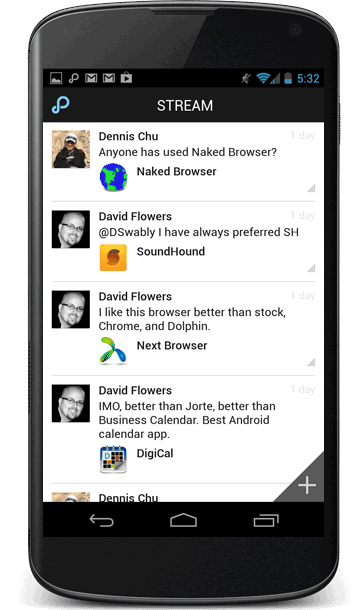
It’s a novel idea, but Chu isn’t confident in his ability to lure investment for the venture in China.
“All these guys,” says Chu, gesturing toward the investors in the room, “they just want to invest in something safe.”
Instead, Shu wants to take his venture to Silicon Valley, where he believes investors are more open to putting their money into untested business models. Speaking of which, I asked Chu, “How are you gonna make money off this?”
Chu smiles in a way that tells me he’s heard that question all too often and replies, “Why do you wanna talk about money?”
That’s certainly not an answer that will get you far as an entrepreneur in China. As my colleague noted in a recent editorial, Asia is still solving systemic problems like online payment, logistics, infrastructure, and internet penetration – many of the same problems the west had to solve 10 years ago. That means most entrepreneurs and investors aim at low hanging fruit, which only require minor modifications to western business models to adapt to the local market.
As a result, Chu feels when something with the potential to be truly disruptive comes along, investors in China won’t be interested. He says when he visited Silicon Valley, VCs were much more receptive. I asked Chu what the SV investors had to say concerning Swably’s potential intellectual property issues.
“They said, ‘if you can get good traction, then we can get you a good lawyer.’”
Chu is hedging his bets that his product won’t suffer the same fate as Napster because developers are not united in the same way that musicians are under major record labels. On Swably, terms of use stipulate only free apps are allowed, but it really has no way to enforce this other than a “claim” option for developers and a “flag” option for users to alert admins to inappropriate content.
“I know it’s a grey line,” says Chu, “but if it’s not dangerous, then it’s not worth doing.”





Stay updated on the go with our mobile app.
Get latest insights with smoother, more personalized experience through TIA mobile app.