Michael Tegos · · 4 min read
Singapore’s 2017 Budget focuses on more funding and international expansion for startups
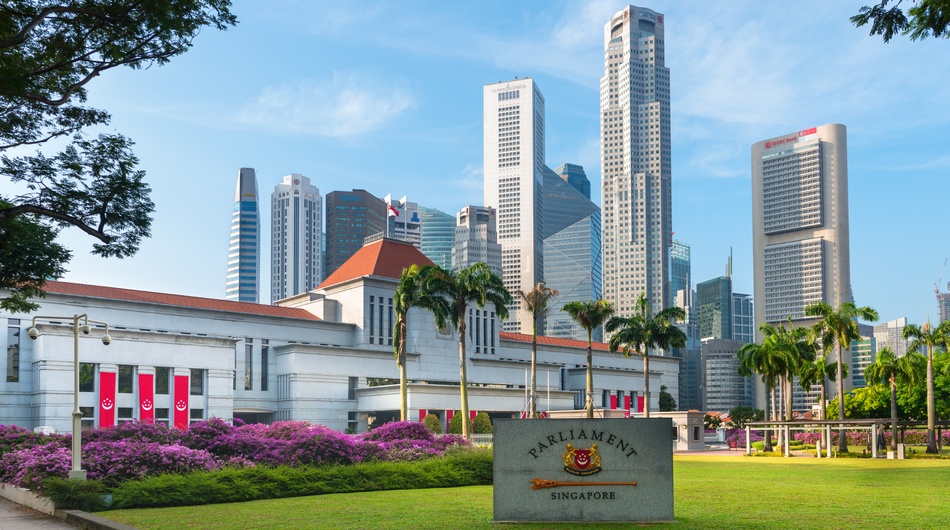
Photo credit: irynarasko / 123RF.
The shadows of Brexit, the US presidential election result, and an increasingly inward-looking world loomed large over the Singapore government’s 2017 budget announcement today. So did the recommendations of the Committee on the Future Economy report, as Singapore seeks to adapt to new challenges.
In presenting the 2017 budget to Parliament, finance minister Heng Swee Keat echoed the report’s recommendations of enabling digitization for small and medium-sized enterprises (SMEs), attracting more funding, and maintaining connections to international markets and innovation hubs.
Here’s how the future economy looks for the technology and startup space in Singapore:
Helping Singaporean firms cross borders
The government will set aside US$420 million for an International Partnership Fund. It will work with local enterprises to co-invest in their expansion overseas. The International Enterprise Singapore scheme helped more than 37,000 companies in 2016, 9 percent more than in 2015.
Singaporean companies must immerse themselves in new markets and understand their customers more deeply if they are to take advantage of the growing consumer class of many Asian cities, the minister said.
Increasing funding
Measures proposed by the Monetary Authority of Singapore (MAS) will relax the restrictions on setting up new venture capital funds in Singapore and provide more sources of funding for startups and SMEs.
The National Research Fund and the National Productivity Fund, both older schemes to enhance research and development, will be topped up by US$352 million and US$705 million respectively. This brings the total budget to implement the strategies of the CFE report to US$1.7 billion over the next four years.
Turning SMEs digital
Enhancing SMEs’ technological capabilities has been a big target for the government and one of the key recommendations of the CFE. The minister announced the SME Go Digital program, which will help small companies modernize their services with the help of technology, especially in sectors like food & beverage, retail, hospitality, logistics, and others.
This will involve SME centers where business owners can receive step-by-step tech support and get advice on which off-the-shelf solutions have been approved for funding support.
Businesses that are ready to pilot emerging tech services will receive both financial support and advice. The program will be led by Singapore’s Infocomm and Media Development Authority, along with enterprise development agency SPRING and other government bodies.
Zeroing in on cyber security
An increased focus on cyber security will be essential if more businesses are to embrace technology. The minister said that Singapore’s Cyber Security Agency will work with professional bodies to train cyber security experts. He highlighted companies like telco SingTel for its efforts to train employees in this field and set up a Cyber Security Institute for education and research on electronic threats.
Tax and employee support for SMEs
SMEs will continue to benefit from a corporate income tax rebate at 50 percent of tax payable, capped at US$18,000, up from US$14,000 last year. The rebate will also be extended into 2018, with a reduced rebate of 20 percent of tax payable, capped at US$7,000.
Previously announced schemes will continue into 2017. One of them is the Wage Credit Scheme, through which the government co-funds 40 percent of wage increases for employees that are Singapore citizens and earn up to approximately US$2,800 per month. This will “help firms cope with rising wages,” the minister said.
Commercializing research and innovation
Regulatory sandboxes and industry transformation
Training Singaporeans for future jobs





Stay updated on the go with our mobile app.
Get latest insights with smoother, more personalized experience through TIA mobile app.