Hikvision’s presence loomed large at a security exposition last month in Hangzhou, taking up the entire upper floor of the convention center. On the ground floor, Dahua Technology, its smaller rival, shared space with other security technology companies. Luminescent displays of road traffic flows, emergency response statistics, and crime reports greeted the hundreds of trade visitors.
Hikvision and Dahua now find themselves in the crosshairs of the US government, which is said to be considering placing Chinese surveillance companies on a blacklist that would bar access to crucial American technologies.
Hikvision said it has engaged with the US government on human rights concerns related to surveillance since October last year. Dahua did not immediately comment.
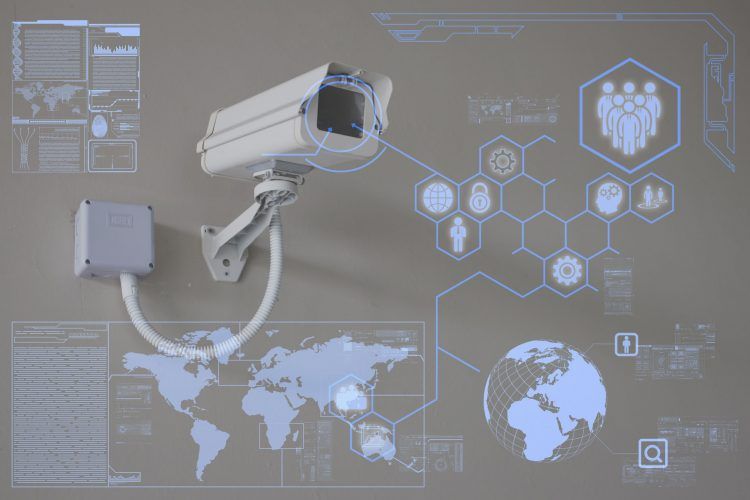
Photo credit: stnazkul / 123RF Stock Photo
The US is now considering cutting off the flow of vital American technology to five Chinese surveillance companies, widening a dragnet beyond Huawei Technologies to include world leaders in video surveillance as it seeks to challenge China’s treatment of minority Uygurs in the country’s west, according to a Bloomberg report on Tuesday.
The US is deliberating whether to add Zhejiang Dahua Technology, Hangzhou Hikvision Digital Technology, Megvii, and two other surveillance companies to a blacklist that bars them from US components or software, Bloomberg reported, citing people familiar with the matter. The two others under consideration are Meiya Pico and Iflytek, according to one of the people.
If the US does place the companies on a trade blacklist, they would join Huawei, the world’s largest telecoms equipment supplier, and other Chinese hi-tech champions that are having their access to US components shut off because they are deemed to pose a threat to US interests.
“The US government is repeatedly using national security as grounds to justify supply chain restrictions: an unreasonable move for Western countries that are supposed to be the stoutest believers in free trade and the market economy,” says Liu Guohong, research director at think tank China Development Institute in Shenzhen. “The US intention can’t be any clearer, and that is to contain China’s rise in advanced technology.”
The US is also said to be concerned that data collected by Chinese-made drones can get into the hands of the Chinese government. Shenzhen-based DJI, the world’s biggest consumer-drone maker, has said it does not transfer data.
Last year, the US initiated a crippling ban on sale of technology to Chinese telecoms equipment maker ZTE, forcing it to sue for peace by paying a US$1.2 billion fine, replacing its entire senior management and accepting a US monitor to ensure its compliance.
In the case of the surveillance companies, the US is concerned that their products can be used to aid espionage, according to media reports.
Hikvision has sold products to more than 150 countries and territories globally.
The US government banned the procurement of Hikvision and Dahua products by federal agencies last year, citing national security risk.
Hikvision executives told the South China Morning Post privately that they have anticipated the trade restriction given the escalating competition between the US and China.





Stay updated on the go with our mobile app.
Get latest insights with smoother, more personalized experience through TIA mobile app.