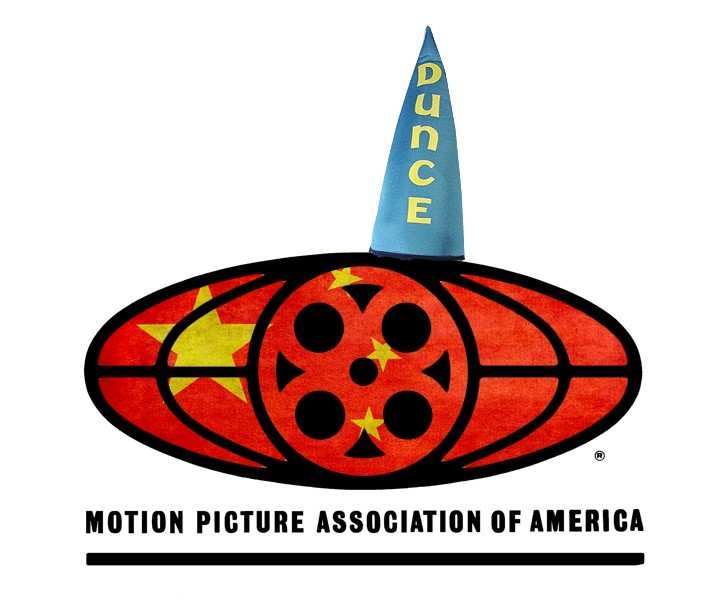
Nobody has ever really accused the Motion Picture Association of America (MPAA) of handling the internet era well. The advent of online movie piracy has inspired the organization into a series of heavy-handed displays aimed at wiping pirates out, including suing a 67-year-old grandfather for more than half a million dollars. Recently, the organization has resorted to lashing out at companies it is meant to be cooperating with. It earned the ire of Google after partnering with the company and then subsequently lashing out at it, and it did the same thing to Xunlei in China last year.
Breaking the partnership
This week, the MPAA has done it again. On Monday, it filed a copyright lawsuit against Xunlei, saying that its partner has not made a strong enough effort to eliminate piracy on its services. Xunlei, for its part, has responded with a statement saying that the American organization has broken the partnership and violated its agreement with the company.
According to Xunlei’s statement, the two partners’s disagreement stems from a software plugin the MPAA wants Xunlei to implement immediately to eliminate piracy. Xunlei says it is concerned the plugin contains security flaws, and has asked the relevant Chinese government bureaus to inspect the plugin before it is added.
Welcome to China
 The specifics are irrelevant, though: the MPAA is going about this all wrong. Naming and shaming doesn’t work all that well in any culture (just look at how Google responded). But in China, where keeping ‘face’ is a crucial component of business culture, it’s a pretty extreme insult.
Even the greenest of China expats knows that in a Chinese business context, it’s far more effective to criticize employees or coworkers privately, so that you don’t cause them to lose face. Even if the MPAA is correct about Xunlei, its blustery approach virtually guarantees that the Chinese company will now fight the MPAA tooth and nail every step of the way. Having a so-called partner insult you repeatedly and publicly in the global press is a huge loss of face. Xunlei’s only way to maintain its reputation is to fight back.
The MPAA will fail
It is not my intention to defend Xunlei’s business here: I haven’t used it in years, but it may well still be easy to find copyrighted films via its services. The MPAA’s criticism and subsequent lawsuit may be wholly justified. My point is that justified or not, the MPAA’s approach is highly unlikely to be effective in the long-term if its ultimate goal is Xunlei compliance. Even if the Chinese company is forced into compliance by court order, that’s likely only a short-term solution. And when pirated material pops up on a new Xunlei product or via a new Xunlei service, the MPAA will have to fight the same court battle again. And again and again.
 Why fight this way? The MPAA has been utterly unable to defeat pirates through legal force even in more sympathetic Western countries. For example: The Pirate Bay has continued to operate with few interruptions in the near-decade since the MPAA declared victory over it following a 2006 raid, and looks poised to bounce back again.
Does the MPAA really expect things to go more smoothly in China?





Stay updated on the go with our mobile app.
Get latest insights with smoother, more personalized experience through TIA mobile app.








📅 Upcoming Events
22 October 2026
Payoneer x CSPN Summit 2026