- Insights This article was written by a TIA community member. Insights pieces undergo the same rigorous editorial process that newsroom-produced articles have.
 Ben Cheah · · 5 min read
Why has motorcycle-mad SEA been slow to adopt two-wheel EVs?
The electric vehicle sector is seen as key in the drive to curb climate change, and both governments and corporations have been formulating policies and infrastructure to support electric four-wheelers. Yet amid these advancements, the adoption of two-wheeler EVs in Southeast Asia has been surprisingly slow.
Motorcycles are the region’s dominant mode of transport, with an estimated 248 million new motorbikes registered from 2020 to 2022. This stands to reason: Motorcycles are more affordable than cars and better suited to navigating through crowded traffic conditions that are common throughout the region.
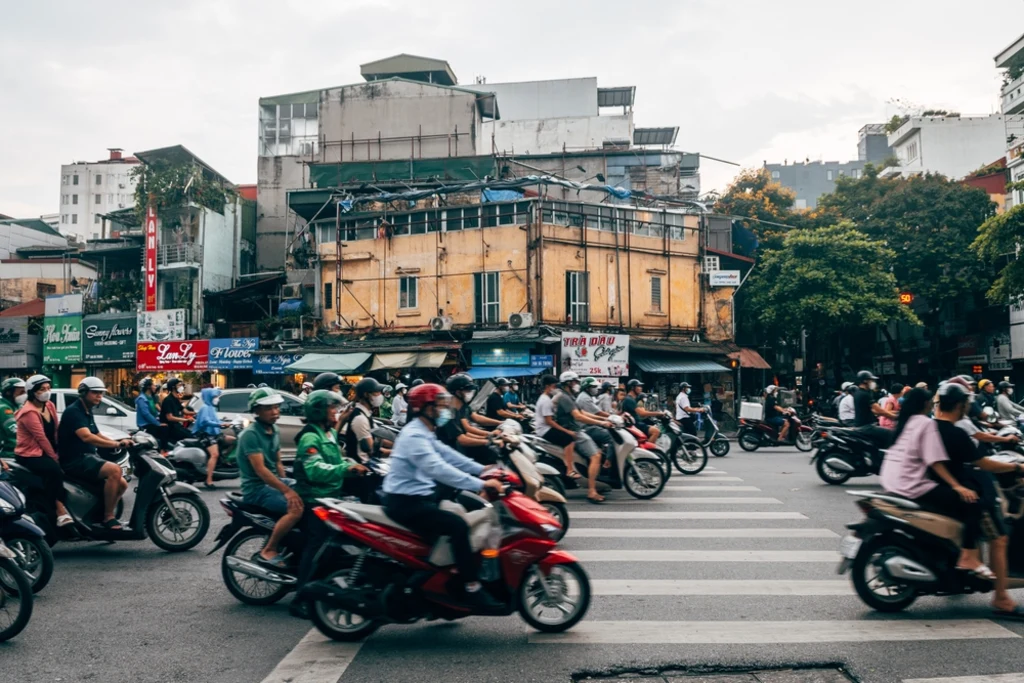
Traffic in Hanoi, Vietnam / Photo credit: Jon Chica / Shutterstock
In both Indonesia and Vietnam, more than 70% of respondents to a survey listed private motorcycles as their main mode of transport.
Given this finding and a strong push for electrification in these markets, we should – in theory – see traditional internal combustion engine bikes quickly vanish.
However, the situation appears to be more nuanced. A report from the International Council on Clean Transportation shows that out of the 2.98 million two-wheeler sales in Vietnam in 2021, just 10% were EVs.
Though adoption rates of electric two-wheelers are increasing in Vietnam and Indonesia, there’s still a long way to go before these vehicles become the majority mode of transportation.
Interestingly, the market leaders for motorcycles in these countries don’t appear to be actively marketing EVs. A major reason could be a fear of cannibalization.
InnoVen Capital’s research found that top players in Vietnam and Indonesia have an estimated 70% market share. For these companies to lead the switch to e-motorbikes, retooling or setting up completely new factories would be a massive and costly undertaking.
While these major players may not have a big incentive to lead electrification, many believe that it’s a must for global decarbonization. This is where we need to see stronger initiatives from both the private and public sectors in addressing existing market gaps.
However, I believe smaller companies and startups also have a key role to play.
Revving up
Some of the important factors that will drive adoption of electric two-wheelers are costs, battery life, and range, as well as charging networks and infrastructure.
Two-wheelers in Southeast Asia are mainly used by lower-income segments of the population, who are extremely sensitive to costs. In our analysis, the total cost of ownership – including upfront and ongoing operating costs of an e-bike across a five-year period – is higher compared to traditional motorcycles.
While two-wheel EVs offer huge savings in maintenance and energy costs, these are currently not enough to offset the higher base prices.
Gear shift





Stay updated on the go with our mobile app.
Get latest insights with smoother, more personalized experience through TIA mobile app.