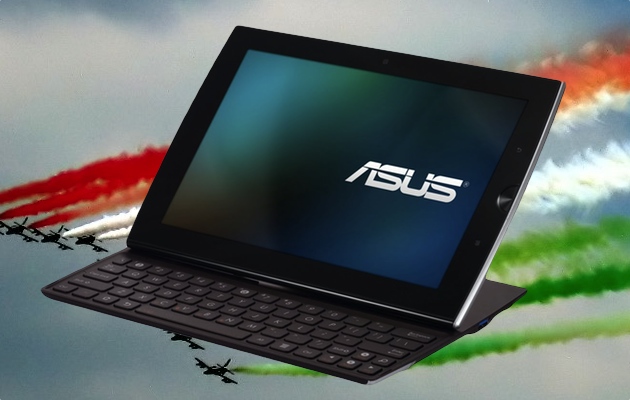
 With the recent launch of the Reliance 3G Tab and Beetel Magiq, the tablet market scene in India is all set for some stiff competition. Now, Asus is planning to heat it up further by unleashing its Eee Pad Slide (pictured above) onto the Indian market.
The Mobile Indian reports that the Eee Pad Slide will arrive here in October. The release will be a boon for Indian consumers and will add to the already varied choices they have in iPad competitiors. But we need to think: who will buy these tablets, and why?
The tablet era
Previously, only higher-income consumers and corporate users could have thought of owning tablets. But now with increasing competition and the introduction of low-priced tablets, they’re within anyone’s grasp. After all, tablets in India are as cheap as $99. Yes, the recently launched series of tablets by Bangalore-based Lakshmi Access Communications Systems (LACS) are priced at $99 and are marketed towards lower-income groups. They run on Android and have a 7-inch screen. The names of the tablets are suitably locaized: such as Paprika, Tamarind, and Mirchi.
People are perhaps buying tablet PCs because it is easier for them to read on a tablet than on a smartphone, and to give more appeal and utility to their favourite apps. The slates are also creeping into the workplace, and have become an essential feature in many boardroom meetings for sharing information. In companies, the higher-end tablets like the Samsung Galaxy Tab and the Apple iPad 2 are used more. But overall, consumers in India are attracted to tablets for all the same reasons as consumers worldwide – but more varied price-points are welcome.
Lower prices = happy customers?
Tablets are now starting to get cheaper. But the profit margins on tablets are still around 20 to 25 percent whereas it is far less on PCs, more like seven to 10 percent. So, initially the first companies to come up with tablets in India launched them at a relatively higher price. But, since the margins were large, the companies who came after them have been able to lower prices to win over consumers. Most of them aim at replicating the success achieved by Micromax, Lava, or Karbonn in the mobile handset market by reaching to the non-metro small-town markets of India.
The low prices have most certainly caught the eye of consumers. Plus, with more products, they also have a variety to choose from. It’s still not clear whether people would take the lower-priced tablets. Here’s what Ashish, a customer on his way to buy a new tablet PC, had to say:
If I were to buy a tablet, I’d buy it for the status quotient and the utility that comes with it. So, it’s certain that I won’t buy the cheapest tablet as I assume cheap tablets are synonymous with lesser features. I might consider buying a moderately-priced one with all the necessary features as I’m not too sure whether the cheap ones will be easy-to-use or not.
Those words would most certainly comfort the folks at Samsung, Motorola or Apple. So, there you are – powerful features still rule the roost for a lot of people. If a customer is planning to buy a tablet PC (most of them would be buying one for the first time) he or she would almost certainly go for a known brand.





Stay updated on the go with our mobile app.
Get latest insights with smoother, more personalized experience through TIA mobile app.










📅 Upcoming Events
22 October 2026
Payoneer x CSPN Summit 2026