 Meghna Rao · · 4 min read
How to make money off stingy gamers: Google’s Guy Newton shares tips

Photo credit: Gamenomnom.
Gamers are a stubborn bunch. According to Guy Newton, manager of Southeast Asian mobile apps for Google, only 2.3 percent of global gamers spend money inside an app. They’ll torrent, crack, and even quit a game before they pay for things – so how does one actually manage to make money off of them?
As quietly as possible, Guy explains.
The topic was so important that Guy conducted an entire session at the developer stage at Tech in Asia Singapore 2016.
He began by giving the audience an overview of what is going on. “On average, gamers spend 37.5 hours in-app per month,” he said. “That’s a 63 percent increase over two years.”
That’s a lot of time spent on apps for only 2.3 percent of users to be transacting. That contrast, of course, was the perfect entrance for Guy to introduce Google AdMob. AdMob was acquired by Google in 2009 for US$750 million. According to Guy’s stats, it’s been a worthy investment.
“650,000 apps are using AdMob monthly,” he says. “Over US$1 billion has been paid to ad developers over the past year.”
When the paying gets tough
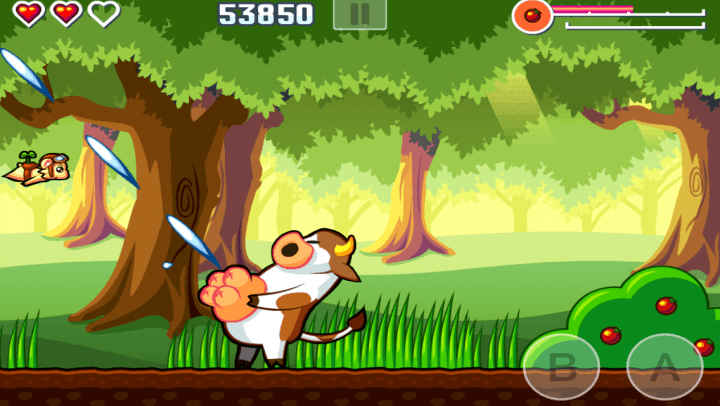
This game features a cow that shoots milk bullets from its udder.
In parts of Southeast Asia and India, many people don’t have access to easy digital payment options. That’s where a product like AdMob comes in handy.
There are a specific set of gamers on the market, Guy explains. On one end of the spectrum are “non-payers”, who make up 27 percent of the types of customers they have to interact with. They keep the in-app purchasing to a minimum, but usually play for a long time. On the other end is the killer whale, a gamer who’s deeply invested and spends tons of money on games.
The way to make money, Guy explains, is to target these “non-payers”. And, in financially disconnected Southeast Asia and India, that is the realm that most gamers fall into.
“The non-payers are captured with a hybrid model,” he says. “That means ads plus in-app purchases.” While the in-app purchases are present for the rare occasion that a non-payer will want to buy something, the focus is on the ads.
These include native ads, which blend in with what’s happening in a game. This is something like having your player attend a baseball game and seeing a small advertisement on a billboard.
“Native ads will grow from US$2.6 billion now to US$21 billion by 2018,” says Guy. “They’re all around good. They benefit the ecosystem by giving users an engaging experience, publishers have revenue growth, and ads can collaborate with publishers.”
“An example of a native ad is one we did for [Russian gaming company] ZeptoLab,” he adds. “There, a character reacted to the advertisement, and we customized the font of the text and included a tiny ‘install now’ button.”
AdMob also makes sure that it’s pushing its ads out intelligently, so it decides what to do after observing users. “The types of monetization streams that have opened up from non-payers are great,” he says. “Those who want to buy will see in-app promotions, while those who don’t want to buy will be shown ads.”
A ‘rewarded ad’ experience
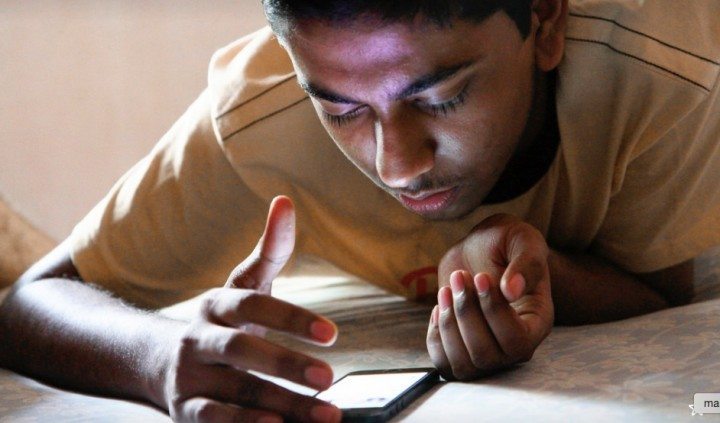
Photo credit: Pabak Sarkar.
There are startups dedicated to helping gaming apps monetize in places where paying can be difficult. India’s US$220 million-funded unicorn InMobi is an example.
In an earlier interview, Dev Ramnane, head of business development for InMobi India, Southeast Asia, and the Middle East, gave us some insights on its strategy.
“A popular method that we use is the ‘rewarded video’ or ‘rewarded ad’ experience,” he said. “Take one of these new ‘runner’ games for example. Something like Subway Surfer or Temple Run… Now, if you’re trying to get past a level and you can’t, this might be a good place to put an ad that lets you watch a video to get a power up and go to the next level.”
Just in the past year, rumors have spread that InMobi will be acquired by Google, and then Microsoft. Neither deal has gone through.
Whether or not the rumors are true, the buzz around app monetization is enough to prove that a lot of people are curious about the sector. “There are now more phones than people,” Guy laughs.
Stay updated on the go with our mobile app.
Get latest insights with smoother, more personalized experience through TIA mobile app.
Recommended reads
 Nykaa’s financial health in 5 charts
 Yahoo to cull 20% of staff amid ads biz restructure
 TikTok TV launches in Malaysia
 JioMart shuts down pilot quick commerce service
 Animoca Brands to buy developer of MotoGP racing game
 ‘Quiz-to-earn’ crypto app hooks 3 million users in Indonesia
 Animoca co-leads $1.75m round of IreneDAO creator
 Square Peg backs Notion-like startup for presentations
 IDN Media launches $3m fund for livestreamers
 Animoca Brands acquires French racing game developer




Editing by Malavika Velayanikal and Jum Balea
(And yes, we’re serious about ethics and transparency. More information here.)




