Kylee McIntyre · · 4 min read
Book your blood test, fight healthcare corruption. That’s this app’s MO
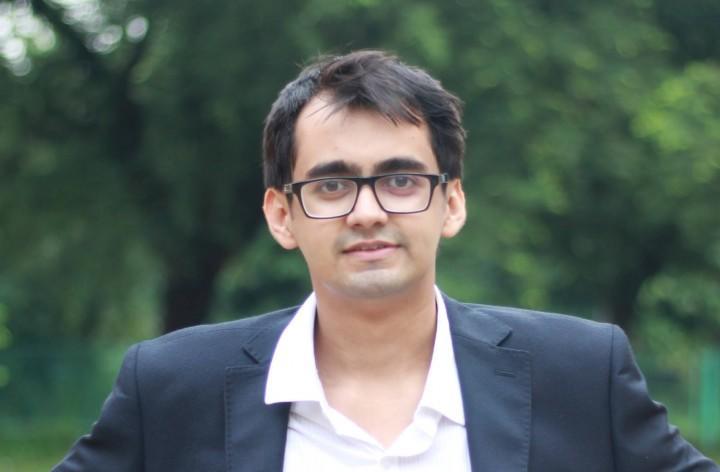
Arpit, co-founder and CEO of Medd
Arpit Kothari knows he wants to change the world, and how. He founded his first non-profit organization even before he was a university student. Around the time he was admitted to university in 2011, he co-founded another non-profit. That idea sprung a mobile app startup called Medd, founded in 2015. True to the entrepreneurial spirit, four years into university, he dropped out along with his co-founders Akash Deep Singhal and Anurag Mundhada, to focus solely on Medd.
The 22 year old says he is pretty clear on the problems he wants to solve within India’s broken healthcare system.
Healthcare in India is highly fragmented and needs renovation. This has given rise to a bunch of health tech startups in India like Practo and others, who are seeking to make treatment easier.
Arpit’s core area of concern is paid medical services. He has a problem with the system of paying “commission” that exists between patients and doctors for lab tests, sometimes resulting in expensive and unnecessary tests. If a patient needs a cholesterol test, for example, the doctor can send the patient to a lab, but a portion of what the patient pays for the test comes back to the doctor. In some cases, the share of test expenses routed back to the referring physician are so high, they could potentially increase prices for the customer by a 100 percent, Arpit said.
“A doctor sends a patient to a lab, and they can retain 20-70 percent of the [test] fee,” Arpit, who also serves as Medd’s CEO, tells Tech in Asia. “If a simple blood test costs 100 rupees, 70 rupees [can go] to the doctor. What we do is pass on an immediate chunk of that back to the patients, and we keep five percent of that.” Using that method, the same blood test would only cost 35 rupees, 5 of which would be kept by Medd. Medd can end up saving patients 15 to 50 percent on their diagnostic tests, by cutting out such referral kickbacks.
Healthcare in India tends to be self-paying, meaning that patients have very little insurance coverage, public or private. Making tests less expensive gives Medd a chance to scale.
“IBM with its Watson is using supercomputers to make clinical support decisions, Theranos is using microfluidics to provide cheaper blood tests, [and] we at Medd are approaching the problem from a different point of view,” explains Arpit. “We are trying to use the available resources and make the system more efficient to deliver more consistent health outcomes at more affordable prices.”
The price of good health
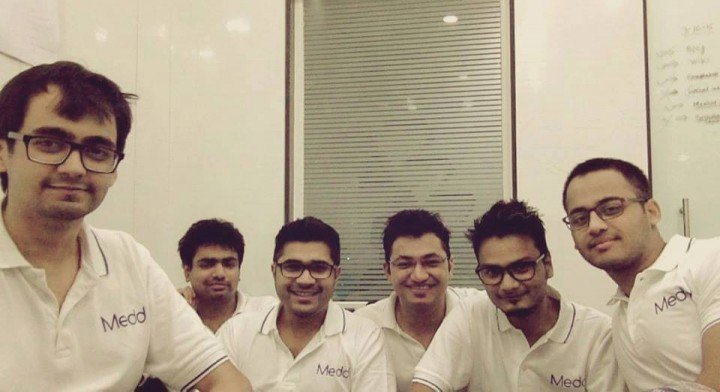
Available for free on the Google Play Store, Medd lets users search for and book medical tests at clinics of their choice. It also gives customers a digital dossier of their test records, and a choice to ask to collect their samples at home or at the office.
“It adds convenience to patients and also helps people who have long-term chronic diseases like diabetes and cholesterol problems,” says Arpit. “They can simply track their health and [test results] on the app.”
What Arpit calls Medd’s patient-centric approach, however, has not been well received by doctors, who may not accept all lab results. Doctors prefer to work on results from clinics they know or trust, to insure themselves against wrong test findings.
Arpit isn’t buying that.
Road to wellness





Stay updated on the go with our mobile app.
Get latest insights with smoother, more personalized experience through TIA mobile app.