 David Corbin · · 2 min read
Japan, you have a unicorn. Mercari’s valuation rises over $1b
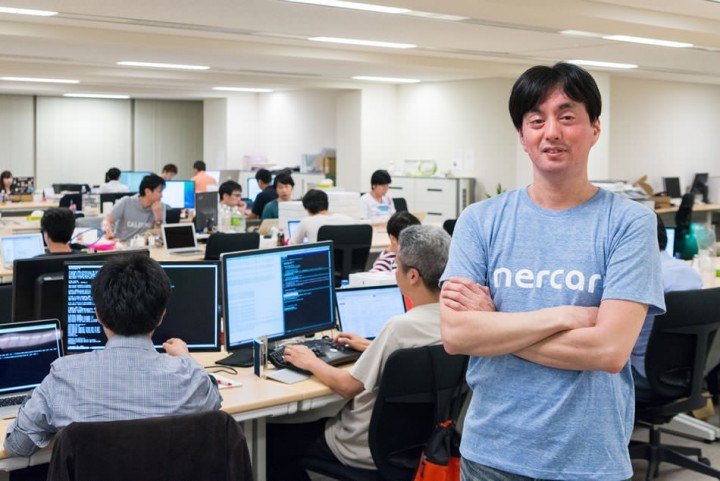
Mercari co-founder and CEO, Shintaro Yamada
Time to update our list of Japanese unicorns. Mercari, an app for selling second-hand goods, has just raised US$74 million in its series D at a valuation of over US$1 billion. (Hat-tip to TechCrunch.)
Since starting in 2013, the company has raised US$110 million. The current round features a who’s-who of Japan’s investment community with Mitsui & Co., Development Bank of Japan, Japan Co-Invest, Globis Capital Partners, World Innovation Lab, and Global Brain all on board.
In just three short years, the app has seen meteoric success. The company’s latest press release notes that it fulfills US$88 million worth of orders every month and Shintaro Yamada, co-founder and CEO, revealed last December the company is profitable by a few million dollars.
Speaking with Tech in Asia, Kei Nagasawa, the company’s CFO, cites superior user experience as the reason why Mercari has found success. “It does not take more than 3min to list an item on our marketplace. On Mercari, items are sold very fast – for instance, 50% of the items which actually gets sold are sold within 24hrs. Even after the item is sold we provide a very convenient delivery solution together with our logistics partner, Yamato Holdings. In short, you do not need to go through the clumsy process (e.g. wrapping the sold item, ask for and write down buyers address, pay shipment fee etc.) which was the biggest obstacle for sellers before Mercari came into this market,” he says.
The news comes just days after Mercari’s number one competitor, Line Mall, announced the end of its service. With a new war chest, you might think that Mercari will follow the footsteps of many other Japanese startups and head to the rest of Asia. But it will not tussle with local players like Carousell or Rakuten’s new Taiwanese flea market app. Instead, Mercari has its sights set on America.
The service boasts 32 million downloads, 7 million of which come from America. How many are MAUs and how much of the US$88 million in monthly goods sold originate in America have not been disclosed. However the company has been active there for over a year, with the office being lead by co-founder Ryo Ishizuka. This round is lacking US investors, a possible indication that the service is facing an uphill climb in the market.
On that point Nagasawa disagrees. “We decided to have Japanese investors to lead this round who understand our business very well and share our aspirations to expand globally…Since we continue to aggressively expand overseas, we are open to foreign investors in the later round(s) if any,” he notes.
UPDATE
This article was updated 15:00 Japan Standard Time to reflect the responses from Kei Nagasawa.
Editing by Erik Crouch
(And yes, we’re serious about ethics and transparency. More information here.)





Stay updated on the go with our mobile app.
Get latest insights with smoother, more personalized experience through TIA mobile app.




📅 Upcoming Events
22 October 2026
Payoneer x CSPN Summit 2026