Osman Husain · · 4 min read
3D printing is becoming popular in Pakistan, and this founder is leading the way
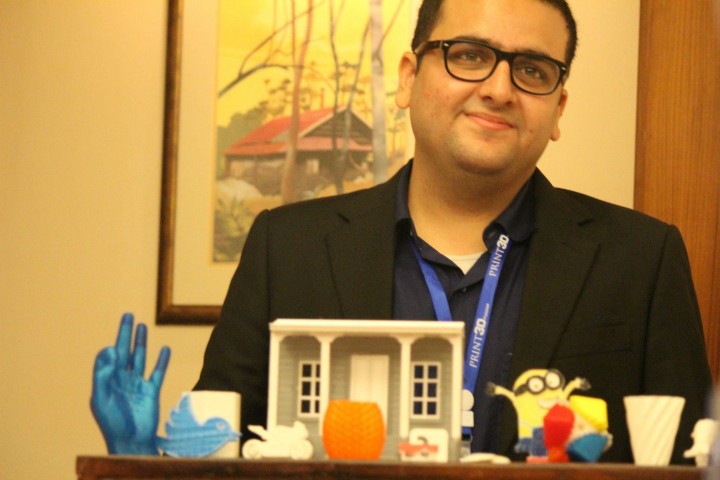
3D Print-Pakistan CEO Farrukh Bhabha
Farrukh Bhabha ventured into the realm of 3D printing purely by chance. As a final year undergraduate student he needed to complete a senior project to graduate. The project tasked him and his team members to come up with a working model of a new gadget but they were struggling for ideas that would stand out from the crowd. However, one thing that they agreed upon was that their project had to stretch the boundaries of innovation and creativity, whilst also providing a sustainable business solution.
3D printing was suggested to Bhabha’s team by their faculty advisor, and the idea clicked immediately. At the time, 3D printing was an alien concept in Pakistan and only a smattering of news stories indicated to them that the idea was gaining traction globally. Undeterred by the lack of local awareness, Bhabha immediately started scouring the internet to gather more information and learn how to build his own printer.
The biggest roadblock that Bhabha faced in his quest to manufacture his own printer was the complete non-availability of components. “Several internet forums provided me with the technical knowledge and skills I needed to assemble my own printer,” he tells Tech in Asia. “However, after weeks of exhaustively searching the local market for parts, I only found one trader who stocked them. And they were massively overpriced.”
Significantly, Bhabha’s tiring quest to build his own device also convinced him of the efficacy of his proposed solution. He knew that Pakistan was not impervious to global technology developments, and with the passage of time there would be significant demand for 3D-printed objects. Bhabha knew he had to act fast to gain a first-mover advantage.
Hobby or profession?
After successfully building and showcasing their first 3D-printer, Bhabha’s team members graduated from university and accepted full-time jobs, looking at their senior project as little more than a hobby. Bhabha, however, wanted to become an entrepreneur, and felt he could use his learning to create a niche in 3D printing.
Bhabha spent time in further refining and understanding the technical aspects of his product, and then proceeded to import parts from Austria, Germany, and Japan to build a bigger and more efficient printer. A total of three more prototypes were built before he was satisfied, and Print 3D-Pakistan was born.
The entrepeneur also received a significant boost when his venture was selected to be a part of the Microsoft Innovation Center pre-accelerator incubation program located at Bahria University, Karachi. Only three startups out of a total of 35 applicants were selected, giving credence to the viability of his product and helping him with other aspects of his business.
“Association with the Microsoft brand has been pivotal in helping Print 3D-Pakistan to secure a number of high profile contracts,” says Bhabha. “Furthermore, I have received mentorship in areas such as finance, marketing, and legal which has allowed me to tweak my model.”
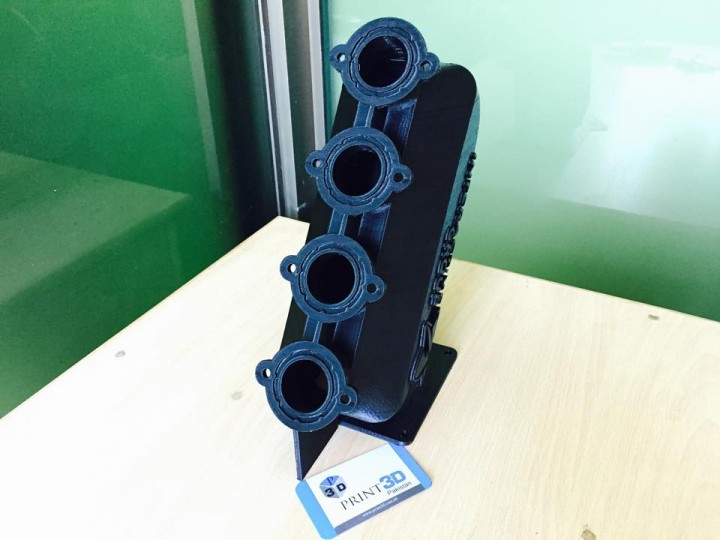
Early interest in Print 3D-Pakistan came from engineering students, who needed printed objects for ongoing projects. Bhabha started receiving orders for robotic arms, engine pistons, and even facial mockups. “Conventional methods of printing were proving to be too costly and time-consuming for students and our solution met their requirements perfectly,” he says.





Stay updated on the go with our mobile app.
Get latest insights with smoother, more personalized experience through TIA mobile app.