 Samantha Cheh · · 4 min read
Meet the company that’s helping developers improve their software

In today’s tech-centric world, a lot can be done with a tap of a screen. This belies, however, the unseen labor that forms the foundations of the software that fills our lives. Indeed, the work of developers behind the scenes has real, tangible effects on the layperson.
“Outside of the software development industry, it’s easy to see the application, but the thing that happens in between is honestly pretty mysterious,” says Rob Zuber, chief technology officer at CircleCI, a software delivery platform that automates the complex process of building, testing, and deploying software.
The reality is that the world of developing and maintaining software is riddled with challenges.
According to Zuber, software development is now about connecting disparate pieces of established software and open-source code and figuring out how they integrate with a company’s proprietary code for the best results.
“The evolution and adoption of open-source software has helped speed the industry up because we don’t have to write as much software on our own anymore,” says Zuber. “But this interconnection of open-source and proprietary code has created complexity in the system and the network of pieces we are pulling together.”

Rob Zuber, CTO at CircleCI / Photo credit: CircleCI
Tripping over fears
When building software, companies need to be careful not to get stuck in the quagmire of trying to anticipate every variable or piece of user feedback.
“One of the big bottlenecks or hang-ups in effect of software delivery is fear,” Zuber explains. According to the CTO, fear of being wrong has led companies to spend more money and invest larger amounts of time in “trying to be right.” This manifests in increased user research and long documents describing what it is that the company is going to build.
In contrast, developers should aim to make small, incremental changes to their code base rather than big ones, all the while staying flexible enough to adapt quickly to feedback. “Course correction is much cheaper and faster when you’re learning on [an hourly basis], instead of years,” Zuber says.
This incrementalist approach to software integration and delivery is the core philosophy behind continuous integration (CI) and continuous delivery (or continuous deployment) (CD) processes. Through CI and CD, changes to a product’s code base are integrated and deployed on an ongoing basis. Developers rely on high-quality feedback from customers to figure out what issues need to be fixed before they ship out the changes and gather more data about their experience. In effect, this feedback loop is what edges a product closer to perfection.
“As you tighten up that feedback cycle, that’s where you’re eliminating that fear of being wrong because it doesn’t cost anything [to correct mistakes],” Zuber says.
Not too long ago, he shares, individual developers or small teams would fiddle with different parts of a code base for months at a time, making overlapping and sometimes contradicting changes that would only be resolved much later. With CI and CD processes, that “build now, fix later” mindset was replaced with a shorter development cycle that ensured at the most basic level that code did what it was supposed to.
Later on, as products were put in front of customers, that cycle evolved to include real customer feedback.
Focus on the business, not the tools
CircleCI helps companies better manage the CI and CD process without having to take on the heavy-duty work of building their own tools. The San Francisco-based firm was founded in 2011, and today, over 40 million software builds run off its cloud-based offering every month.
“Ultimately, we’re enabling you to focus on your business goals instead of on building the tooling,” he says, adding that the extra time this frees up helps companies zero in on getting user feedback and carrying out other changes.
The CircleCI platform is an easy-to-use cloud and server-based service that comes with a full suite of integration and deployment tools to support a company throughout the validation process. The platform is integrated with many developer tools, which are essential in ensuring that teams do not have to do the heavy lifting themselves.
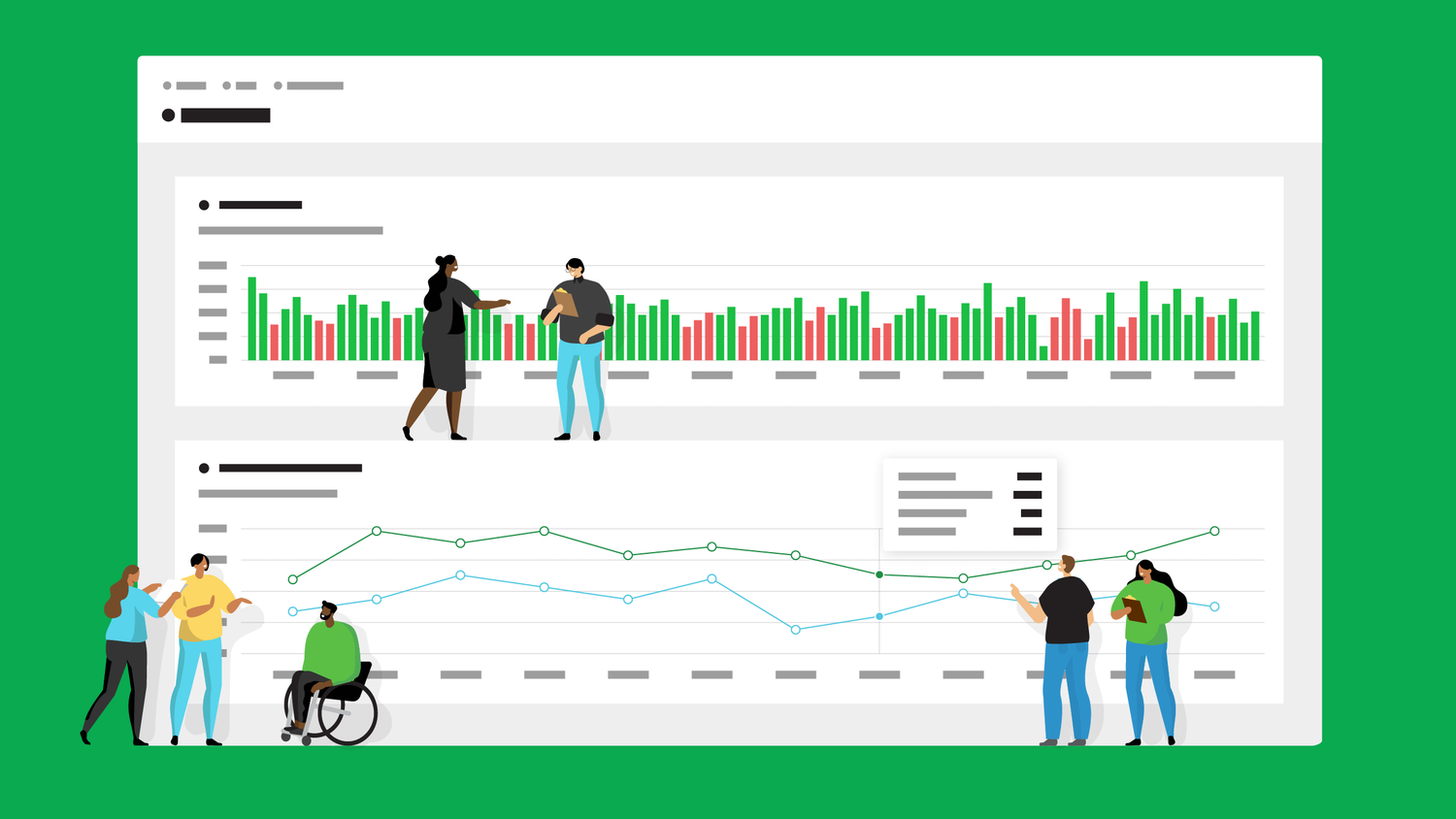
Photo credit: CircleCI
Eyes on everything
To make the development cycle even easier, CircleCI created a new user insights interface, which provides detailed feedback for individual developers and their teams on how they are performing as well as where in the development process mistakes are arising. “Within that small microcosm, or that small subset of my work, I get quick feedback, so it’s easy to figure out how to solve the problem,” Zuber says.
The platform also goes far beyond the developer-customer feedback cycle. It has an internal feedback cycle that enables managers to see how their teams are performing across a longer time span. With this information, leaders can more accurately allocate resources and identify bottlenecks in the workflow.
Often, when developers add more code, they must also do more tests. This leads to a gradual and, subsequently, significant increase in overhead costs. Using the platform’s trend function, a team will be able to spot this problem early on and readjust.
CircleCI’s overarching goal, according to Zuber, is to ultimately serve the software developer community better. “We are software developers, we are building software for developers. But we are also consumers of software,” he says. “When people build great products, we get to enjoy them.”
For more information on how your business can build software better and with more confidence, sign up on CircleCI’s website to start developing on its platform.
This content was produced by Tech in Asia Studios, which connects brands with Asia’s tech community. Learn more about partnering with Tech in Asia Studios.
Stay updated on the go with our mobile app.
Get latest insights with smoother, more personalized experience through TIA mobile app.
Recommended reads
 Forrest Li on scaling Sea, building smarter bots, and founder grit
 SGX’s CEO says it doesn’t need a unicorn to win
 SMEs want AI too, but not the kind Big Tech is selling
 Oatside’s alt-milk rise hits a profitable gear
 Alibaba’s financial health in 12 charts
 Asia’s telcos bundle AI into mobile plans. Will it pay off?
 M-Daq chases bigger clients as revenue falls, losses grow
 VC tracker: Accel raises US$3.5b, including US$550m for India
 Graas buys Temasek-backed Trustana in agentic commerce push
 Doctor Anywhere posts healthier operations in 2025





Editing by Winston Zhang, Nathaniel Fetalvero, and Jaclyn Teng
(And yes, we’re serious about ethics and transparency. More information here.)




