Bree Chan · · 5 min read
How DBS helps customers become savvier savers and investors

Eager to give retail customers more control over their finances and investments, DBS has turned to a hybrid approach of combining digital intelligence and human guidance.
Since 2020, the bank has been sending out AI-powered nudges via its digibank platform and deploying wealth planning managers (WPMs) to provide personalized financial advisory and solutions.
This mix of physical and digital engagement – dubbed “phygital” – is “improving (our) customers’ personal finances,” says Calvin Ong, head of consumer banking group at DBS Singapore.
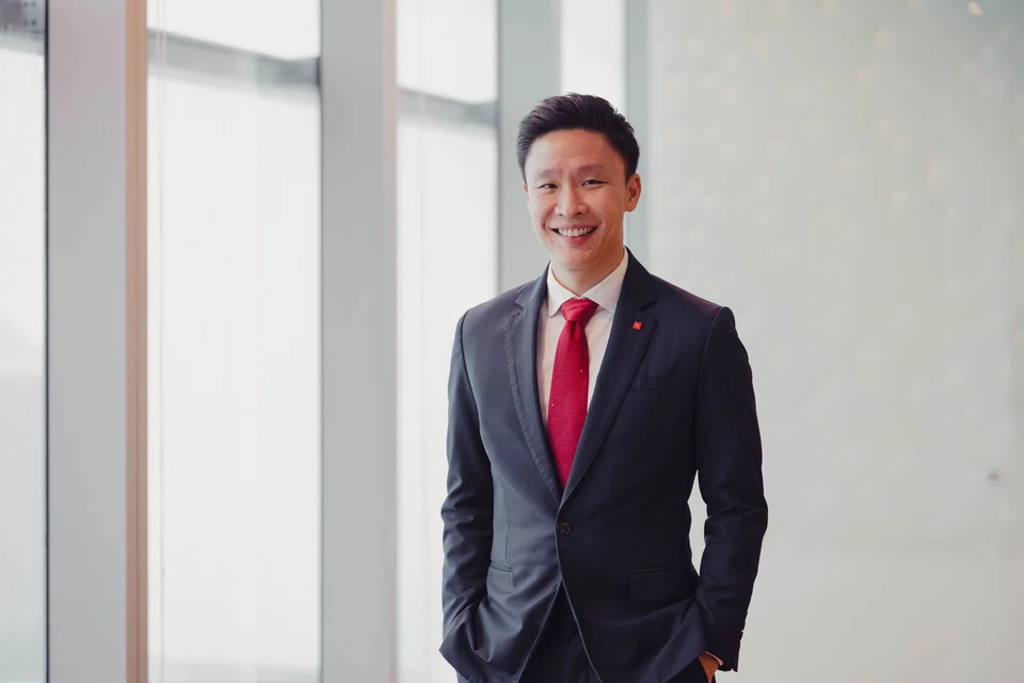
“While volatility may be here to stay, what remains constant is DBS’ commitment to providing customers with the right advice to help them stay financially resilient, navigate evolving macroeconomic conditions and remain invested through market cycles,” says Calvin Ong, head of consumer banking group, DBS Singapore / Photo credit: DBS
“More customers are staying invested and are doing so in a more disciplined manner, by diversifying appropriately and avoiding short-term decision-making, through the course of recent market volatility,” he adds.
DBS’ focus on personalization has helped customers make better financial and investment decisions. For example, those who engaged with the personalized nudges via the bank’s digital financial planner in 2024 saved twice as much, invested 5x more, and were nearly 3x more insured than non-users.
Individuals who adopted a dollar-cost averaging approach – by investing a fixed monthly amount via a regular savings plan – have grown steadily over the years, reaching a two-year high in September 2025.
Notably, the average ticket size for purchases involving digiPortfolio – DBS’ digital discretionary managed portfolio offering for retail investors – rose 50% from January to September despite the bank lowering the minimum investment sum.
The shift toward self-managed investing through a hybrid model is gaining momentum as the bank doubles down on its commitment to make it more convenient for customers.
One strategy comes through DBS digiWealth, an enhanced all-in-one digital wealth platform that allows users to invest, insure, and plan for retirement seamlessly. Users can easily grow their net worth and build their financial well-being by consolidating financial information across different government agencies and financial institutions via SGFinDex.
Aligned with DBS’ phygital strategy, customers can use digiWealth to connect with a dedicated WPM to get advice while on the go.
DBS has also incentivized customers to invest and insure for the long term. The bank ran a partial-matching campaign this year, where customers who purchased insurance coverage received credits deposited directly into their Retirement Portfolio as an incentive to start building long-term wealth. Over 90% have stayed invested since, with some making further top-ups.
Making investment accessible
The biggest challenge retail investors face, as identified by the bank, is the barrier to action posed by financial decisions’ complexity.
“Too many products, too much information, and the fear of making the wrong move can lead to doing nothing,” Ong says.
This creates a kind of paralysis, which is further compounded by rising costs of living and uncertainty.
“That is why, among first-time retail investors, DBS digiPortfolio continues to rank among the most popular due to its well-diversified and professionally constructed and managed portfolios,” Ong explains.
“It is particularly suited for younger investors who are just starting out on their investment journey,” he adds.
One of the six portfolio options is SaveUp, a high-quality, short-duration bond portfolio that offers diversification and low management fees. Also available are Global and Asia portfolios, which give access to low-cost global and Asia exchange-traded funds, respectively.
The bank’s latest offering is the Retirement portfolio, a global investment portfolio optimized with a glidepath strategy. Ong describes this strategy as “one that offers higher equity participation when the investor is younger while lowering the risk through bonds every year until his/her retirement.”
When the portfolio was launched last year, younger customers in their late 20s to 30s accounted for half of the total investors in the Retirement portfolio. Among them, 70% went on to invest via a regular savings plan.
The number of Retirement portfolio investors has grown more than 5x since the start of 2025. This signals a rise in consciousness among younger investors to invest for the long term via a disciplined approach.
On top of offering a variety of portfolio options, DBS has sought to make investing even more accessible to young investors. In fact, it has lowered the minimum investment sum for three portfolios – Retirement, Income, and Global Portfolio Plus – from S$1,000 (US$768) to S$100 (US$77).
The bank has also reduced recurring fund house fees by up to 50% by introducing rebate-free unit trust share classes within the SaveUp and Retirement portfolios.
“In doing so, customers benefit from the lowered cost of investing, which potentially translates to greater long-term returns,” Ong explains.
Future-proofing investors
“While volatility may be here to stay, what remains constant is DBS’ commitment to providing customers with the right advice to help them stay financially resilient, navigate evolving macroeconomic conditions, and remain invested through market cycles,” says Ong.
“To help customers navigate increasing volatility, DBS seeks to provide a wider range of solutions that offer diversification across asset classes, geography coverage, and risk levels,” he adds. “This allows customers to invest in ways that are resilient across market cycles, rather than dependent on particular outcomes.”
One such solution is the new DBS CIO Insights Funds. Available on digiWealth, it is curated by the bank’s investment experts for customers eyeing long-term investments.
These funds, which include the in-house DBS CIO Liquid+ Fund, provide diversified exposure across global markets and asset classes, offering both growth potential and stability across market cycles.
Looking ahead, Ong notes that the bank also seeks to explore ways to broaden retail access to more sophisticated asset classes in a more responsible manner.
This includes assessing how tokenized investment structures could further lower minimum investment sums or how retail investors could gain measured exposure to private assets and alternatives, subject to regulatory approval.
A “tokenized” asset is one that’s been converted to a digital asset – something that can be traded on the blockchain. A relatively new financial development, tokenized assets are expected to speed up transactions and enhance assets’ liquidity.
Ensuring retirement is within reach for Singaporeans
“The true measure of our success is whether our customers are trusting us and managing their money better with us,” Ong says.
He adds that beyond activity metrics, DBS is focusing on outcomes such as stronger emergency savings, more disciplined investment behavior, and adequate insurance coverage that pave the way to a well-deserved retirement.
A DBS study shows that Gen Z and millennials set aside only 15% to 17% of their salaries for investment, with over half of that allocated to fixed-income instruments. This makes them the least invested among all pre-retirement groups.
“While low-risk, these generate lower returns that may not be sufficient to help grow and future-proof one’s wealth,” Ong points out.
“Our approach moving forward is to step up customer engagement toward taking investment actions through personalized nudges, clearer goal-based guidance, and offering access to human support when it matters, especially for this group of customers,” he adds. “Over time, we believe this will help them stay invested and become confident with their money.”
Currency converted from Singapore dollar to US dollar: US$1 = S$1.30
This story was republished with permission from The Business Times. It was moderately edited to reflect Tech in Asia’s editorial guidelines.
Stay updated on the go with our mobile app.
Get latest insights with smoother, more personalized experience through TIA mobile app.
Recommended reads
 Indonesian AI startup goes global
 Forrest Li on scaling Sea, building smarter bots, and founder grit
 An AI assistant that joins sales calls and scores team skills
 SGX’s CEO says it doesn’t need a unicorn to win
 SMEs want AI too, but not the kind Big Tech is selling
 Oatside’s alt-milk rise hits a profitable gear
 Alibaba’s financial health in 12 charts
 Asia’s telcos bundle AI into mobile plans. Will it pay off?
 M-Daq chases bigger clients as revenue falls, losses grow
 VC tracker: Accel raises US$3.5b, including US$550m for India





Editing by Jonathan Chew and Mina Deocareza
(And yes, we’re serious about ethics and transparency. More information here.)