Sarah Dai · · 4 min read
Chinese app handled $100b in goods a year by matching shippers with truckers
It can sometimes take two days or more to get business, so Zheng Xiaopan found some shade, parked his truck, and made himself comfortable for the wait. A for-hire sign was his principal way of advertising his services to haul goods around China’s southeastern Guangdong province.
“There’s no knowing when my truck can be filled up,” said 26-year-old Zheng, a high-school dropout who took up one of the world’s most dangerous occupations to help pay for his sisters’ college tuition. “Not knowing how long I had to keep waiting was just as tiresome as driving.”
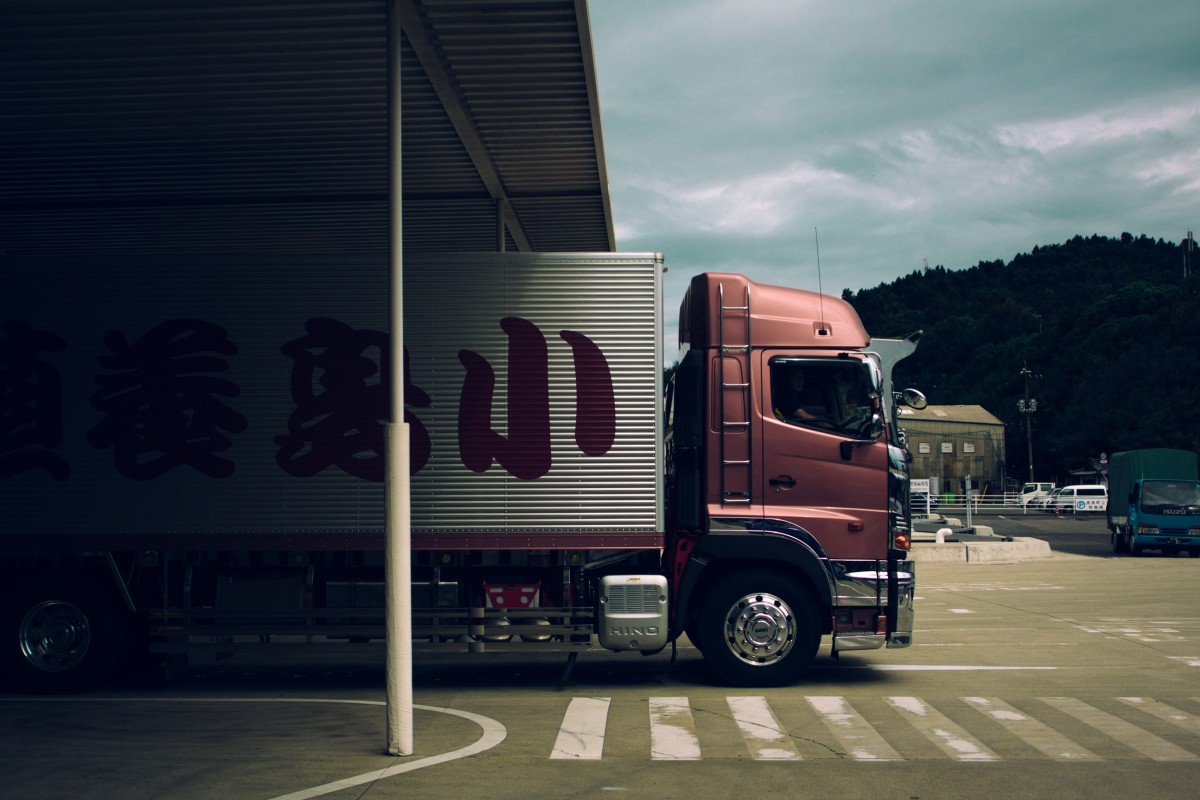
Photo credit: Pxhere
Then in 2016, a friend introduced Zheng to an app that matches truckers and shippers – and there was no turning back. Using the app created by Manbang Group, Zheng managed to cut the time that his truck remained empty by 87%, increasing his overall income.
For the estimated 8 million truckers in China, the advent of freight-booking apps has revolutionized the way business is done in one of the backbone trades keeping the world’s second largest economy running.
For all of its importance to the economy, long-haul trucking in China is fragmented and inefficient, with 95% of rig drivers either self-employed or working for a small firm, according to a report by McKinsey & Company. Only 1% of trucking companies employed more than 50 staff.
Today, more than 1.8 million registered shippers and 6.7 million truckers use the Manbang app to find and book haulage services in China. The app handled about 700 billion yuan (US$101 billion) worth of goods a year. More than 70% of truckers pick up orders within the first 20 minutes of posting.
Manbang Group counts Masayoshi Son’s SoftBank Group, Alphabet’s CapitalG, and state-backed China Reform Fund among its investors. The startup, headquartered in Guizhou, one of China’s poorest provinces, was valued at US$9 billion after its latest funding round last year, according to media reports. The company was formed from a merger of arch-rivals Huochebang and Yunmanman in a marriage brokered by investors on both sides after years of intense competition.
Manbang is close to breaking even this year, after branching out into electronic toll collection, truck sales, vehicle maintenance, auto financing, and insurance, according to Zhang Hui, the company’s chief executive.
“Our income comes from multiple sources,” Zhang said on the sidelines of the Guiyang Big Data Expo held at the end of May in Guizhou’s provincial capital. “Some new businesses like secondhand truck sales require continued investment, but basically there isn’t any money-bleeding unit now.”
Manbang is now focused on increasing user loyalty, and there is no rush for an initial public offering or pressure to generate more revenue from its services, according to Zhang.
The company is a market leader in a logistics industry with a total value of 280 trillion yuan (US$40.4 trillion), according to estimates by a research institute under the Chinese Academy of Sciences.
Globally, there are a raft of startups that seek to be the Uber of trucking, including Seattle-based Convoy, New York-based Transfix, Madrid-based OnTruck, Paris-based Convargo, as well as Rivigo and Blackbuck in India.
To Zhang, Manbang may draw comparisons with Uber at first glance but it is in essence more like Taobao, the ecommerce marketplace of mostly retail merchants operated by Alibaba Group, which owns the South China Morning Post. “Ride-hailing platforms offer standardized products, while our business is more complicated,” said Zhang. “There would be bargaining between drivers and shippers, depending on market demand and supply at the time. Other price factors range from truck height and length to cleanliness of cargos and waiting time spent on uploading and offloading.”





Stay updated on the go with our mobile app.
Get latest insights with smoother, more personalized experience through TIA mobile app.