Kylee McIntyre · · 4 min read
This IIT grad created an app to make managing diabetes less of a drag
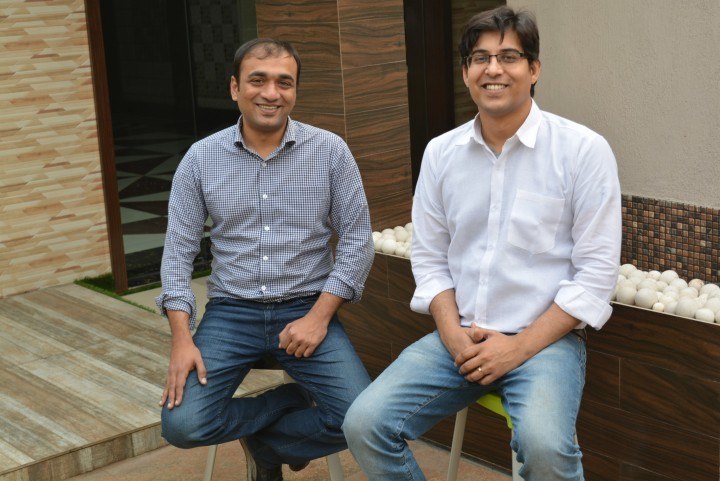
Anshuman Chaudhary (left) and Kaustubh Chandrabhan (right), co-founders of DailyDoc
“Say I’m a diabetes patient. A diabetes center tells me that I’m diagnosed with diabetes and I’m positive for a high blood glucose level. For any chronic disease, you’re diagnosed for a lifetime. You can’t treat the disease – you can only manage it.”
India is the diabetes center of the world. IIT Delhi graduate Anshuman Chaudhary’s approach to that was not to try to solve the problem but rather to make the process of managing the disease easier.
His app, DailyDoc, began when he realized that mobile apps could aid those with chronic diseases. To start, he and his co-founder, fellow IIT Delhi grad Kaustubh Chandrabhan, zeroed in on diabetes, which affects 8.7 percent of adults in India between the ages of 20 and 79.
Managing the disease means a lot of work on diabetic patients’ parts – they need to remember to take prescriptions, keep track of what to eat at what time, and take special care of their hands and feet. If they’re under the care of a diabetes center, they also need to keep track of their blood sugar readings at regular intervals. All of that information together determines how often the patient needs to see his or her physician.
“After he [the patient] leaves, he needs to know what also this means, and sometimes he is not motivated to bring his disease under control,” Anshuman explains. “This is where DailyDoc comes into play.”
The doc is in
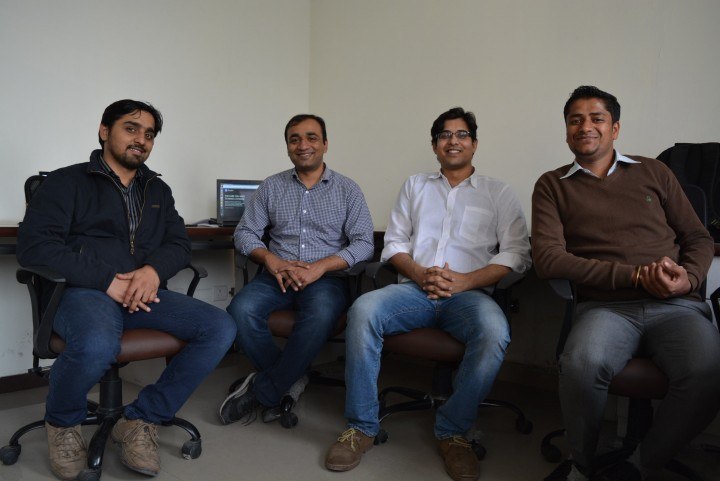
Some of DailyDoc’s team members
DailyDoc can only be used under the care of a physician. Doctors and patients agree upon a care plan to be recorded on the app, and after the patient leaves the doctor’s office, the app tells the patient what to do – when to eat, when to take blood sugar readings, etc.
The app can also receive updates from the patient’s doctor or care coach. “The app can guide him [the patient] throughout the day, [keep track] of his daily goals, and get content on a daily basis,” Anshuman tells Tech in Asia. Before DailyDoc, Anshuman, whose father is a doctor, worked in medical device consulting.
As patients keep track of their diabetes, their physicians and assistants (usually diabetes educators) have guide boards to interact with the patient through the app. They can comment on the data and message the patient to motivate or educate him or her. Patients can also ask questions as the day goes on.
The result, says Anshuman, is a more collaborative experience for diabetic patients and their respective caretakers.
Though DailyDoc works between patients, physicians, and physician’s assistants, the app only charges the physician per month and per patient. It’s up to the physicians to charge patients for their services.
Since keeping track of several patients’ DailyDoc readings is too much work for one physician, patients need either a physician’s assistant or a patient educator for the app to work correctly. There are therefore two payment plans – one for doctors who work, for example, at diabetes centers that already have diabetes educators on staff, and one for physicians who work at private practices and don’t have such assistants. In that case, the app costs extra, as DailyDoc will provide its own.
The search for a long-term fix





Stay updated on the go with our mobile app.
Get latest insights with smoother, more personalized experience through TIA mobile app.