Grace Priscilla Teo · · 4 min read
IBM on AGI: bad math, wrong science
This article summarizes an episode of Dec0der with Nilay Patel’s video series featuring Arvind Krishna, CEO of IBM.
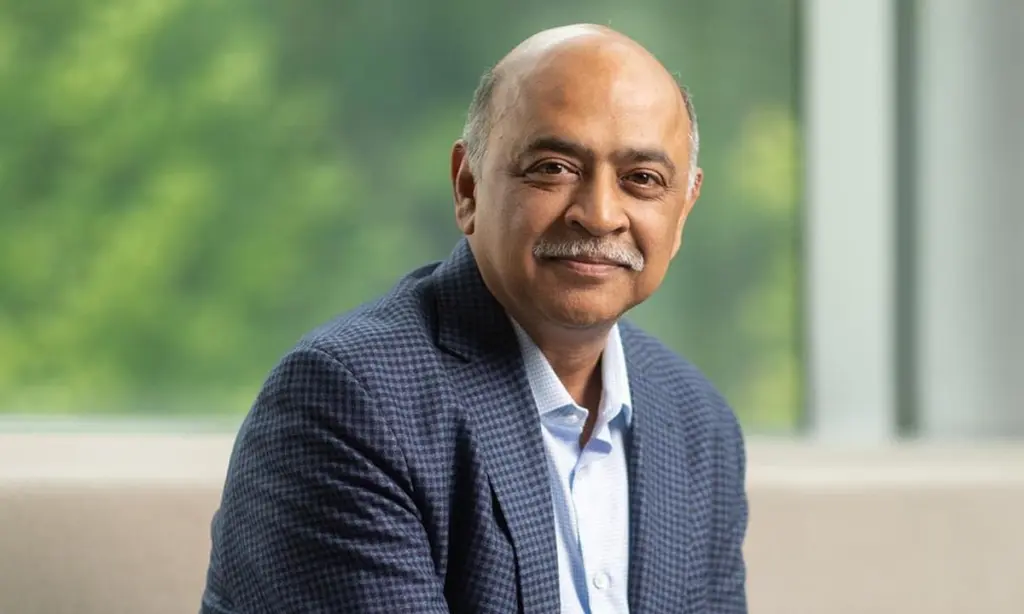
Arvind Krishna, CEO of IBM / Photo credit: IBM
Arvind Krishna, CEO of IBM, argues the race to build AGI is based on technology that won’t work and costs that are too high. His analysis shows the limits of today’s AI and offers a practical plan for how companies should invest in technology.
A rational gamble, not a bubble
The fast pace of AI investment makes many people think it’s a bubble. But Krishna sees the spending as a planned risk to win a huge market of everyday users.
Some investors will lose money
Krishna states, “Do I think we’re in an AI bubble right now? No. Do I believe that there will be some displacement and some of the capital being spent, especially the debt capital, will not get its payback? Yes.”
The prize is winning over the world’s consumers
He explains, “If you build a slightly better model by spending another US$50 billion and that can attract another 200 million users, it seems to make economic sense… This is a race towards who can get more and more of the world’s 7.5 billion people to become subscribers on a given model.”
The unforgiving math of AGI
While chasing a worldwide user base makes sense, Krishna points to the huge amount of money needed. At current costs, the spending cannot continue.
Building the equipment is too expensive
Krishna calculates, “It takes about US$80 billion to fill up a 1 gigawatt data center… if you are going to commit 20 to 30 gigawatts, that’s one company, that’s US$1.5 trillion of capex.”
The numbers for the whole industry are even worse
He continues, “The total commits in the world on this space [of chasing AGI] seem to be like 100 gigawatts… That’s US$8 trillion of capex. There’s no way you’re going to get a return on that, because US$8 trillion of capex means you need roughly US$800 billion of profit just to pay for the interest.”
The thousandfold path to cheaper AI
With such high costs, the only way forward is to make computing much cheaper. Krishna believes this is possible within five years, but it requires improvements across three different layers:
- Semiconductors: He projects a 10x advantage in chip manufacturing over the next five years.
- Design architecture: He expects another 10x gain by evolving hardware designs beyond the current GPU architecture.
- Software: He anticipates a final 10x efficiency boost coming directly from software advancements.
The problem is not just about cost
Even if computing becomes a thousand times cheaper, Krishna believes the industry faces a bigger problem. The race to AGI is a problem with the science, not just the money.
Today’s AI has a limit
Krishna states, “I give it really low odds, like we’re talking 0 to 1%, that the current set of known technologies gets us to AGI. That’s my bigger gap.”
A new way to do research is needed
Krishna believes the next step toward AGI is to go past systems that only use statistics and use a mix of methods.
The hidden cost of automation





Stay updated on the go with our mobile app.
Get latest insights with smoother, more personalized experience through TIA mobile app.