- Premium Content It takes our newsroom weeks - if not months - to investigate and produce stories for our premium content. You can’t find them anywhere else.
 Elyssa Lopez · · 7 min read
AI video surged in 2025. Is a 2026 shakeout ahead?
Sanidhya Narain was so impressed that AI could turn his stories into web comics, he built a platform around it called Dashtoon.
But by early 2025, genAI showed that the technology – driven by visual models from Google and Midjourney – could create videos so realistic that viewers struggled to tell fact from fiction.
That was when Narain knew it was time to pivot from page to screen. In August 2025, he launched Dashreels, a media platform focused on AI-generated microdramas. It was a hit, garnering over 25 million downloads with about 7 million active, paying users.
By then, he had reintroduced the startup as Dashverse, covering both Dashreels and Dashtoon.
The company isn’t alone in seeing the opportunities of video generation models.
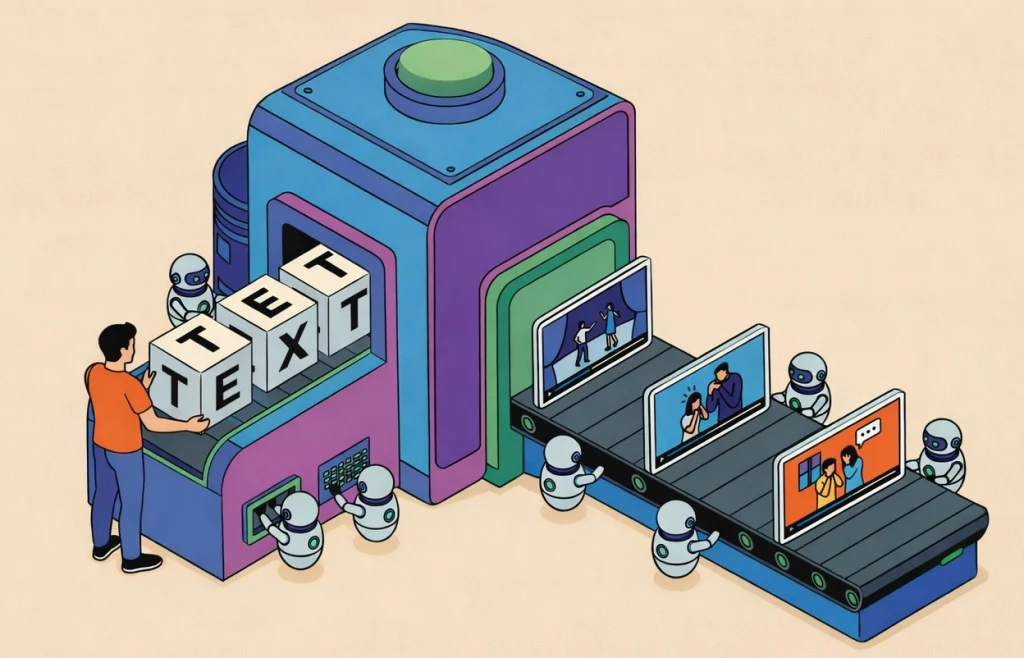
Image credit: Made by Tech in Asia with the help of Gemini
Since 2020, about 75 text-to-video platforms have emerged globally, data from Tracxn shows. In total, about US$3.4 billion worth of funding has been funneled into these startups worldwide.
PitchBook estimates an even larger figure at over US$5.9 billion, though it clarifies that the data comes from a simple keyword search for “generative AI” and “video” startups.
Either way, the data shows that firms are racing to compete in the next wave of generative AI.
But entering the industry isn’t quick or easy. Building foundational video generation models costs money, and firms that are not backed by Big Tech firms often face a financial crunch.
Startups that build applications using these models have to build products that can’t be easily copied by a competitor or generated by a chatbot. Experts say that means players should go very niche and serve a specific sector or build a covetable engineering team that excels in post-training.
Regardless, a startup would need to have a prized asset other than their text-to-video generation features. And leaders believe that 2026 will be the critical year that will define which of the industry’s players will last.
So is there a bubble?
With text-to-video platforms emerging left and right, many in the industry are wondering: Is there a bubble?
Economic bubbles happen when speculative investing drives up the valuation of certain assets, and they often pop when investors rush to cash out.
The battle for industry and domain dominance
The cost question
Stay ahead in Asia’s tech landscape
This is premium content. Subscribe to read the full story.
Startups rushing into text-to-speech need to be cautious. While the sector has drawn over US$3.4 billion in funding, the enthusiasm has some people seeing a bubble.
We know this is not ideal. ⌛ Sign up in 20 seconds. Cancel anytime.
Our subscriber community includes professionals from these companies:





Stay updated on the go with our mobile app.
Get latest insights with smoother, more personalized experience through TIA mobile app.