Malavika Velayanikal · · 4 min read
The big shift: half of the 1,000 new startups in India this year are B2B. Here’s why.

Image credit: Pixabay.
An upsurge in business-to-business (B2B) startups and the emergence of deep tech were among the highlights from Indian software industry body Nasscom’s annual report on the startup scene, released today.
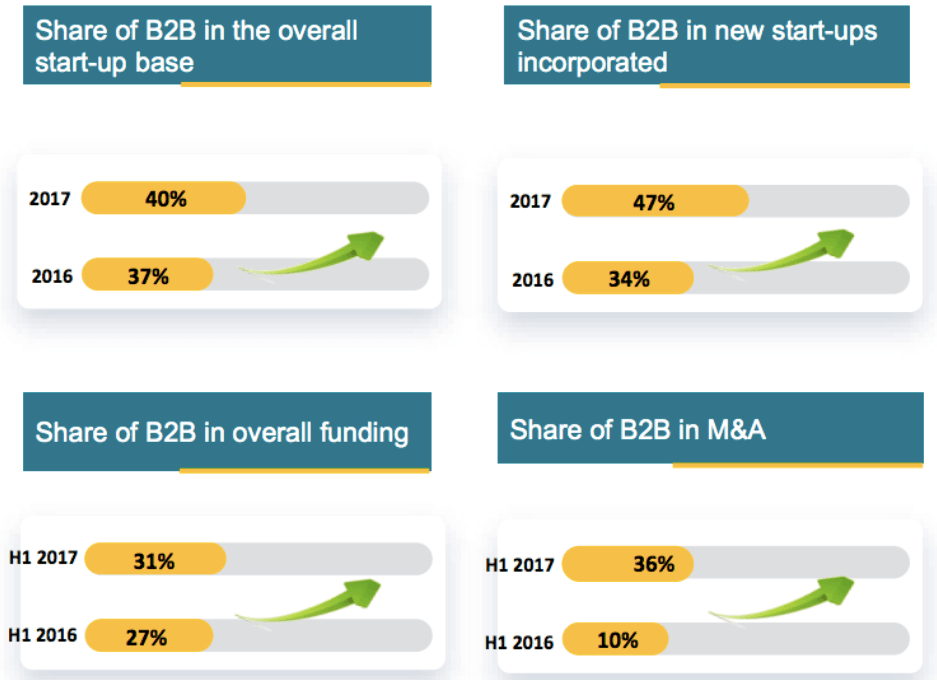
Over 1,000 new startups cropped up in India this year, and almost half of them were in the B2B segment, says the report. Taking into account only tech companies incorporated from 2012 to 2017, India now has over 5,000 startups, making it the world’s third-largest startup ecosystem.
Source: Nasscom.
B2B’s share of overall tech startup funding has risen to almost one-third, with increased corporate involvement with startups, especially in fintech, partly fueling this growth. This involvement takes different forms, ranging from collaboration programs to accelerators and investments. Over 50 M&A deals in the first half of the year also show an uptick in global corporate interest in Indian startups.
The rise of B2B is significant because it leverages India’s tech talent base, built up over decades of providing software development and services to the world. The SaaS (software-as-a-service) model of startups targeting large enterprises as well as small businesses has attracted most of the B2B funding.
The rise of B2B is significant because it leverages India’s tech talent base, built up over decades of providing software development and services to the world.
“The rise of B2B startups augers well for a balanced growth of India’s startup ecosystem, where adequate premium is being paid to all steps of the value chain, rather than to consumer services alone,” says Alok Mittal, founding member of the Indian Angel Network. “This is likely to create more global product companies out of India.”
See: 45 hot product startups from India and their cool ideas
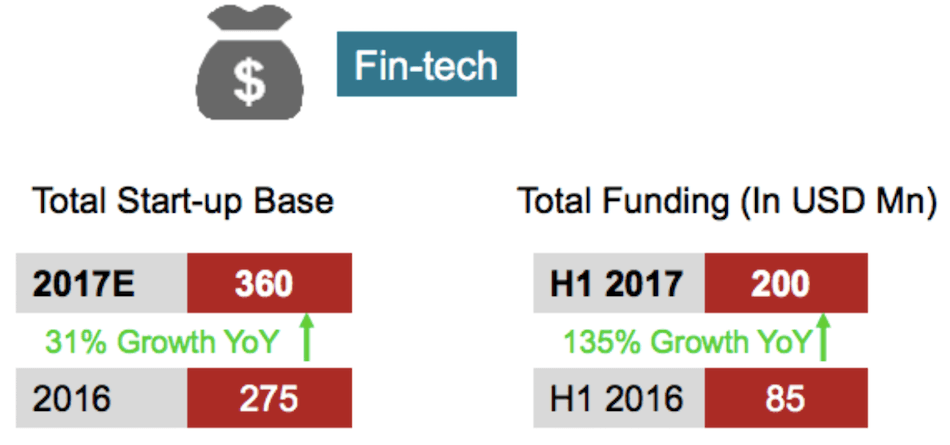
A big driver for the rise of B2B startups and corporate involvement is fintech. India’s demonetization gave it a push towards the end of last year. The government has also pushed the adoption of biometric digital ID Aadhaar and a unified payments interface (UPI) with a lightweight Bhim app.
The bigger companies like Alibaba-backed Paytm were the first to see their traction take off after demonetization. But now we’re seeing new innovators riding the fintech wave. Digital payments and lending have matured as well, and there are emerging opportunities in wealth management and insurancetech.
State governments are also getting into the act, such as Andhra Pradesh, which started building Vizag on the east coast into a fintech hub last year. The Monetary Authority of Singapore is collaborating with the AP government, while fintech hub from Singapore Lattice80 announced that its first center abroad would be in Vizag.





Stay updated on the go with our mobile app.
Get latest insights with smoother, more personalized experience through TIA mobile app.