 Elaine Ramirez · · 5 min read
Localizer prevents you from accidentally advertising a clitoris festival
It was meant to be a family-friendly event. But organizers of the “Feira do grelo” in the small northwestern Spanish town of As Pontes were horrified to learn that their festival celebrating the “grelo,” the region’s signature rapini (it’s like a turnip), was being advertised as a very different kind of party.

The festival’s advertisement in the original Galician.
They blamed Google Translate for the gaffe, which translated “grelo” from the region’s Galician dialect into “clitoris” for their Spanish ads. Apparently interest in the festival skyrocketed, but the organizers learned the hard way not to believe in a “magic button” for translation.
We can joke about translation gaffes all. Day. Long. Despite Google Translate’s algorithmic advancements, you can still end up accidentally praising Russia as Mordor. But for startups whose fate might hinge on successful localization, botched translations are no laughing matter.

Seriously, it’s not funny. Stop laughing. Photo credit: Boing Boing.
Sometimes you just need real native speakers to get it right. Sinan Kaya, an ecommerce entrepreneur in Australia, has been working on a browser-based solution fusing tech’s efficiency with humans’ know-how to easily translate websites for businesses of all types and sizes.
The result, Localizer, lets users pick which content to translate and have it refined to satisfaction. It brings the process down to one click, from automated pricing to translation memory that helps create new translations based on previous ones.
“Other companies spend several months and hundreds of man hours,” he claims. “The same thing you can manage with Localizer in four hours and with human translators.”
More than translation
Sinan started out a year ago by tackling his own business’s problem – translating and localizing online shops on its business ecommerce platform AShop, so they could expand beyond the closed off, saturated market of their island continent. But the team wasn’t satisfied with the gamut of options and developed their own, faster solution.
“Up to now, [localization] was only accessible for enterprise businesses – it’s a very, very costly exercise,” he says. “I learned their process, which is amazingly old-fashioned and labor-intensive.”
In large Silicon Valley companies like Dell, he says, teams of 100-200 people duplicate the website and manually translate every page. His team’s solution turned out effective for the merchants he worked with, which he claims have seen up to 40 percent revenue growth in the last six months. So they packaged the service and launched it in September 2015.
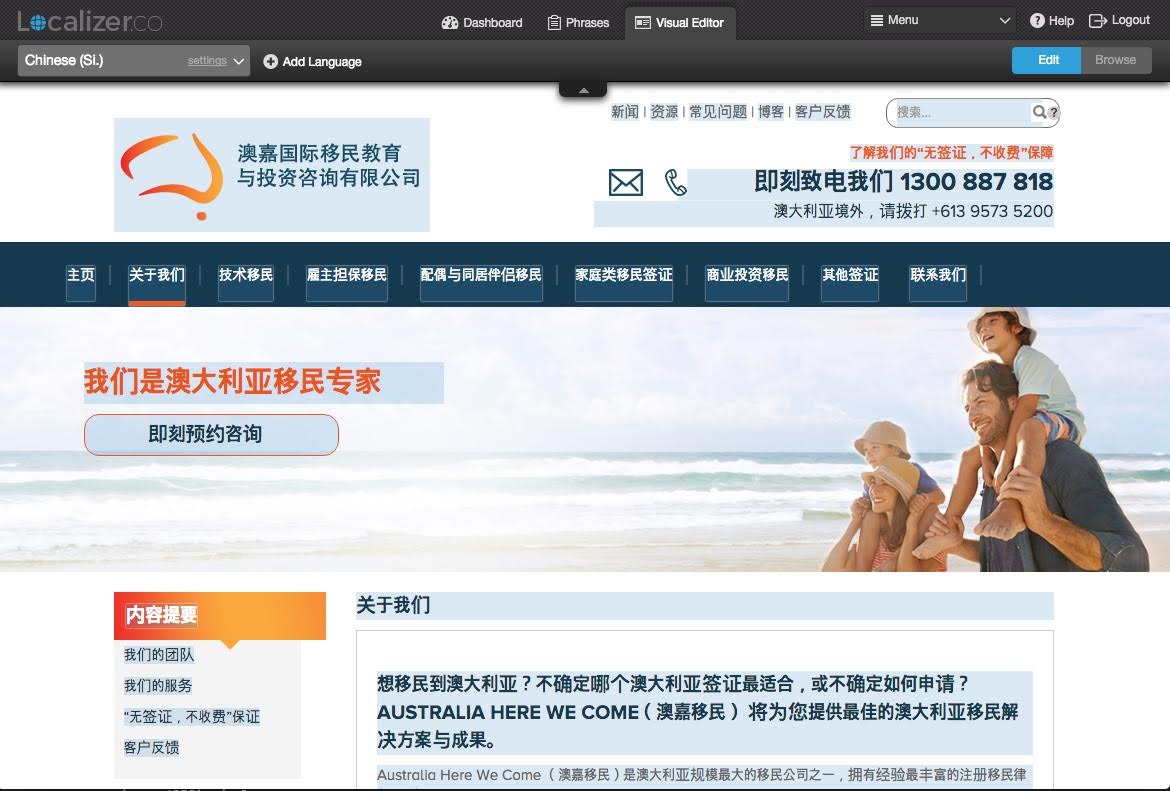
Localizer’s Chinese version.
Down to one click





Stay updated on the go with our mobile app.
Get latest insights with smoother, more personalized experience through TIA mobile app.









📅 Upcoming Events
22 October 2026
Payoneer x CSPN Summit 2026