- Premium Content It takes our newsroom weeks - if not months - to investigate and produce stories for our premium content. You can’t find them anywhere else.
 Thu Huong Le · · 9 min read
A David vs. Goliath battle in Vietnam’s B2B ecommerce sector
Despite the boom of ecommerce and convenience stores, mom and pop stores still dot Vietnam’s narrow streets and alleys. Similar to the warungs in Indonesia or the sari-sari stalls in the Philippines, these stores (known as cửa hàng tạp hoá) form an integral part of everyday life.
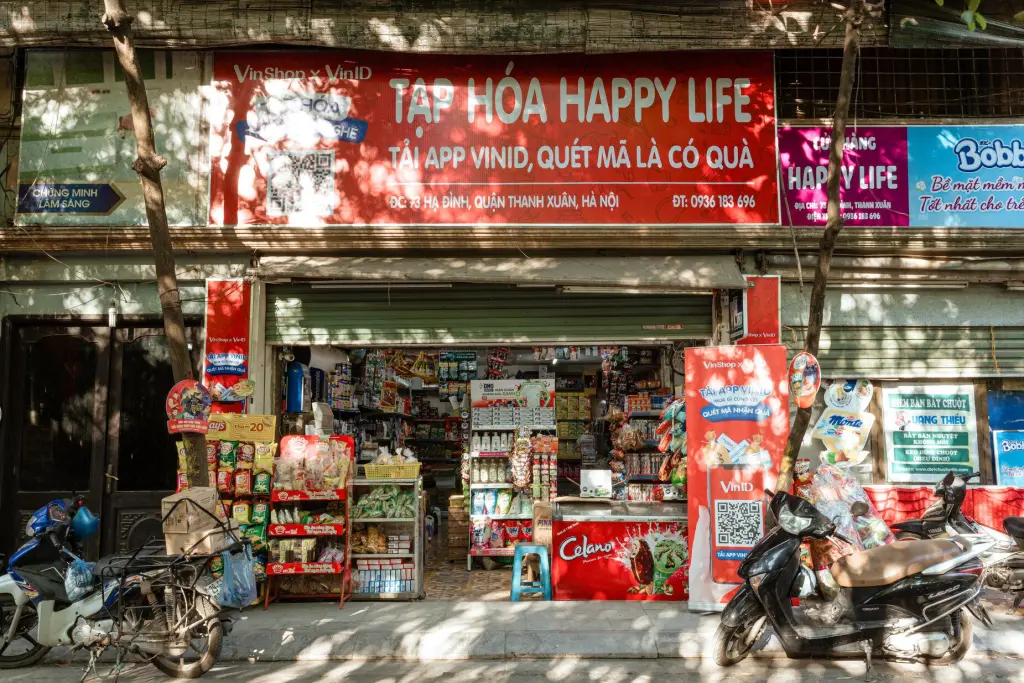
A mom and pop store in Hanoi that has been rebranded as part of VinShop’s network. / Photo credit: VinShop
Forty-year-old Lan Nguyen opened her store in a neighborhood within Hanoi’s Ba Dinh District several years ago, before the arrival of modern stores like VinMart+ and Circle K that are now located nearby.
Even then, she says her shop had a decent pool of customers. Her biggest concern has been managing her inventory, which she does manually after closing the shop at 11 p.m. She orders from her suppliers by phone.
Like their counterparts elsewhere, these corner stores have not yet caught on Vietnam’s fast-sweeping technology wave. Customers still pay in cash and shop owners often rely on their memory to quote the prices of their goods.
But now, startups and companies are rushing to capture the massive opportunity to digitalize them.
A startup vs. a conglomerate
Across the country, there are about 1.4 million mom and pop stores and 9,000 wet markets, according to various industry estimates. Roughly 88% of FMCG goods still flow through these general trade outlets to reach consumers in Vietnam, which is the highest rate among ASEAN countries, according to RedSeer Consulting.
In December 2019, GGV Capital, Tiger Global Management, and Sequoia India signed off a US$25 million check for Telio, which at the time had barely reached its first year. Given the lack of early-stage Vietnamese startups that could raise a sizable series A, the Telio deal was quite significant for Vietnam’s tech ecosystem.
GGV Capital has a record of backing B2B ecommerce startups, such as Udaan (India), Khatabook (India), and Shihuituan (China). In its internal podcast, Jixun Foo, managing partner at GGV Capital, explained the firm’s decision to back Telio: He said that the startup could improve procurement for small retailers and potentially provide them with the right form of financing.

Telio’s core team at the time of its series A fundraising announcement in December 2019. / Photo credit: Telio
Similar to Udaan, Telio also aims to disrupt the wholesale entity in the supply chain, allowing general trade retailers like mom and pop stores to buy directly from brands, manufacturers, and distributors on its centralized platform.
Telio CEO and founder Bui Sy Phong did not respond to Tech in Asia’s request for comment.
A potential 3x to 4x growth
The race has just begun
Stay ahead in Asia’s tech landscape
This is premium content. Subscribe to read the full story.
A race to digitalize mom and pop shops has begun in Vietnam. How will startups and investors capture this opportunity?
We know this is not ideal. ⌛ Sign up in 20 seconds. Cancel anytime.
Our subscriber community includes professionals from these companies:





Stay updated on the go with our mobile app.
Get latest insights with smoother, more personalized experience through TIA mobile app.