Samantha Cheh · · 7 min read
CDNs are the unsung heroes of the internet and its 5G future

We’re already hearing incessant buzz about 5G as the next internet-frontier and the possibilities it holds for the more than 4.5 billion people already on the internet, a number that is predicted to rise to 6 billion by 2022. But not enough are talking about the underlying technologies that are going to be essential for us to make use of the tech.
One such example are content delivery networks (CDNs), a system of distributed proxy servers and caching machines that are the “unsung heroes of the internet,” according to Peter Löfling, general manager for APAC at Varnish Software, a pioneer in high-performance content delivery.

Peter Löfling, general manager for APAC at Varnish Software / Photo credit: Varnish Software
“The reality is that most of us use CDNs many, many, many times a day. It really is a service that goes beneath the radar,” he says. “If we do a good job, then nobody knows we’re there. The only time anybody knows we’re there is when something goes wrong.”
CDNs may seem complicated, but they can be easily understood as a type of technology that enables content providers to reach their customers quickly and predictably through caching technology. Caches are temporary storage areas that allow us to easily access files on web pages or hard disks. CDNs use this technology to make it easier for a huge number of users to gain access to a wide variety of content without straining their internet bandwidth.
“Say we’re sitting in Indonesia or Singapore and you want to watch a movie. What you’d see [on your screen] is content that’s originally stored on a server in the US,” he explains. Once the system realizes that a lot of people in Southeast Asia are looking at this content, it makes a copy of it that it then puts on a server that’s closer to customers, perhaps in Singapore, Indonesia, or the Philippines.
“The internet is a shared medium so you can never predict how it’s going to react,” he says. “CDNs came in to alleviate the performance and bottleneck issues of the internet itself by moving content closer to the customer.”
The CDN is born
CDNs have undergone a number of transformations since they first emerged in the mid ‘90s. According to Löfling, the first global CDN company began building up server infrastructure around the world in order to cater to the needs of large companies like Apple that wanted to enable faster software upgrades and deliver content.
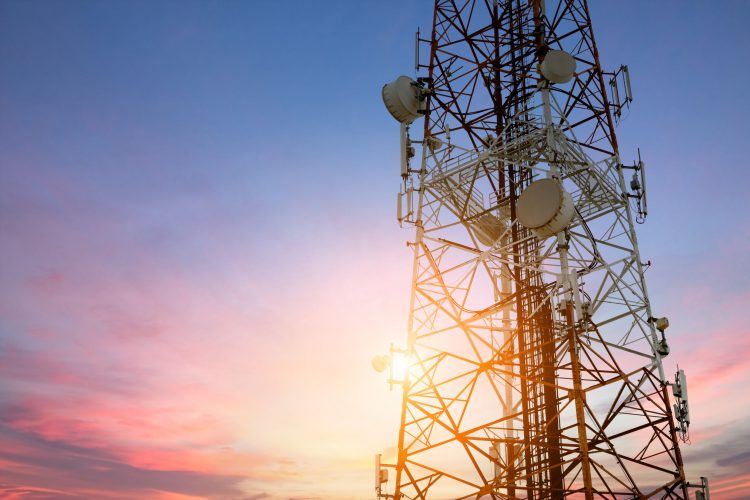
Photo credit: 123RF
The next stage came about when large corporations, frustrated with service providers’ inflexible pricing and operations, began building their own infrastructure in order to gain more control and better protect their brand name and value.
“Imagine you’re a big company selling your end-user content, which you put on a third-party CDN,” he says. “If they fail with the delivery, the end-user has no clue that there is a third party between them and you; they will just blame the company that they have a relationship with.”
Soon after large private companies had struck out on their own, telcos and cable operators with last-mile infrastructure started integrating caching technology and CDNs to their networks, which allowed them to bring more value and higher speeds to their broadband customers.
Video created the CDN star
Löfling says that the rise of video was the major factor that drove the rapid changes in CDN and caching technology that we have seen over the last 25 years.
“If we look at how the internet had started out, it was [all about] webpages and information. But [today] video has been the really big service on the internet and that has pushed CDNs much further,” he says.
On its own, video requires a huge amount of bandwidth to function, but when the heavy load of highly subscribed events such as the Olympics or the World Cup get added to the mix, lower latency and fewer interruptions become even more crucial.
“If you load a software, for example, you don’t really care [how long it takes to run] because you can put it on in the background. But if you watch a football game, you really care when there are too many interruptions or if the video takes a long time to load,” adds Löfling.
As more of the world goes online and gains the capability to tune into live events, virtual CDNs like what Varnish provides will quickly become the go-to software for bringing content closer to users. Virtual CDNs can be deployed across an army of small servers and they offer the advantage that they can be spun up or down quickly depending on how much capacity is needed, thus freeing up servers and hardware to run other features.
“From a customer’s perspective, CDNs are very flexible today,” says Löfling. “But going forward, that flexibility will be much more improved by virtual CDNs, it’ll be like a big evolution.”
Keeping up with the 5G revolution
The next era for CDNs will also be closely tied to the 5G revolution. Proponents of 5G have noted that 5G technology will promise faster download speeds, lower latency, higher capacity, and less reliance on broadband – all of which will be key for enabling the functionality of the next generation of technologies and pushing the boundaries of what can be achieved in terms of video content and streaming.
“It’s very important to understand that 5G and the internet are not separate entities, just separate infrastructures,” says Löfling. “Most of the content that you will fetch will still be from the internet even if you use 5G, and vice versa.”
However, he warns that the true potential of 5G cannot be realized if CDNs and networks do not keep up by innovating their own technologies. If available CDN infrastructure isn’t scalable or robust enough to handle real-time data communication and super low latency, many use cases will be hampered by it or impossible to execute. Future use cases require as close to real-time delivery as possible. An example of where this no-latency approach is important is the self-driving car.
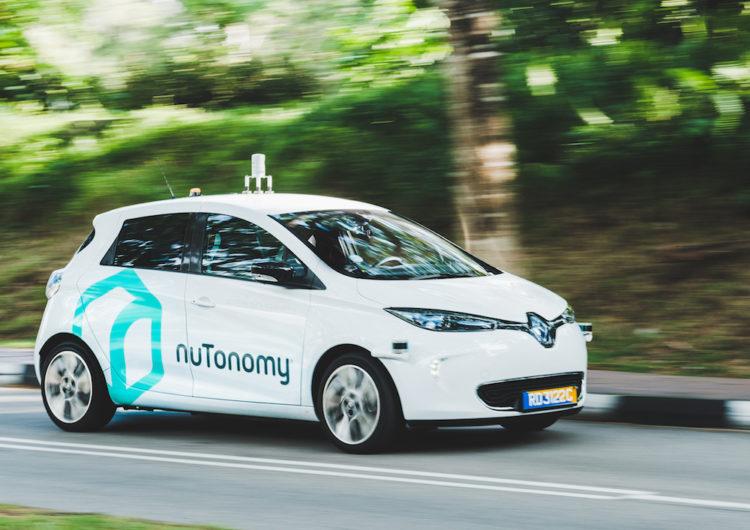
Photo credit: NuTonomy.
“Self-driving cars are dependent on talking to 5G base stations. You actually need to make decisions as close to the car as possible and send information back to the car,” he explains. Autonomous vehicles rely on receiving up-to-the-minute information with minimal lag about their surroundings and other road-users in order to be safe – speeds that are only possible with 5G.
“You cannot have a car driving in Indonesia that has to talk to a server in the US before it gets a response.”
Furthermore, because 5G infrastructure is expensive and difficult to upgrade and replace, CDNs will also need to be able to mediate between generations of broadband networks, which will continue to coexist in the future years after the transition.
Building the future with virtual CDNs
Varnish has been working for years at the convergence of CDN technology, 4G, and the 5G future. The company’s virtual CDN software has found a lot of success in Europe and North America, and is currently working to introduce itself to markets in APAC. Löfling explains that the company has been working with its partners to ensure the seamless integration of various services with the potential of 5G networks.
“This is not something we invented on pure speculation. This is work that was done closely with our existing 4G and, more importantly, 5G customers,” he says.
Two such partners are Intel and VMWare, both of which have been working with Varnish to create a hardware-software combo that would ultimately better serve users. Intel provides the necessary chips and hardware for the servers on which VMWare’s edge computing software and Varnish’s virtual CDN service will run. Working together, each party is able to optimize the others’ specialities and create more accurate provisioning of capacity for higher performance.
It’s easy to see how virtual CDNs and 5G networks could have a huge impact on the way we live. Since the coronavirus pandemic has inspired huge work-from-home experiments and streaming services have seen their numbers surge this year, the internet infrastructure that supports our daily lives will need to be more robust and flexible than ever.
As the complexity of our technologies grows and their architecture expands in response, real-time data communication must not become more difficult but rather easier.
Löfling says this can happen if virtual CDNs are easily scalable and able to push the complexity further off the network to accommodate more services.
“The only thing we know is with the 5G environment, we can start implementing functions and features that we do not implement yet today,” he concludes. “But what we do tomorrow, who will actually come up with the killer apps, and what we’re going to use them for, I can only speculate.”
Want to learn more about how you can make the most of the coming 5G revolution and edge computing technologies? Download Varnish Software’s whitepaper on its website.
This content was produced by Tech in Asia Studios, which connects brands with Asia’s tech community. Learn more about partnering with Tech in Asia Studios.
Stay updated on the go with our mobile app.
Get latest insights with smoother, more personalized experience through TIA mobile app.
Recommended reads
 Life’s a game, and AI agents are Animoca’s new play
 Indonesian AI startup goes global
 Forrest Li on scaling Sea, building smarter bots, and founder grit
 An AI assistant that joins sales calls and scores team skills
 Beyond the check: Why VCs need more than capital
 SGX’s CEO says it doesn’t need a unicorn to win
 SMEs want AI too, but not the kind Big Tech is selling
 Oatside’s alt-milk rise hits a profitable gear
 Alibaba’s financial health in 12 charts
 Asia’s telcos bundle AI into mobile plans. Will it pay off?





Editing by Nathaniel Fetalvero and September Grace Mahino
(And yes, we’re serious about ethics and transparency. More information here.)