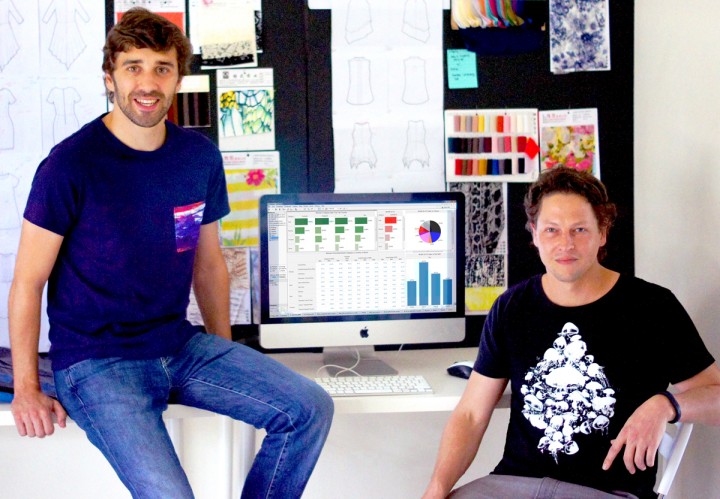
From left: Goncalo Reis, founder and managing partner, Andrew Wolf, founder and creative director.
Business intelligence and data analytics are not words you usually hear uttered at a fashion label. But for Andrew Wolf and Gonçalo Reis, founders of Singapore-based fashion company Lift12, these terms are bread and butter.
The tag team is building a different sort of company in an age-old industry steeped in tradition. While software and internet technology have infiltrated many industries, fashion design is still an art beholden to the tastes of the designer.
Not anymore. While human judgment still has a role to play at Blake and Co as well as 9fountains – Lift12’s women and menswear brands, respectively – a lot of their design decisions are made with the help of data.
This is a fashion brand built from the ground up to run like an internet company.
“We want to be the retailer of the future, in the sense that retailing is going to be an intersection of the physical with e-commerce and data,” says Reis, who is the business brain with stints at Groupon and Rocket Internet – both heavily involved in selling to consumers online.
Fashion industry divorced from reality
E-commerce is playing an increasingly important role in driving fashion sales, but designers and retailers have not caught up. Labels typically push a new collection to retailers four times a year and according to seasons – even in tropical countries where it’s rain and shine all year round.
Prices do not always match what consumers are willing to pay for, and trends that filter down from the runway to the mass market do not always reflect genuine tastes.
Retailers bear a large share of the risks; it’s guesswork to pick the right labels to stock their shelves. While shops collect sales data, they do not understand much about the people who buy them. The items, which are paid for upfront by retailers, take a long time to arrive, from three weeks to as long as six months.
For Lift12, determining fashion trends is not just a top down process. Data seeps into every stage of each product’s lifecycle, from design to manufacturing to sales.
The company eats data for breakfast. Its web crawlers fan out all over the web everyday to scrape data on fashion trends and pricing.
For now, these scrapers only scan websites of other fashion labels and retailers. In the future, however, the company could also sieve through web fashion publications and social networks like Pinterest, Twitter, and Instagram for consumer insights.

Data-driven, rapid design cycles
Top performer on Zalora
Step-by-step





Stay updated on the go with our mobile app.
Get latest insights with smoother, more personalized experience through TIA mobile app.









📅 Upcoming Events
22 October 2026
Payoneer x CSPN Summit 2026