Miguel Cordon · · 2 min read
Wavemaker-backed WasteX wants to turn farm waste into biochar
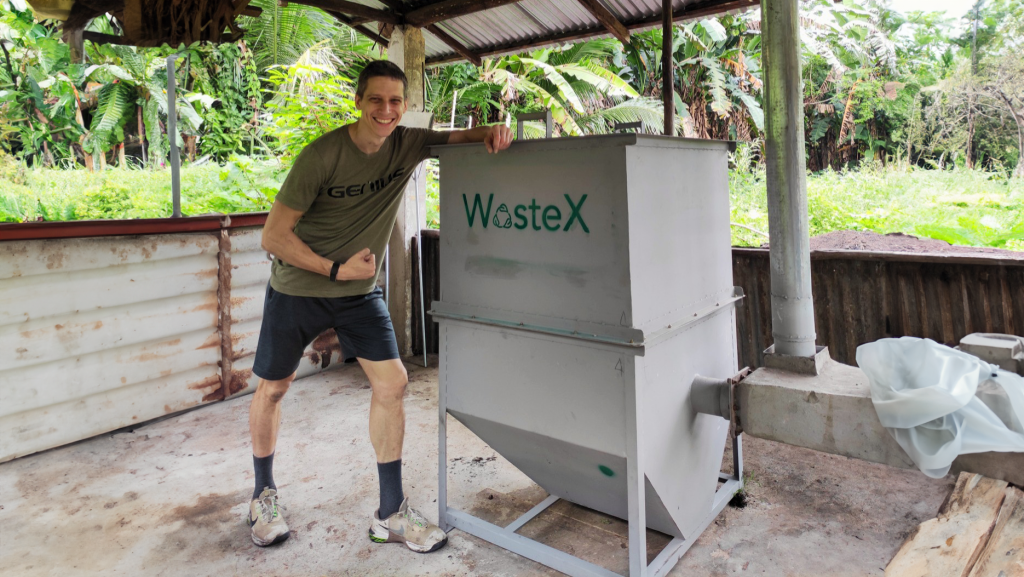
WasteX founder and CEO Pawel Kuznicki / Photo credit: WasteX. This photo was enhanced with the use of Photoshop’s generative fill.
After exiting his first business – an invoicing platform called Capital Match – Pawel Kuznicki wanted to address climate change.
That led him to join Wavemaker’s venture-building program in 2022 to develop WasteX, which aims to tackle the 1.3 billion tonnes of agricultural waste that farms generate every year.
The waste can come from different types of farms, including crop farms, livestock farms, and even aquaculture plants. Farms can sell this waste for cheap to manure manufacturers, for example, but most of the time, farms resort to burning it, resulting in pollution and other environmental issues.
Kuznicki wants to turn this waste into something far more useful: biochar.
Keeping barriers to entry low
Biochar is a type of charcoal made from various organic materials. It has been used throughout history to improve soil quality, plant health, and crop nutrition, leading to higher farming efficiency.
But the product has not found wider usage due to a number of factors, according to Kuznicki.
One is the high cost and risk of implementing biochar. Farms need to invest a substantial amount of money, and high-quality biomass sources can be limited. There is also a general lack of information about biochar and its benefits.
Based in Singapore, WasteX offers an end-to-end solution to bring biochar to more farms across Southeast Asia, starting with a proprietary small-scale, modular equipment that can turn any biomass into biochar. Farms can either use the biochar or sell it to other customers.
The equipment is automated, meaning farmers just need to push a button. Using the WasteX app, farmers can record their biochar production and receive customized recommendations on how to apply the biochar.
WasteX sells the equipment for US$4,950, which the firm said is a competitive price. Net benefits for farmers would more than double the investment in just one year, according to the company.
Kuznicki said that WasteX is not earning much margin on the equipment in order to keep barriers to entry low. To boost profits, the company also sells carbon credits that partner farms generate by using biochar. WasteX keeps track of the credits through its app.
A ton of biochar generates US$50 worth of carbon credits, the company said. This can translate to around US$1,500 on average for a six-hectare cacao farm.
Right now, WasteX’s clients include two farms in Indonesia, one in the Philippines, and one in Thailand.





Stay updated on the go with our mobile app.
Get latest insights with smoother, more personalized experience through TIA mobile app.