- Premium Content It takes our newsroom weeks - if not months - to investigate and produce stories for our premium content. You can’t find them anywhere else.
 Nicole Jao · · 13 min read
Lessons from the Luckin fiasco
Luckin Coffee was hailed as a success story last year when the Chinese startup debuted on Nasdaq. The company was a growth miracle: Founded in October 2017, it reached the coveted unicorn status in less than a year and went public in just 17 months. In China, Luckin was the only homegrown coffee chain to challenge the longstanding dominance of US giant Starbucks.
In hindsight, Luckin’s success story was too good to be true. Investors can be blinded by the lure of rapid growth among Chinese startups, observers tell Tech in Asia. It eventually emerged that Luckin was operating on an unsustainable cash-burning business model and overstating its sales figures.
In China’s hyper-competitive business culture, tech startups are pushed to expand with a “grow-at-all-cost” mindset. But when that drive is coupled with weak corporate governance, it can lead to trouble.
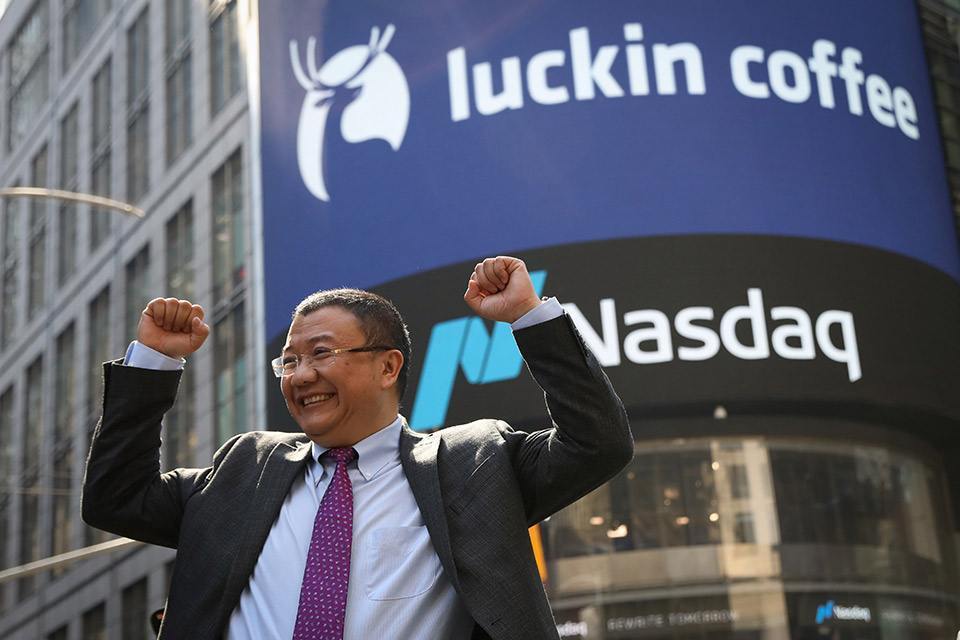
Charles Lu Zhengyao, former chairman and co-founder of Luckin Coffee (Photo credit: Luckin Coffee)
The man behind Luckin and the mastermind behind the sales fraud was Charles Lu Zhenghao, who is known for practicing high-pressure growth tactics at his companies. In retrospect, Luckin’s fast growth and initial public offering likely led to shortcuts in the due diligence process.
While doing deep due diligence is costly, it’s an important step in evaluating speculative high-growth companies like Luckin. After all, the real victims when things blow up are retail investors who are vulnerable to risks rather than venture capital firms that can sell their stakes in a company much earlier to avoid losses.
Fall from grace
Investment due diligence firm Muddy Waters Research received an anonymous report in February alleging that Luckin Coffee’s sales figures were exaggerated.
In early July, Luckin completed its independent internal probe into the sales fraud. It found that a group of employees began creating fake sales transactions in April 2019 – a month before the company made its Nasdaq debut. As a result, its 2019 numbers were inflated: revenue by US$300 million while its costs and expenses by US$190 million.
One of the ways the company cooked the books was by recording sales of vouchers that could be exchanged for cups of coffee. Some of these vouchers were purchased by individual accounts, but vouchers redeemable for tens of millions of cups of coffee were sold to companies linked to Lu, who was then co-founder and chairman of Luckin, according to a Wall Street Journal report that cited internal documents and public records.
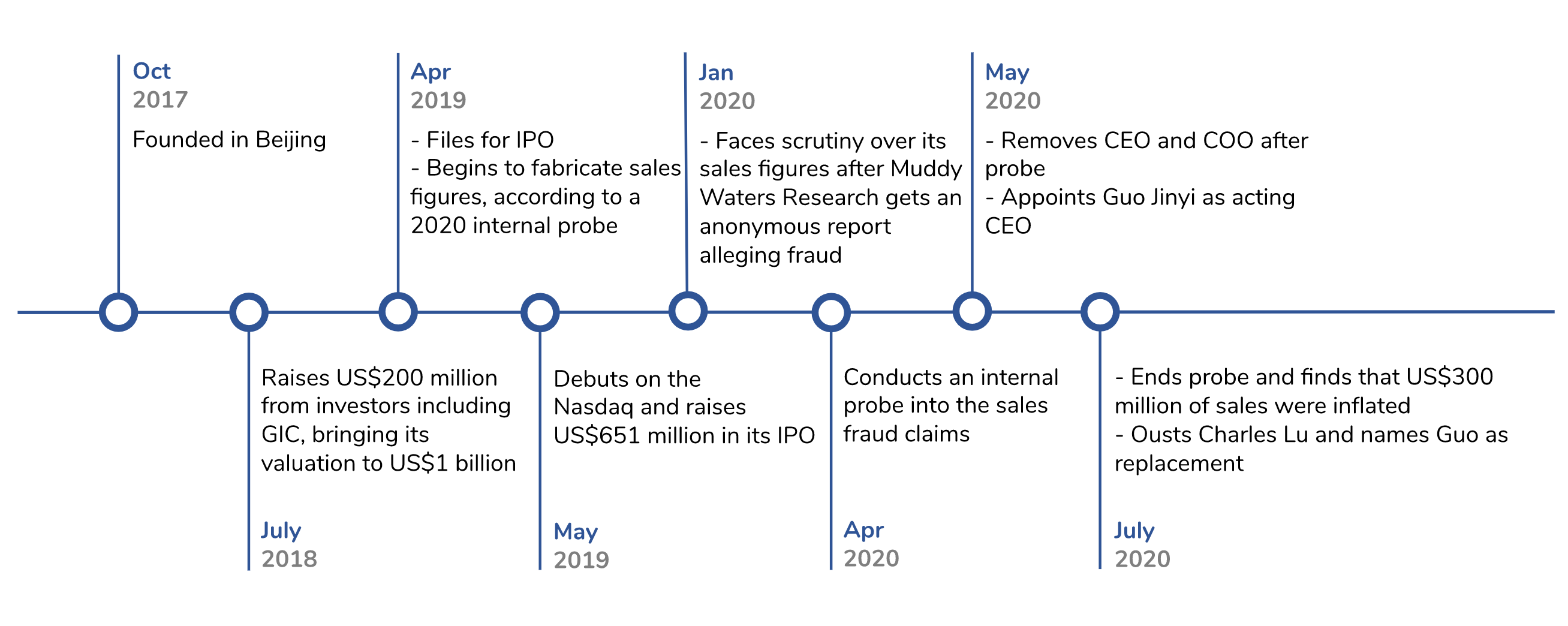
A timeline of key events leading up to Luckin’s sales fraud
Before the scandal, Luckin was the darling of capital markets. It opened more than a thousand stores within the first few months of its existence, setting up in office buildings, school campuses, and central commercial areas across major cities in China.
Lu was regarded as a serial entrepreneur who controlled two other public companies in China: Hong Kong-listed vehicle rental service Car Inc. and ride-hailing startup UCar, which was listed on The New Third Board.
Given these favorable odds, what could go wrong?
Red flags
A disintegrating business empire
The problem with lightning-fast growth
Insufficient checks
The aftermath
Stay ahead in Asia’s tech landscape
This is premium content. Subscribe to read the full story.
Though there were warning signs that Luckin’s prospects were too good to be true, investors were too dazzled by the company’s growth story.
We know this is not ideal. ⌛ Sign up in 20 seconds. Cancel anytime.
Our subscriber community includes professionals from these companies:





Stay updated on the go with our mobile app.
Get latest insights with smoother, more personalized experience through TIA mobile app.








📅 Upcoming Events
22 October 2026
Payoneer x CSPN Summit 2026