- Insights This article was written by a TIA community member. Insights pieces undergo the same rigorous editorial process that newsroom-produced articles have.
 Rui Ma · · 13 min read
How Douyin created a product that gets 1 billion views a day
The speech below was given by Kelly Zhang, the original head of Douyin and, as of March 2020, CEO of ByteDance’s China business, in February 2018 as part of the offline expert-sharing curriculum of popular professional development company Hundun University.
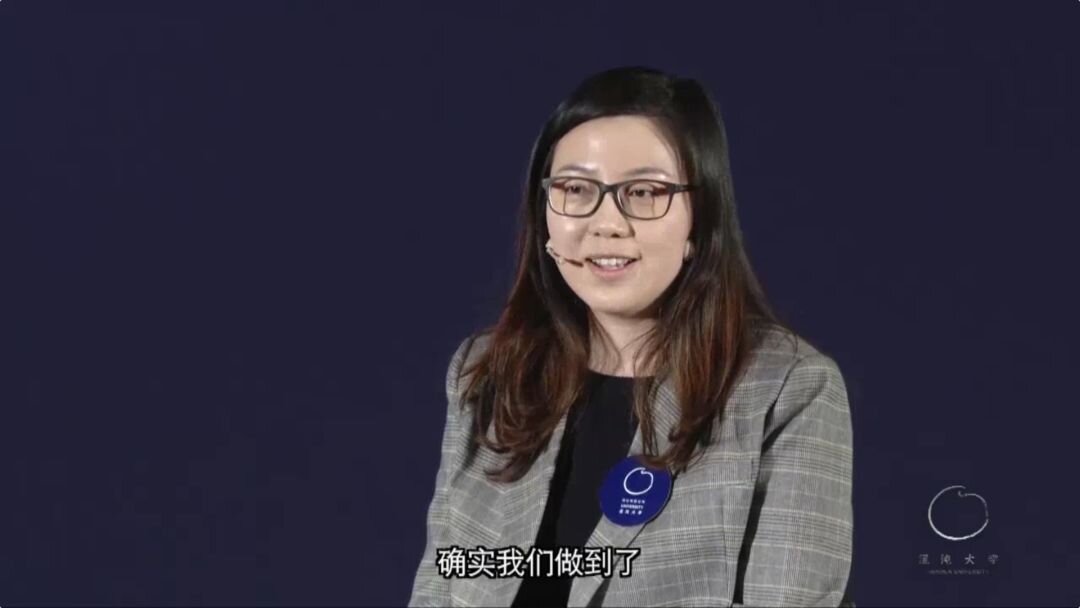
Kelly Zhang at Hundun University, February 2018
Zhang joined ByteDance in 2014 after the company had acquired the photo-sharing startup she co-founded. She was initially put in charge of the jokes and memes app Neihan Duanzi, ByteDance’s earliest product and its first success before Toutiao.
Though Neihan Duanzi, which had 200 million registered users, was shut down permanently in April 2018 for inappropriate content, Zhang became a very respected figure in Chinese tech circles for her product acumen, which is evident in her 2018 speech.
In her capacity as CEO of ByteDance China, reporting directly to company founder Zhang Yiming, Zhang is “responsible for the company’s products in the China market, leading product management and operation, marketing, and partnerships for Toutiao, Douyin, Xigua, Toutiao Search, and other products and services,” according to a profile.
Given that six of the top 10 most popular apps in China were owned by ByteDance as of the beginning of 2020, and that substantially, all of its alleged US$28 billion in target revenue this year will probably be from China, that’s an impressive amount of responsibility. Zhang is also still in her 30s. Born in the early 1980s, there’s very little public information about her, other than that she’s from Xi’an.
Here is the transcript of Zhang’s speech, a rare firsthand account of the rise of Douyin, annotated for the readers’ benefit. Credit goes to Pandaily editor Lu Zhao for her translation work, more of which you can learn about here.
Full transcript, part one
Kelly Zhang: Douyin has been around for more than a year; we started it in 2016. Today, we are going to talk about how [we created] a short-video product that has over 1 billion daily views. In fact, it is far more than 1 billion now, thanks [to] your love for Douyin.
Annotation: Douyin was officially launched in China in September 2016. At the time of this presentation, it was just under 18 months old. I estimate that development and beta testing took about six months because past interviews reveal that the idea to make a short-video product was finalized during the company’s management retreat in Japan around the Chinese New Year of 2016, which would have been around February.
KZ: Let’s go back to the second half of 2016 when we decided to enter the short-video market. You probably know that 2016 was the heyday of the short-video industry, and the competition was very intense. But we still decided to join the battle because we saw that there was great potential here. We thought it was worth trying.
At that time, we also made a bold decision. Some of you may already know this, but we made two short-video products at the same time, one called Douyin and the other called Huoshan.
Annotation: If you’re not familiar with Huoshan (which has since been folded into the Douyin brand), we’ve got you covered.
TL;DR: Huoshan was targeted at rural China and can be considered as ByteDance’s answer to Kuaishou, the leading short-video app at the time and still a very strong competitor to Douyin in China.
Launched in April 2016, Huoshan actually preceded Douyin by a few months. It was renamed Douyin Huoshan in January 2020 and has effectively become a sub-brand to Douyin. By the end of 2019, Huoshan had about 50 million daily active users.
KZ: On the topic of special effects filters, I don’t know if you saw the 2016 App Store ranking list, but there were a lot of special effects camera apps on it, which makes you realize that Chinese people really like these special effects and filters.




Stay updated on the go with our mobile app.
Get latest insights with smoother, more personalized experience through TIA mobile app.