Jia Xin Lim · · 3 min read
Learn how HR analytics can help your business drive strategic decisions
It has often been said that employees are a company’s greatest asset. By attracting star players and retaining them, businesses are setting themselves up for success. However, only 23 percent of managers and senior executives believe their current acquisition and retention strategies will work. In addition, almost a third of senior management cited attracting talent as their top managerial challenge.
Should hiring be based on gut feel or data? Researchers have suggested that when making recruitment decisions, instincts are often subject to interview biases. As interviews are a result of personal exchanges between people, social factors may unintentionally affect how the candidate is being evaluated. Instead of assessing a candidate’s ability to do the job well, irrelevant factors such as race or gender may influence the interviewer’s decision on whether to hire. A better hiring guideline would be to favour facts over our gut instincts.
Hiring based on data
A study by Harvard Business Review revealed that simple computer algorithms outperformed human decisions by at least 25 percent, “regardless of whether the job is on the front line, in middle management, or in the C-suite.” In other words, we would probably end up with better hires if we depended more on algorithms and analytics, compared to our instincts.
Analytical HR has been around for a while. At Google, people management decisions are guided by “people analytics team”, with one of their goals being “all people decisions at Google are based on data and analytics”. Progressively, more companies are placing greater emphasis on data-driven recruitment, allowing employers to better understand their current employees and to attract the ideal candidate to be part of their organization.
While a candidate may look perfect on paper with relevant experience and qualifications, people analytics tools offer a broader view of a candidate’s potential, ultimately helping businesses make better hiring decisions.
Learn how you can drive strategic decisions with HR analytics
HR analytics may be important, but it’s often a challenge to get started. Here’s where NCS, a leading information, communications and technology service provider, can help. NCS has had a proven track record of over 30 years, having successfully implemented over 3,000 large-scale projects for Singapore’s government ministries and agencies.
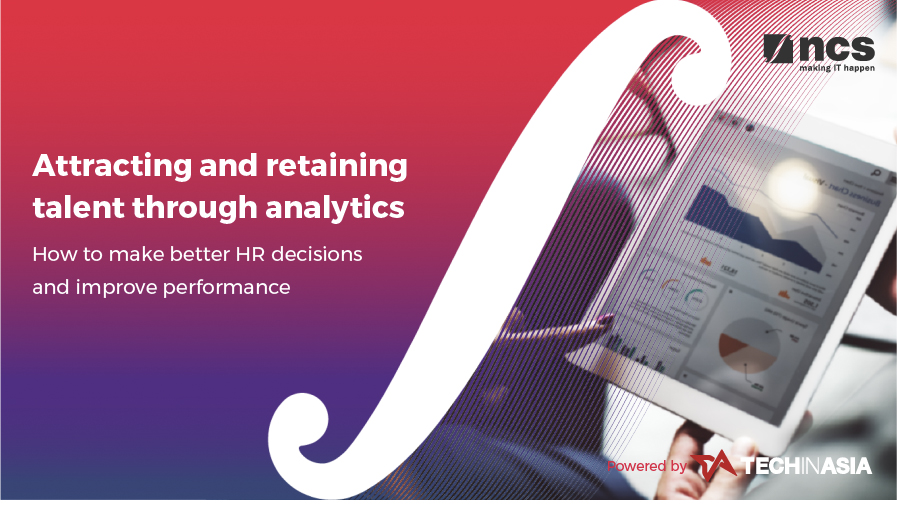
On 1 March, NCS will be holding an information session for HR practitioners on how to attract and retain the right talent through analytics. By using machine learning to bring actionable insights, NCS’ HR Analytics Solution solves two major hiring pain points – identifying the right hires and reducing employee turnover.
With the use of data, the software is able to spot the right candidates with favourable performance from applicants, leading to quality hires. In addition, it is able to pick up attrition patterns of employees and understand the key drivers of turnover.
Click on the button below to register your interest by 22 February. As this is an invite-only event with limited seats, successful applicants will be notified via email by 23 February. We look forward to meeting you there!

Event Details
Date: 1 March 2018, Thursday
Time: 4pm to 7pm
Venue: The Great Room
Stay updated on the go with our mobile app.
Get latest insights with smoother, more personalized experience through TIA mobile app.
Recommended reads
 Building a human capital operating system for students
 The AI talent war in Asia: who’s winning, who’s losing, and why
 Metrics and management: Best practices from engineering heads on how to lead effectively
 Corporate learning platform Codemi secures seed funding from Bukalapak founder’s Init 6
 HR tech firm Pulsifi bags $1.8m in an angel round to expand into Europe
 Singapore prime minister clarifies details on new work pass for global tech talent
 For SMBs, digitalization starts with having the right tools and resources
 ByteDance’s 10,000-employee bet on the edtech bubble
 AI startup Acceler8 lands backing from A16z Speedrun
 AI hiring heats up in Singapore





Editing by Cheong Hui Min
(And yes, we’re serious about ethics and transparency. More information here.)