- Insights This article was written by a TIA community member. Insights pieces undergo the same rigorous editorial process that newsroom-produced articles have.
 Sneha Kataria · · 7 min read
Grabbing ecommerce by the horns in the golden land of Myanmar

Photo credit: Jörg Peter.
In a country of 55 million people where the average demographic spends over 15 hours online, almost all of it on a mobile device, ecommerce seems and sounds like a cash cow industry to capitalize on. In fact, Ericsson recently pegged Myanmar as the fourth fastest-growing smartphone market in the world.
Startup dream? Not quite yet.
Asia’s last digital frontier has been struggling with enabling online commercial transactions for a while now. It does help that the numbers of online adoption are ever growing. Google Analytics on most websites and popular apps will tell you that Myanmar is truly the land of Android, but more importantly, web apps.
Yes, you read that read right. In a world that is upgrading to more native platforms, this is not a mobile-first market; it’s a mobile-only market where most app downloads are conducted via direct APK stores and (wait for it)… file sharing!
While there are a bunch of Android apps — and they’re treated like de facto collateral for brands these days — 90 percent of the market lives off of WAP websites, landing pages, and web apps.
At times like this, how do ecommerce players — those existing and those hopeful of entering — manage updates on Android apps and urge users to do the same?
When the Burmese spend so much time on their mobile phones, how much of that is being spent on ecommerce?
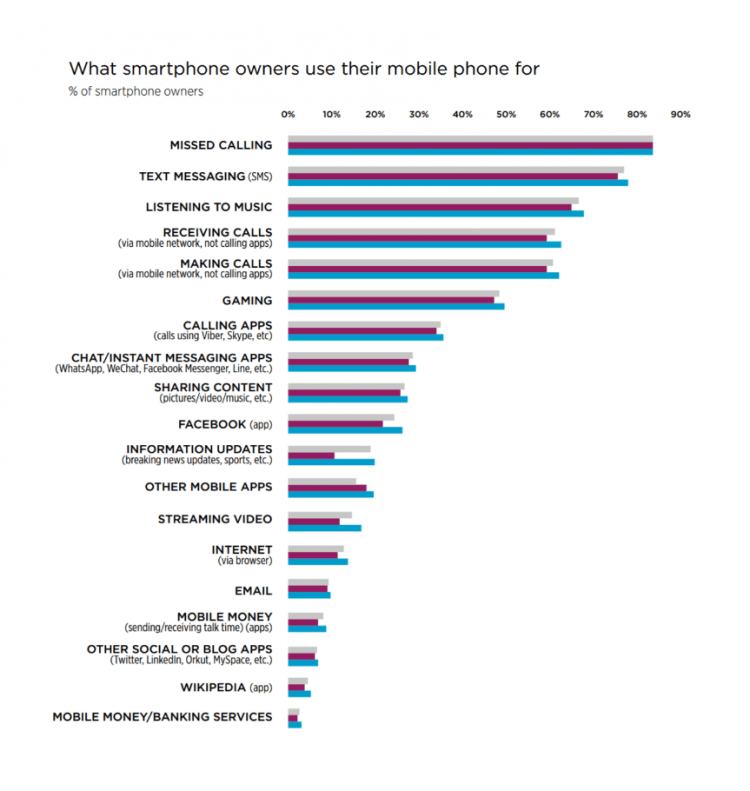
Photo credit: Mobile Phones, Internet, and Gender in Myanmar 2015 report.
Also, how can people do business with various stakeholders when only a little over 2 million of the population banks? But everyone dives into this cash-rich economy — vendors, brands, users, collaborative offers, and international parties.
Below are a few ways you can attempt to confront these problems head on and hope for the best:
Commercials
While a myriad of payment providers exist in the country, most of them have caveats:
- They are designed for POS hardware given to brick-and-mortar stores.
- They are prepaid i.e. you need to lock capital in advance via an agent account to be able to use services from digital payment providers.
- They cap the usage per transaction to a relatively low amount, approximately US$200 to US$500. Some levy this limit on a per day basis, which is easier.
- They are similar to each other in terms of features so it becomes a matter of who is easiest to collaborate with.
- They don’t have open APIs to integrate with tech startups or ecommerce stores online. (Bummer!)
- There is a huge discovery gap between Burmese users and Burmese apps.
Business growth
Social media
Process and technology





Stay updated on the go with our mobile app.
Get latest insights with smoother, more personalized experience through TIA mobile app.