Rebecca Liew · · 6 min read
Behind these Singapore tech firms’ successful expansions abroad

Singapore’s tech ecosystem is thriving: Not only is it home to many successful Southeast Asian startups like Carousell and PropertyGuru, but scores of tech majors have also made the city their homebase in Southeast Asia in recent years, thanks to the city-state’s business-friendly environment and strategic location in the region.
And while tech companies from abroad are setting up shop on the nation’s shores, Singaporean tech firms are seeking new opportunities on the global stage to drive further growth and develop world-class products.
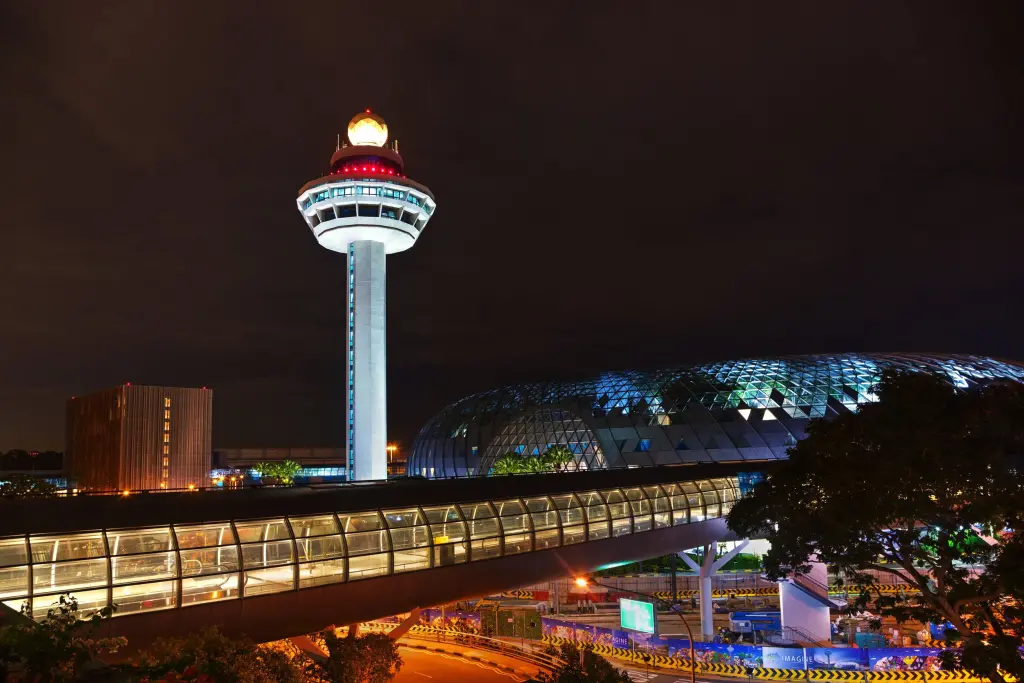
Photo credit: andreykr / 123RF
Last year, over 300 Singapore-based firms forayed overseas – a 10% increase from 2020. These expansion plans will generate an estimated S$4.6 billion (US$3.42 billion) in overseas sales.
However, tapping into opportunities abroad is not easy. Companies face a multitude of barriers to entry in overseas markets ahead: navigating varying layers of regulatory approval, establishing a network of trusted partners and distributors, and hiring tech talent with a deep understanding of the markets in question.
That’s where having the right support can prove useful.
Opening new doors
Knorex, a homegrown enterprise software-as-a-service company that provides programmatic advertising products and solutions to marketers, understands the value of internationalization – and the challenges inherent within it.
According to Justin Tan, its co-founder and vice president of business development, the firm began eyeing expansion to the US as soon as it had a product ready to go. That was after Knorex identified a significant opportunity in the US market for its adtech and martech enterprise software, and saw its potential to help fast-track the firm’s competitiveness on the global stage.

Justin Tan, co-founder and vice president of business development at Knorex / Photo credit: Knorex
However, Knorex faced challenges in gaining an in-depth understanding of customers’ unique needs in this potential market so that it could determine the relevance of its product and solutions.
“When expanding overseas, establishing an initial point of contact is critical. One key challenge was finding a local partner who is familiar with the market, and who could be trusted to work with us to deliver results,” Tan shares.
To aid in its expansion, the tech firm connected with Digital Industry Singapore (DISG), a joint office of the Economic Development Board, Enterprise Singapore and Info-communications Media Development Authority. The office aims to link tech companies with resources and programmes across agencies to help build new solutions that can scale globally from Singapore. This includes supporting and partnering with companies in areas – such as market access, research and development, and product innovation – to drive the growth of Singapore’s tech sector.
“With the assistance of DISG officers, we were able to access targeted support from government agencies,” says Tan, adding that this support helped defray the cost of entering a new market. DISG also supported Knorex in the development and registration of its intellectual property in the US.
Tan believes that these stepping stones have helped Knorex fast-track its competitiveness in reaching out to a “demanding and sophisticated market”.
“By venturing into different markets, we get to tap on a wider pool of talent and expertise,” he adds. “This has helped us create better products and solutions to address the challenges commonly faced by marketers.”
Eyeing uncharted territory
Lai Teik Kin, the founding CEO of EyRis, an AI-powered healthcare provider , also saw opportunity abroad. The company’s flagship product is Selena+, which uses an AI deep-learning system to detect eye diseases such as glaucoma, age-related macular degeneration, and diabetic retinopathy, which is a diabetes complication that can lead to blindness.
“While Singapore is an excellent proof-of-concept platform, we recognized that our product had the potential to benefit the near-half billion people with diabetes globally,” says Lai, who explains that Selena+ could revolutionize the detection of retinal and chronic diseases in large communities and be a “game changer” in the future of first-stage medical diagnostics.

Lai Teik Kin, CEO of EyRis / Photo credit: EyRis
To better reach this expansive market, the EyRis team first identified countries with large diabetic populations, such as China and India. The team also considered other factors, including the availability of healthcare subsidies, each country’s general sentiment towards AI, and AI adoption rates, before preparing to enter those markets.
“We also looked at [introducing our solution to] underserved communities,” shares Lai. “The majority of diabetics live in low- and middle-income countries, but the spread of eyecare specialists is rather uneven. Ophthalmologists and trained professionals are usually concentrated in more advanced countries and mainly in urban areas.”
While expanding abroad, however, EyRis faced two main obstacles: obtaining the necessary regulatory approvals, and convincing new markets that its AI-powered product can diagnose ailments as accurately as a trained eyecare professional.
Lai says EyRis expedited the process and overcame these hurdles thanks to DISG’s role in providing the firm with strategic market insights and facilitating networking opportunities.
“The team [at DISG] provided us with a better understanding of each local landscape, introduced us to local industry leaders, and helped us establish an initial connection to better plan our entry into different markets,” he shares.
Today, Selena+ is offered in 26 countries and has won EyRis recognition, including at the Techblazer Awards 2021. EyRis is venturing into Mexico next and is working on securing regulatory approval to capture the Chinese market, which is home to some 120 million diabetic people.
“DISG has been very supportive of our journey. We’re very appreciative of the strategic advantage they have given us in establishing local adoption in overseas markets,” Lai says.
Establishing strong ties
Fintech services company Adera is another smart tech business that has successfully expanded into Southeast Asia.
The company offers a suite of end-to-end solutions integrated with smart automated tech across three key areas: secured data handling of sensitive data, smart tech, and fintech. The latter two include digital wallet solutions, digital identity verification, and a facial recognition system.
Right from the get-go, Adera knew it wanted to expand beyond Singapore.
“Given Singapore’s inherently small market size, internationalization has always been one of our key growth strategies,” says Adera’s CEO, Anthony Ong.
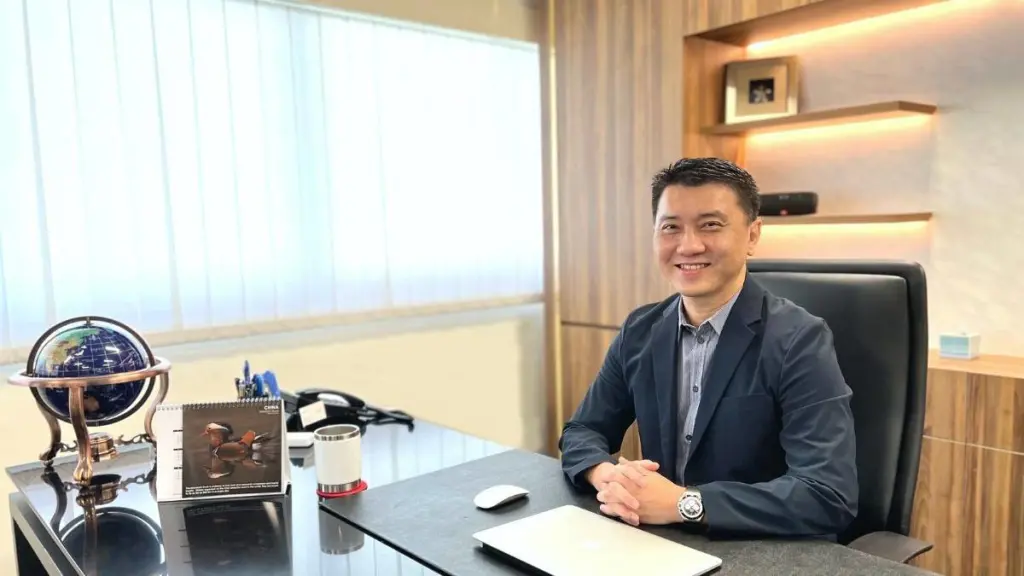
Anthony Ong, CEO of Adera / Photo credit: Adera
The company’s smart tech arm now has a presence in Indonesia, Vietnam, the Philippines, and Cambodia – populous markets that are largely unbanked or underbanked where the firm aims to capture market share and help accelerate the growth of fintech.
However, getting to this point proved to be challenging.
“One difficulty was finding a partner with the necessary technical capabilities to support some of our solutions,” he explains. “It helped when [prospective partners] were introduced to us through reliable parties like DISG.”
DISG introduced Adera to a pivotal SaaS partner in China, as well as other partners and distributors based in Indonesia. The joint office also worked with Adera to explore opportunities in different markets and connected it to potential business leads and partners, helping Adera secure more contracts and shorten its sales cycles.
“While internationalization is fraught with uncertainties, being agile and responsive to the changing trends means being able to capture the right opportunities,” Ong says. He believes this includes leveraging support from organizations such as DISG to access relevant market opportunities.
“This support can make a difference in the time, effort, and resources needed to internationalize,” he concludes.
Currency converted from Singapore dollars to US dollars: US$1 = S$1.35.
Digital Industry Singapore (DISG) is a joint office of the Economic Development Board, Enterprise Singapore, and Info-communications Media Development Authority, established to support the growth of the technology sector in Singapore.
Learn more about DISG here.
This content was produced by Tech in Asia Studios, which connects brands with Asia’s tech community. Learn more about partnering with Tech in Asia Studios.
Stay updated on the go with our mobile app.
Get latest insights with smoother, more personalized experience through TIA mobile app.
Recommended reads
 Mistral AI targets major Singapore hiring push in 2026
 Singapore retailer first worldwide to sell lab-grown meat
 Regulations ‘likely necessary’ for AI, YC chief Garry Tan says
 East Ventures backs $2.7m round of Indonesian climate tech startup
 Applications open for Emerging Enterprise Awards 2024, now in their 17th year
 Asia is setting a new benchmark for growth via intangible assets
 NUS to invest nearly $15m to support deeptech startups
 Following the rebranding, Granite Asia’s veteran partners dig in for the long haul
 VNG subsidiary becomes Nvidia’s latest SEA partner
 Nvidia co-invests $200m in Indonesian AI center amid SEA push





Editing by Stefanie Yeo, Winston Zhang, and Arpit Nayak
(And yes, we’re serious about ethics and transparency. More information here.)