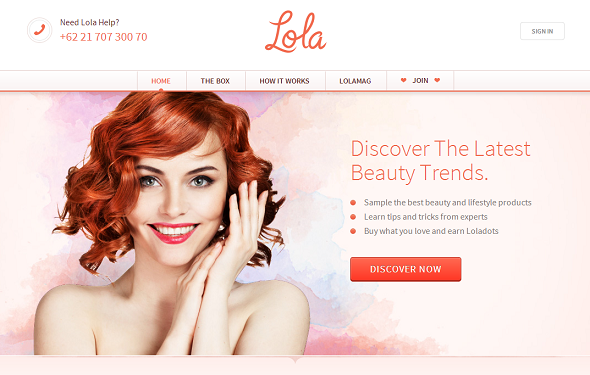
News has hit this week that Indonesia has become the new battleground for beauty box companies — a type of subscription service where customers receive a box of cosmetics samples on a monthly basis.
Singapore’s VanityTrove is believed to be the first to enter the country, followed closely behind by Lolabox, started by two former Rocket Internet employees, and BeautyTreats. Both competitors launched officially yesterday to much fanfare from the tech press.
While their entry into Indonesia is good news for consumers who have been clamoring for such services in the country, there are legitimate reasons to be skeptical about their success.
It all starts with the fact that Rocket Internet’s very own GlossyBox has avoided Indonesia and its surrounding countries like a plague.
Those familiar with Rocket Internet will know that it is an extremely data-driven company. So the higher-ups, for whatever reason, have decided that the upside of doing a beauty box service in South Asia is not worth the investment.
That’s why GlossyBox left Australia after a brutal battle, and exited Taiwan by selling their business to VanityTrove. And they didn’t even touch Southeast Asia.
The math probably didn’t add up.
As much as Indonesia is a rising star for e-commerce — which is why the Samwer Brothers have kept Zalora and Lazada active in the country — there are two obstacles that could prevent a beauty box company from attaining much traction:
1) Logistical problems
Like any e-commerce venture, a beauty box service is logistics-intensive. To keep subscribers happy, VanityTrove and its ilk must figure out a way to deliver boxes to not just customers in Jakarta, but all around the vast country, which has over 17,000 islands.
It’s not just about reaching the destination: Couriers must ensure that the box gets to the customer on time and in perfect condition.
As it stands right now, Indonesia’s e-commerce players believe that the country’s logistics infrastructure is not up to scratch. There are not enough courier services around, and the ability to pick goods up at the convenience store doesn’t cut it since that eliminates one of the benefits of subscribing to a beauty box service in the first place — having cosmetics delivered to your doorstep.
Not only is logistics in Indonesia inefficient, it’s expensive too. A journal article points out that trucking in the country could cost up to 34 cents a kilometer, and up to 50 cents if it’s transportation by sea or air. That’s the highest rate in ASEAN.





Stay updated on the go with our mobile app.
Get latest insights with smoother, more personalized experience through TIA mobile app.










📅 Upcoming Events
22 October 2026
Payoneer x CSPN Summit 2026