You head to work in the morning with just a smartphone in your pocket. You hail a Grab to work. In the car, you order, pay for, and pick up your morning coffee. Then, you enter your office building even without an ID card. You accomplish all this with nothing but your smartphone–no phone calls, cash, credit cards, paper coupons, or loyalty cards.
For most living in China’s first-tier cities, this is the value, ease, and convenience provided by their mobile wallets. Needless to say, when AliPay and WeChat announced their entrance into the Malaysian market this year, anticipation was high.
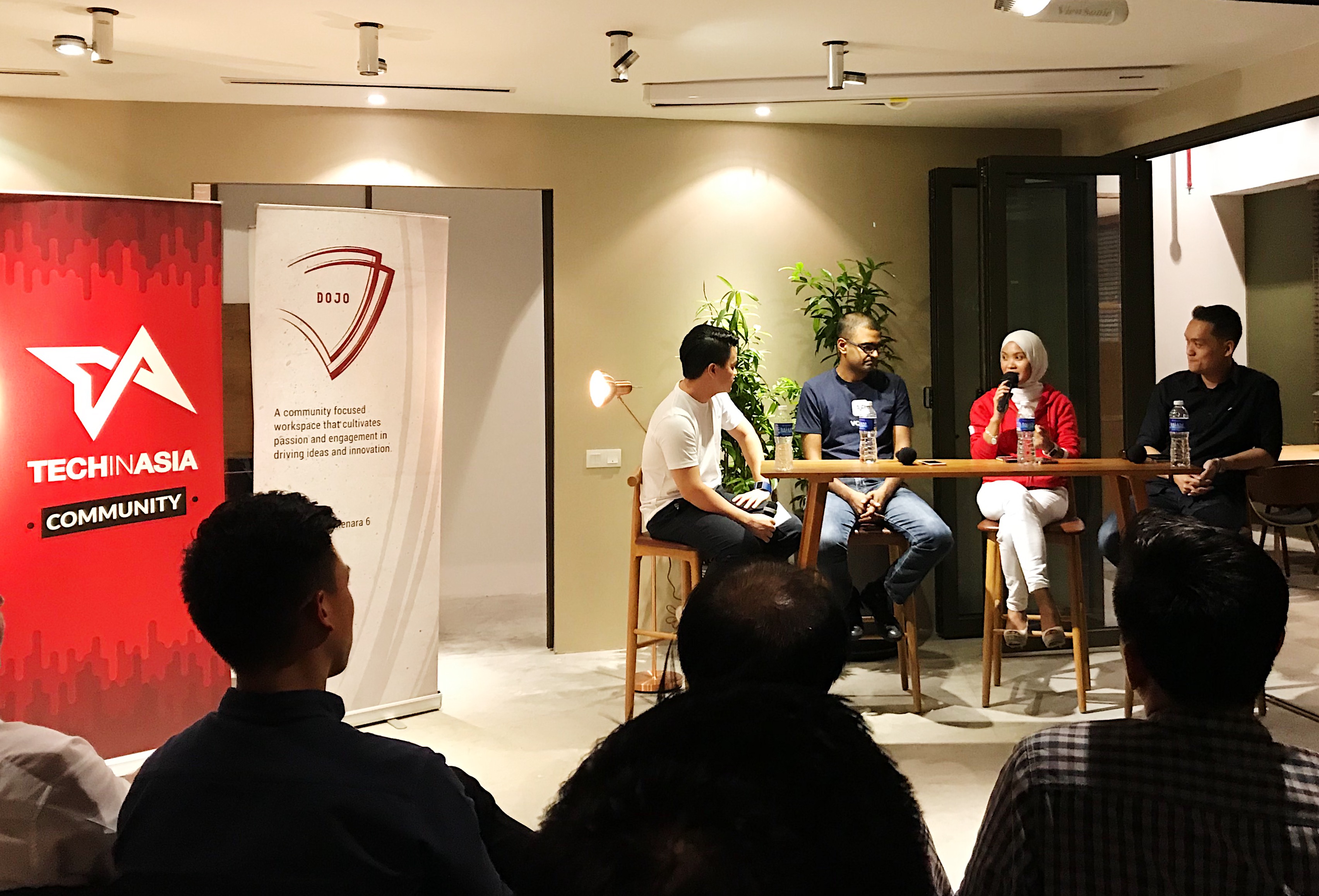
Tech in Asia City Chapters (Kuala Lumpur) recently organized its first founders’ meetup, discussing the future of digital wallets in Malaysia. The panelists were from WeChat, Boost, and vcash, three Asian startups that have their hands in the local wallet ecosystem.
The future of digital wallets in Malaysia
Boosting wallet stickiness
For digital wallets to have more value, providers must focus on their users’ everyday lives. But encouraging a change in behavior is no easy task.
Ungku Liza, the lead for the strategic partnerships and operations arm of Axiata’s digital wallet, Boost, agreed. According to her, “If you were to promote payment as payment per se, it would never take off.” For it to be sticky, she recommends a more holistic approach to fulfilling a user’s daily needs.
For example, Boost has started an on-the-ground marketing campaign with its partner Tiffin Food Court (a youth-focused local food festival). The mobile wallet was the food festival’s cashless partner and was used to conduct all transactions. “We know Malaysians love to eat. So, that was one avenue that we tapped on,” Liza shared.
WeChat’s game plan
In early 2018, WeChat is planning to roll out its payment services in Malaysia, which will be the first country out of China to get the service.
No stranger to the local payments industry, WeChat Pay’s Malaysia CEO, Jason Siew, explained that their experience in China will help with their localization efforts.
According to Siew, while WeChat is inherently social, their secret sauce is their Hong Bao (red envelope) application and how they “gamify it.”
“For example, when we give out Hong Bao to a group chat with randomized amounts to each user, we amplify the network effect and create a user-get-user outcome,” Siew said.
Localization strategies
Financial inclusion
Pushback from banking partners
Collaboration in the midst of competition





Stay updated on the go with our mobile app.
Get latest insights with smoother, more personalized experience through TIA mobile app.













📅 Upcoming Events
22 October 2026
Payoneer x CSPN Summit 2026